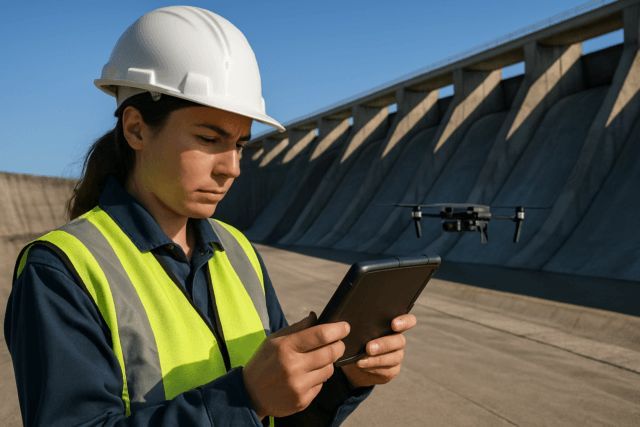
The proliferation of unmanned aerial vehicles (UAVs), commonly known as drones, has ushered in an era of unprecedented opportunities, from commercial delivery to emergency response. However, this same accessibility presents a growing challenge for security forces worldwide: how to detect and mitigate unauthorized or malicious drone activity, especially in dynamic, mobile environments. Portable drone detection systems are emerging as a crucial line of defense, empowering mobile security units to maintain vital airspace awareness and protection wherever and whenever threats may arise.
What Are Portable Drone Detection Systems?
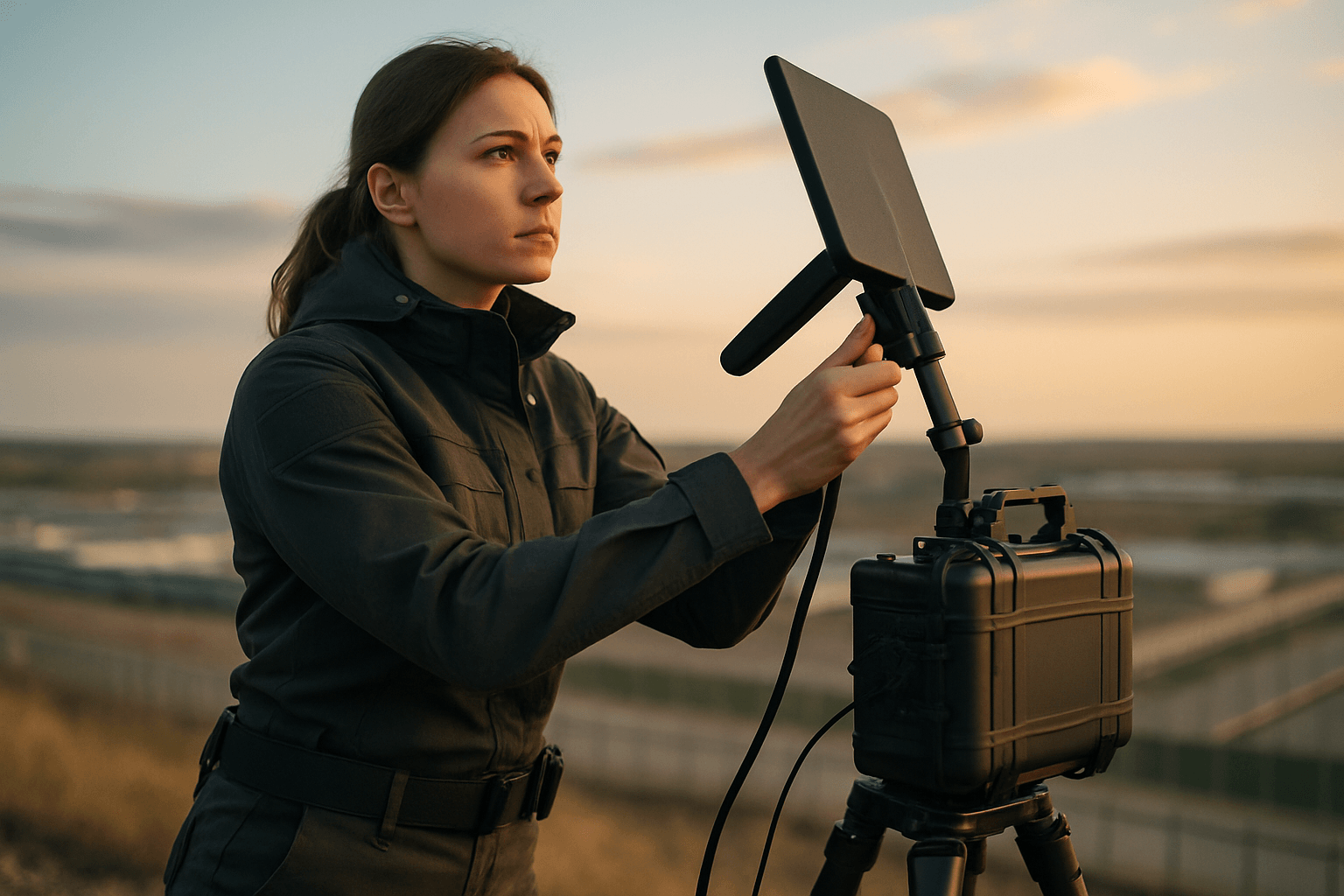
At their core, portable drone detection systems are security solutions designed for rapid deployment to dynamically locate and identify drones and their operators in real-time. Unlike traditional fixed installations, these systems are characterized by their lightweight components, minimal wiring, and quick setup, often becoming operational in minutes rather than hours. This inherent flexibility allows security teams to reposition quickly, delivering critical airspace awareness and protection in temporary missions, emergency responses, and for mobile units where continuous flexibility is paramount. While some systems are set up in a fixed location for a period, advanced solutions can even function effectively while being moved in a vehicle, providing true operational agility.
The Evolving Drone Threat to Mobile Security
The widespread adoption of drones, both commercial and recreational, has introduced a host of security concerns for mobile units:
- Illegal Surveillance & Privacy Invasion: Drones can be used for unauthorized observation of individuals, events, or sensitive locations, compromising privacy and intelligence gathering.
- Contraband Delivery: UAVs can transport illicit items into restricted areas like prisons, secure facilities, or across borders, facilitating illegal activities.
- Security Breaches & Espionage: Drones can be utilized to scout critical infrastructure, government buildings, or event venues, posing risks of espionage or even direct attacks.
- Disruption of Operations: Unauthorized drones can interfere with public events, emergency response efforts, or law enforcement activities, causing safety risks and operational delays.
- Terrorism & Safety Risks: In the most severe cases, drones can be weaponized or used to create chaos in densely populated areas, representing a significant safety and security threat.
Mobile security units, by their very nature, operate in diverse and unpredictable environments, from large public gatherings to remote border patrols. Traditional, infrastructure-heavy drone detection systems are often impractical or too slow to deploy in such dynamic scenarios. This underscores the urgent need for portable, rapidly deployable solutions that can adapt to evolving threats on the fly.
How Portable Drone Detection Systems Work: Key Technologies
Portable drone detection systems leverage a combination of advanced technologies to identify, track, and often classify UAVs and their pilots. These systems can rely on a single method or, more commonly, integrate multiple sensors for enhanced accuracy and situational awareness.
Radio Frequency (RF) Analysis
RF analysis is a cornerstone of many portable drone detection systems. These systems passively listen for the radio frequency signals emitted by drones for communication with their pilots or for navigation.
- Detection & Identification: RF sensors analyze signal frequency, modulation characteristics, and other identifying features to detect the presence of a drone and, in many cases, classify its make and model.
- Pilot Location: By triangulating or using directional antennas, RF systems can determine the direction from which signals originate and often estimate the pilot’s location.
- Remote ID Integration: Some systems leverage Remote ID signals to instantly detect and identify drones and their pilots, a feature becoming increasingly important with regulatory mandates.
Radar Detection
Specialized drone detection radar systems emit radio waves and use the reflections (echoes) from objects to measure their direction and distance.
- Long-Range Tracking: Radar is effective for long-range detection, with some systems capable of identifying UAVs several kilometers away, even in various weather conditions.
- Small Target Focus: Unlike radars designed for large aircraft, counter-UAS radar is specifically engineered to track smaller objects like drones with high precision.
- Simultaneous Tracking: Advanced radar units can handle hundreds of targets simultaneously and provide constant tracking.
Electro-Optical/Infrared (EO/IR) Cameras
Optical and infrared sensors capture images and videos of drones, providing visual confirmation and tracking capabilities.
- Visual Confirmation: EO/IR cameras provide visual data, allowing security personnel to confirm a drone’s presence, potentially identify its payload, and record evidence.
- Day and Night Operation: Infrared capabilities allow for detection and tracking based on heat signatures, making them effective during both day and night.
- AI-Powered Analytics: Recent advancements include AI-powered detection, tracking, and classification, improving resolution and processing power.
Acoustic Sensors
Acoustic sensors use microphones or microphone arrays to detect the sound made by a drone and calculate its direction.
- Passive Detection: This method is passive and can detect all drones within the near field, including those operating autonomously without RF emissions.
- Gap-Filling: Acoustic sensors can be useful in areas outside the line-of-sight of other sensors and in environments where other technologies might struggle.
Multi-Sensor Fusion
Many state-of-the-art portable systems employ multi-sensor fusion, combining data from RF, radar, and optical sensors to create a more comprehensive and accurate picture of the airspace. This integration helps eliminate false positives and provides robust detection, tracking, and identification (DTI) capabilities.
Applications for Mobile Security Units
Portable drone detection systems are invaluable tools for a wide range of mobile security operations:
Public Events and Large Gatherings
Concerts, sports stadiums, festivals, and political rallies are particularly vulnerable to drone intrusions. Portable systems can establish temporary no-fly zones and provide real-time monitoring to identify and neutralize unauthorized drone activity, ensuring public safety.
VIP and Dignitary Protection
For protecting high-profile individuals, mobility and quick redeployment are key. Portable drone detection systems can secure movements and events, providing critical situational awareness against potential aerial threats.
Law Enforcement and Emergency Response
Law enforcement agencies can quickly deploy these systems at crime scenes, during search and rescue operations, or for perimeter control. Emergency management teams benefit by securing airspace during natural disasters or crisis situations, allowing responders to operate safely without interference from unauthorized drones.
Border Control and Critical Infrastructure Patrols
Monitoring expansive and often remote border areas or critical infrastructure sites (like power plants or government buildings) is a continuous challenge. Vehicle-mounted portable systems offer continuous surveillance, helping detect drones used for smuggling, illegal surveillance, or other illicit activities across vast stretches of land.
Interim Security and Tactical Deployments
Portable systems are ideal for providing interim or test coverage for sites before permanent installations are set up, or for tactical military operations requiring flexible on-ground deployments.
Key Features and Considerations
When evaluating portable drone detection systems for mobile security units, several features and considerations are paramount:
- Rapid Deployment: The ability to set up and become operational in minutes is crucial for mobile scenarios.
- Real-time Tracking and Alerts: Systems should provide instant alerts and continuous tracking of drones and their pilot locations for immediate response.
- Accuracy and Range: Effective systems offer precise localization and a detection range suitable for the operational environment, often several kilometers.
- Portability and Durability: Lightweight, compact, and ruggedized designs that can withstand challenging environmental conditions are essential for field use.
- Multi-Sensor Integration: Solutions that combine RF, radar, and optical sensors often provide superior detection capabilities and reduce false positives.
- Drone Authorization/Deconfliction: The ability to differentiate between authorized and unauthorized drones is critical, especially in environments where friendly drones might be in use.
- Ease of Use & User Interface: An intuitive interface allows operators to easily control the device, select modes, and interpret data stream, which can be archived for post-incident review.
- Scalability: The option to network multiple portable units to create a larger defensive perimeter offers enhanced coverage for extensive events or areas.
- Integration with Other Security Systems: Seamless integration with existing command and control (C2) platforms enhances overall security posture.
The Future of Portable Drone Detection
The drone detection market is experiencing rapid growth, driven by intensifying global security concerns and the expanding use of drones across sectors. Innovations are continually pushing the boundaries of what these portable systems can achieve:
- AI and Machine Learning Integration: AI-driven predictive analytics will enhance situational awareness, allowing systems to anticipate unauthorized drone activity and distinguish between drone types with greater accuracy.
- Miniaturization and Ergonomics: Future systems are expected to become even more lightweight, ergonomic, and efficient, making them easier for frontline personnel to carry and operate.
- Enhanced Connectivity: Features like optional Starlink connectivity will ensure reliable, high-speed communication even in remote areas.
- Advanced Countermeasures: While portable detection is the focus, the integration with non-kinetic countermeasures (like RF jamming or cyber takeover systems, where permitted by regulation) could become more streamlined.
- Regulatory Compliance: Systems will increasingly incorporate features to comply with evolving regulations, such as the FAA Remote ID mandate, offering real-time insights and verifiable data.
Portable drone detection systems are transforming airspace security for mobile units, offering dynamic, flexible, and robust protection against the escalating threats posed by unauthorized drones. As technology continues to advance, these systems will become even more sophisticated, ensuring that security teams can effectively safeguard critical assets, public safety, and national security in an increasingly complex aerial landscape.