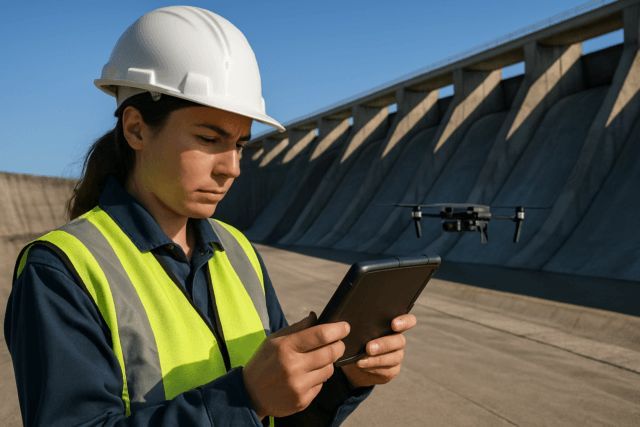

In critical moments where every second counts, the ability to rapidly locate missing persons or assess disaster zones can mean the difference between life and death. Traditional search and rescue (SAR) operations, while heroic, are often limited by human perception, endurance, and accessibility to challenging terrains. Enter the transformative force of Unmanned Aerial Systems (UAS), commonly known as drones, now supercharged with Artificial Intelligence (AI)-powered object detection. This convergence of aviation technology and advanced AI is fundamentally reshaping SAR, offering unprecedented efficiency, accuracy, and reach in the most demanding environments.
What is AI-Powered Object Detection?
At its core, AI-powered object detection is a computer vision technique that allows algorithms to identify and locate specific objects within images and video footage. Unlike conventional image processing, which relies on predefined rules, AI models, particularly those leveraging deep learning and neural networks, are “trained” on vast datasets to recognize patterns, shapes, colors, and even thermal signatures associated with targets like humans, vehicles, or specific distress signals.
This technology enables systems to distinguish objects from cluttered backgrounds, account for variations in size and orientation, and even process information from different sensor types simultaneously. When integrated with drones, these AI algorithms transform aerial footage from raw visual data into actionable intelligence, significantly enhancing situational awareness for SAR teams.
How AI Object Detection is Applied to Drone SAR Footage
The application of AI-powered object detection in drone SAR footage involves a sophisticated workflow that maximizes efficiency and effectiveness:
Automated Data Acquisition by Unmanned Aerial Systems (UAS)
Drones, equipped with high-resolution visual (RGB) cameras, thermal infrared (IR) sensors, and sometimes LiDAR, are deployed to collect vast amounts of data over designated search areas. These UAS can cover ground far more quickly than human teams and access areas too dangerous or inaccessible for ground personnel or even manned aircraft. Advanced navigation techniques, often AI-driven, enable drones to autonomously plan optimized search patterns, avoid obstacles, and maintain consistent altitudes for optimal data capture, even in complex terrain or GPS-denied environments.
Real-time and Post-mission Analysis
One of the most significant advantages is the ability of AI to analyze data either in real-time on the drone controller or process footage post-mission. Real-time AI detection represents a major leap, providing immediate alerts to operators when potential targets are identified, cutting down search times dramatically. Post-mission analysis can involve processing extensive datasets for a more thorough review, identifying subtle clues that might have been missed by human observers due to fatigue or cognitive overload.
Identifying Persons, Objects, and Distress Signals
AI algorithms are trained to detect a wide array of indicators. This includes:
- Human Shapes and Movement: Recognizing human forms, even when partially obscured by foliage or debris, or identifying patterns of movement that indicate distress.
- Heat Signatures: Thermal cameras, coupled with AI, can detect body heat signatures, making it possible to locate individuals in darkness, through smoke, or under dense tree cover where visual detection is impossible.
- Specific Colors or Objects: Training AI to look for specific colors (e.g., bright clothing, a red helmet) or objects (e.g., a backpack, a collapsed tent) that might be out of place in the natural environment.
- Gesture Recognition: Advanced AI can even be trained to recognize specific human gestures, such as arm-waving, as calls for help.
Benefits and Advantages of AI in Drone SAR
The integration of AI-powered object detection into drone SAR operations offers a multitude of compelling benefits:
Enhanced Search Efficiency and Speed
Drones can scan vast areas rapidly, and AI can process visual data much faster and more consistently than human eyes. This dramatically reduces the time required to cover a search area, increasing the chances of finding missing persons alive, especially when “every second counts”.
Increased Accuracy and Reduced Human Error
AI eliminates human limitations such as fatigue, perception errors, and the cognitive strain of continuously monitoring video feeds. The system scans the entire screen continuously, highlighting potential targets for human verification, thereby improving detection accuracy and reducing missed details.
Operation in Challenging Environments
Drones can operate in conditions too risky or difficult for human rescuers or manned aircraft, such as dense forests, rugged mountains, disaster zones, or during night operations and inclement weather. Thermal imaging, enhanced by AI, is particularly effective in low-visibility scenarios.
Data-Driven Decision Support
AI processes large volumes of data swiftly and efficiently, providing SAR teams with valuable insights and highlighting areas of interest. This supports informed decision-making regarding resource allocation, search pattern adjustments, and coordination with ground teams, making missions more responsive and successful.
Cost-Effectiveness and Safety
Deploying drones is often significantly more cost-effective than using helicopters, and it removes human rescuers from immediate danger in hazardous environments. This not only saves resources but also prioritizes the safety of SAR personnel.
Challenges and Limitations
Despite its immense potential, the widespread adoption of AI-powered object detection in drone SAR footage faces several challenges:
Data Processing and Computational Demands
AI drones generate vast amounts of data, requiring significant processing power, often in real-time. While edge computing solutions are emerging, limited onboard processing capabilities and potential latency in data transfer to cloud servers can hinder real-time decision-making, particularly in remote areas with poor internet connectivity.
Sensor Limitations and Environmental Factors
Dense vegetation, motion blur from fast-moving drones, low light, and adverse weather conditions (fog, heavy rain, snow) can still impede sensor performance and AI detection accuracy. Thermal imaging may also struggle if a missing person is wearing heavily insulated clothing.
False Positives and Training Data Quality
AI models require extensive, realistic, and well-annotated training data to reduce false positives and improve reliability. Poor quality or inconsistent labeling of small objects in drone datasets can distort the model’s feature hierarchy, affecting performance.
Regulatory and Ethical Considerations
The increasing autonomy of drones and the collection of potentially sensitive data raise regulatory concerns and ethical questions regarding privacy, data security, and the appropriate level of human oversight.
Integration with Existing SAR Workflows
Integrating this advanced technology seamlessly into established SAR procedures and ensuring effective collaboration between human operators and AI systems remains an ongoing challenge. Teams risk becoming overly reliant on AI, potentially missing details a human might notice, underscoring the need for a layered approach that combines human expertise with AI tools.
The Future of AI in Drone Search and Rescue
The trajectory for AI-powered object detection in drone SAR is one of continuous advancement and broader integration. Future developments are likely to include:
Enhanced Autonomy and Swarm Intelligence
As AI algorithms become more sophisticated, drones will exhibit greater autonomy in navigation, obstacle avoidance, and dynamic mission planning. The deployment of drone swarms, where multiple drones collaborate and dynamically allocate tasks, will enable even faster coverage of vast areas and more complex search patterns.
Multi-Modal Sensor Fusion
Further improvements in AI-driven sensor fusion will allow drones to integrate data from an even wider array of sensors (visual, thermal, LiDAR, radar, acoustic) to create a more robust and reliable understanding of the environment, particularly in GPS-denied or challenging environments. This could include AI analyzing sound frequencies to detect human screams or distress signals.
Real-time Onboard Processing and Edge AI
Advances in edge computing will allow more powerful AI processing directly on the drone, reducing reliance on external connectivity and enabling faster, more autonomous decision-making in the field.
Improved Human-AI Teaming
The focus will shift towards intuitive human-machine interfaces (HMIs) that allow SAR operators to easily interpret AI-generated insights, provide feedback for model improvement, and maintain critical oversight, ensuring that AI acts as a powerful assistant rather than a replacement for human judgment.
Specialized AI Models
AI models will become increasingly specialized, trained for specific environments (e.g., dense forests, urban rubble, maritime searches) and for detecting nuanced indicators of distress, including micro-gestures or specific injury patterns.
Conclusion
AI-powered object detection in drone SAR footage represents a monumental leap forward in aviation technology and its application in saving lives. By augmenting human capabilities, overcoming environmental limitations, and dramatically speeding up search processes, this technology is already transforming how search and rescue missions are conducted worldwide. While challenges remain, continuous innovation in AI algorithms, sensor technology, and drone autonomy promises an even more impactful future, making AI-powered UAS an indispensable tool for emergency responders and a beacon of hope for those in distress.