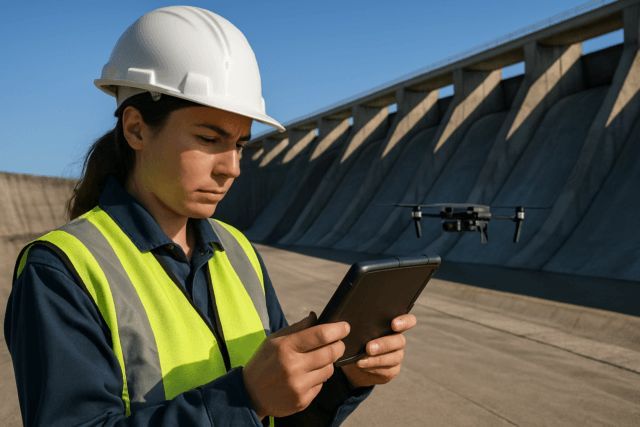

Search and Rescue (SAR) operations in remote or challenging environments present unique logistical and communication hurdles. Unmanned Aerial Systems (UAS), or drones, have become indispensable tools, offering a bird’s-eye view, rapid deployment, and access to treacherous terrain. However, the effectiveness of these drone operations hinges critically on robust and reliable communication systems, especially in areas where traditional infrastructure is non-existent or compromised.
The Critical Role of Communication in Remote SAR Drone Operations
In the unpredictable and often perilous landscape of remote SAR, seamless communication is the backbone of successful missions. Drones equipped with advanced sensors can locate missing persons, assess disaster zones, and deliver essential supplies. Yet, without a steadfast communication link to ground control, their potential remains largely untapped. This link transmits vital telemetry, command and control (C2) signals, and critical real-time video or sensor data, enabling informed decision-making and coordinated efforts among rescue teams. The ability to maintain connectivity in signal-degraded zones has historically been a major challenge for UAVs in SAR contexts.
Understanding Communication Challenges in Remote SAR Environments
Remote SAR environments present a formidable array of challenges to drone communication systems:
Line-of-Sight (LOS) Limitations
Many conventional drone communication systems rely on a direct line of sight between the drone and the ground control station. In mountainous regions, dense forests, or urban rubble, terrain features and obstacles can easily obstruct this line, leading to signal loss and control issues. For Beyond Visual Line of Sight (BVLOS) operations, where drones fly beyond the operator’s visual range, consistent connectivity is crucial to mitigate risks associated with communication failures.
Environmental Interference
Adverse weather conditions, such as heavy rain, snow, or electromagnetic interference from various sources, can severely degrade signal quality and range. This is particularly challenging in disaster areas where infrastructure may be damaged.
Power Constraints
Drones operate on finite battery power, and communication subsystems can consume a significant portion—between 10-40%—of available energy. This necessitates efficient power management to maximize flight time and operational capabilities, as transmission power requirements increase quadratically with distance and interference.
Key Communication Technologies for Remote SAR Drones
To overcome these challenges, a multifaceted approach leveraging various communication technologies is essential for remote SAR operations:
Satellite Communication (SatCom)
SatCom provides expansive coverage, making it ideal for remote areas where terrestrial networks are unavailable. It enables Beyond Visual Line of Sight (BVLOS) capabilities by relaying signals via satellites, offering reliable command and control (C2) and data transmission links. Low Earth Orbit (LEO) satellites, like those in the Iridium constellation, offer lower latency and global coverage, making them suitable for real-time command and basic telemetry, or as a failover in case of radio signal drops. While high-speed data transmission over satellite can be expensive and experience higher latency, it ensures a connection in otherwise inaccessible areas. Encrypted satellite communication enables remote operations and flexible mission planning without ground-based line-of-sight control.
Mesh Networking
Mesh networks allow drones to communicate directly with each other and with ground units, forming a self-organizing and self-healing network. This decentralized architecture enhances reliability and resilience, as the network remains operational even if individual nodes or drones fail. Drones can act as mobile access points, extending coverage over large and remote areas and facilitating seamless connectivity in challenging conditions, making them indispensable in disaster response and SAR operations. Mesh networking protocols have demonstrated strong communication resilience, maintaining over 85% communication integrity even in signal-degraded environments.
Long-Range Radio Frequency (RF) Systems
Dedicated long-range RF systems provide reliable direct communication links. These systems often operate on various frequencies (e.g., 900 MHz, 1.4 GHz, 2.4 GHz, 5.8 GHz) and are designed for high transmission power and robust anti-interference performance, crucial for BVLOS and industrial operations. Antenna design and power output are critical factors influencing the range and signal strength of these systems. MIMO (Multiple-Input Multiple-Output) wireless technology can further extend datalink capabilities by using multiple antennas to improve reliability and capacity.
Cellular (4G/5G) with Boosters/Repeaters
While cellular networks are primarily optimized for urban areas and may have patchy coverage in remote regions, they can still be a valuable asset where available. Drones can utilize cellular connectivity (4G/5G) for BVLOS operations, especially when augmented with boosters or repeaters to extend range and improve signal strength. However, relying solely on a singular cellular network for critical operations is risky due to potential network congestion, coverage gaps, and environmental conditions. The integration of 5G components with AI modules has been explored to enhance UAV-based SAR missions, offering reliable bandwidth and improved data transfer rates.
Best Practices for Robust Drone Communication in Remote SAR
Implementing several best practices can significantly enhance the reliability and effectiveness of drone communication in remote SAR:
Redundancy and Diversity
Employing redundant communication systems is paramount. This involves having multiple, often dissimilar, communication channels (e.g., primary RF link, secondary SatCom, tertiary cellular) that can automatically or manually switch over if the primary system fails. Hardware redundancy, such as duplicating sensors and flight controllers, and power redundancy with multiple battery systems, also contribute to operational integrity.
Pre-Mission Planning and Site Assessment
Thorough pre-mission planning is crucial. This includes evaluating weather conditions, understanding the terrain, identifying potential hazards, and mapping out areas with known communication blackouts or weak signal strength. Connectivity-aware mission planning helps allocate resources efficiently to search and communication tasks, and pre-planned tower handoff sequences can ensure continuous command and control in BVLOS flights. Advanced software can facilitate mission planning, real-time data analysis, and communication coordination.
Training and Skill Development
Drone operators in SAR missions must be adequately trained and certified, possessing not only technical drone operation skills but also a deep understanding of SAR strategies and communication procedures. Regular training exercises are essential to keep skills sharp and adapt to new technologies and challenging conditions. This training should cover effective communication protocols and crew resource management.
Power Management Strategies
Efficient power management is vital to maximize flight time and ensure critical communication links remain active. This includes using power-efficient flight modes, real-time power consumption monitoring, and potentially energy regeneration techniques. Hybrid power systems, combining batteries with solar panels or fuel cells, can optimize power for communication, extending operational durations. Smart batteries with communication protocols like CAN Bus can provide real-time data on battery health and performance.
Antenna Optimization
The selection, placement, and orientation of antennas significantly impact communication range and signal quality. High-gain antennas can enhance range and signal strength. Systems with Multiple-Input Multiple-Output (MIMO) technology leverage multiple antennas at both the transmitter and receiver to improve reliability and capacity.
Data Link Security
In SAR operations, the data transmitted can be sensitive. Secure data links with advanced encryption (e.g., AES-256) and authentication protocols are necessary to protect against unauthorized access and interference, ensuring the integrity of command, control, and intelligence, surveillance, and reconnaissance (ISR) data.
Future Trends in Drone Communication for Remote SAR
The field of drone communication for SAR is continuously evolving:
AI-Enhanced Communications
Artificial Intelligence (AI) is set to revolutionize drone communication by enabling autonomous decision-making, interpreting complex data, and maintaining secure and reliable links in real-time environments. AI algorithms can prioritize mission-critical information, optimize signal strength, and dynamically select the best communication paths, avoiding interference and dead zones. AI-powered edge computing allows drones to process data locally, reducing latency and optimizing bandwidth usage.
Swarm Robotics and Autonomous Mesh Networks
Drone swarms, multiple drones working collaboratively, offer enhanced adaptability, resilience, and efficiency. When combined with autonomous mesh networking, swarms can maintain over 85% communication integrity, even in degraded environments, by each drone acting as an access point and relaying messages. This distributed intelligence and communication resilience overcome limitations of single UAV systems, allowing for faster and more comprehensive search coverage.
Advanced LEO Satellite Constellations
The ongoing deployment of advanced LEO satellite constellations is improving global coverage, reducing latency, and increasing data transfer rates for drone operations, making SatCom an even more viable and robust option for remote SAR.
Conclusion
Robust communication systems are the bedrock of effective drone operations in remote search and rescue. By understanding the unique challenges of these environments and strategically deploying technologies like satellite communication, mesh networks, and long-range RF systems, SAR teams can significantly enhance their capabilities. Adhering to best practices in redundancy, planning, training, power management, and security, while embracing future innovations in AI and swarm robotics, will ensure that drones continue to transform and save lives in the most challenging conditions.