
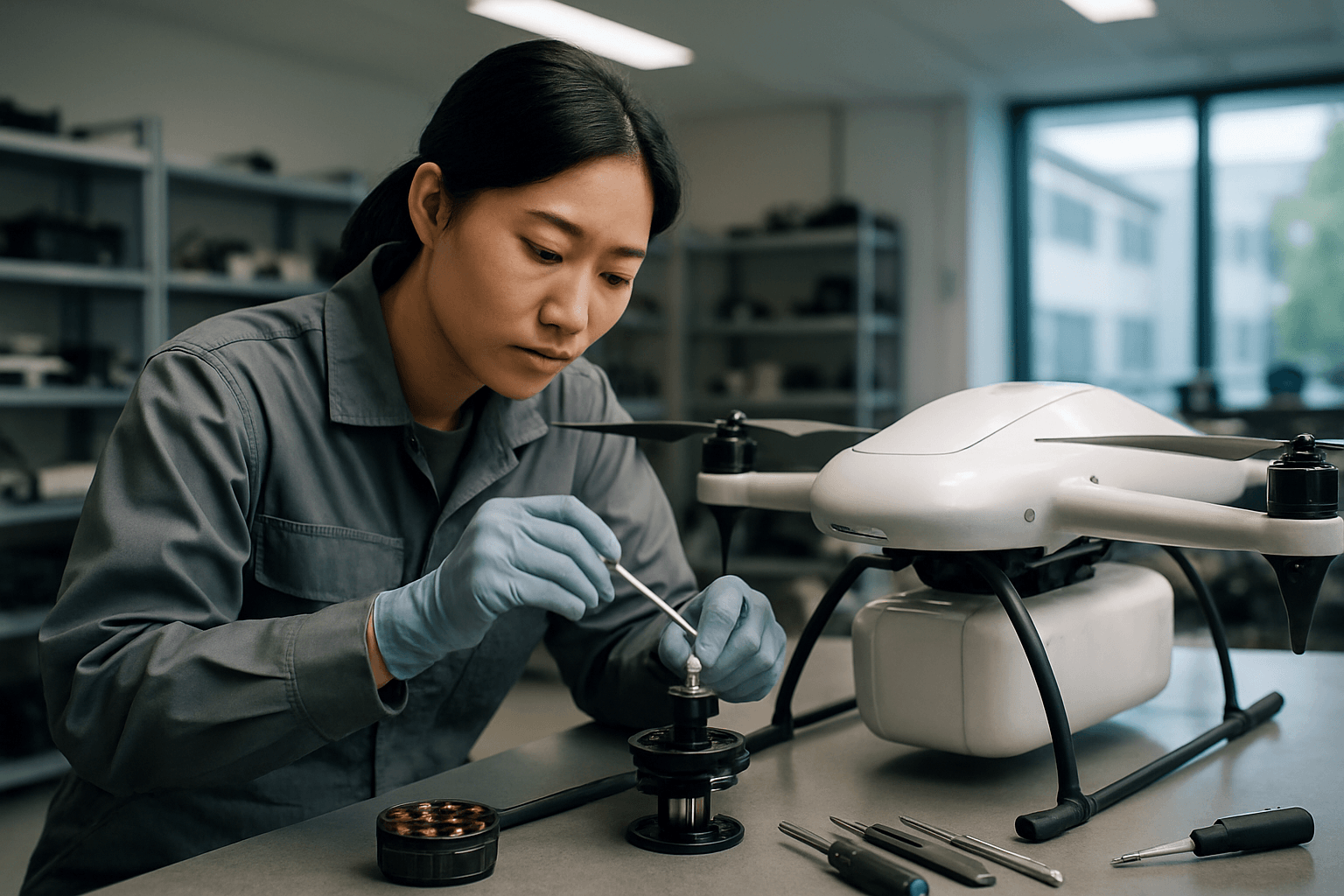
In the rapidly expanding world of drone delivery services, the reliability and efficiency of unmanned aerial vehicles (UAVs) are paramount. At the heart of every delivery drone lies its propulsion system, a complex array of components responsible for generating lift, thrust, and precise maneuverability. Ensuring the consistent, safe operation of these systems hinges on a rigorous and proactive maintenance regimen. Neglecting these critical checks can lead to costly downtime, operational failures, and significant safety risks.
Understanding the Core Components of Drone Propulsion
A delivery drone‘s propulsion system typically comprises several interconnected elements, each requiring specific attention to maintain peak performance:
- Motors: These convert electrical energy into mechanical energy, spinning the propellers. Brushless motors are common in delivery drones due to their efficiency and power.
- Electronic Speed Controllers (ESCs): Acting as the intermediary between the flight controller and the motors, ESCs regulate the power supplied to each motor, dictating its speed and direction.
- Propellers: These blades convert the motor’s rotational motion into the thrust needed for flight. They are directly responsible for lift and directional control.
- Batteries: Often lithium-ion (Li-ion) or lithium-polymer (LiPo), these power the entire drone, including the propulsion system, and are a critical determinant of flight duration and payload capacity.
Understanding how these components interact is key to effective troubleshooting and maintenance.
Detailed Maintenance Requirements for Key Propulsion Components
Maintaining each part of the propulsion system involves specific inspections, cleaning protocols, and replacement schedules.
Drone Motor Maintenance
Motors are subject to wear and tear from continuous operation and environmental factors. Regular maintenance is crucial to extend their lifespan and ensure reliable performance.
- Cleaning: Dust, dirt, and debris can accumulate in motors, causing friction, wear, and reduced efficiency. Motors should be cleaned periodically using compressed air or a soft brush to remove any foreign objects. Avoid harsh chemicals.
- Inspection for Damage: Check for any physical damage, deformation, or objects attached to the motor. Listen for unusual noises or vibrations, which could indicate issues with motor bearings.
- Lubrication: Proper lubrication of motor bearings can reduce friction and wear. Apply light lubricant at regular intervals, being careful not to over-lubricate, as excess grease can attract more dirt. Some sealed bearings, however, do not require oiling.
- Temperature Monitoring: Overheating is a common cause of motor failure. Monitor motor temperatures during flight, especially in high-temperature environments, to prevent overheating.
- Bearing Health: Bearings are critical for smooth rotation. Dust, moisture, or environmental factors can cause friction, leading to worn bearings, reduced efficiency, and potential motor failure. Replace worn bearings as necessary.
Electronic Speed Controller (ESC) Maintenance
ESCs are vital for motor control and are susceptible to issues from constant strain and power fluctuations.
- Visual Inspection: Regularly inspect ESCs for any signs of overheating, physical damage, or loose connections. Burnt components or melted solder can indicate a problem.
- Wiring Integrity: Check for loose or frayed wiring, as these can disrupt the motor’s commutation process, leading to irregular stuttering or failure to start. Ensure all wires are soldered correctly and that no wires or joints are shorting.
- Firmware Updates: Keep ESC firmware updated to ensure optimal performance and compatibility with the flight controller. Corrupted firmware can cause an ESC not to respond.
- Calibration: ESCs need to be calibrated to ensure consistent performance across all motors. Follow manufacturer-specific procedures, often involving setting the throttle range.
- Troubleshooting: If a motor stutters or fails to spin, test it with another ESC channel or try reflashing the firmware. Check for bridged motor pads or screws that are too long and touching motor windings.
Propeller Maintenance
Propellers are frequently exposed to physical stress and environmental elements, making them a high-wear component.
- Pre-Flight and Post-Flight Inspection: Visually examine each propeller for cracks, chips, bends, deformities, or missing pieces before and after every flight. Even minor damage can compromise flight stability and safety.
- Cleaning: Clean propellers after every flight to remove dirt, dust, and debris. A soft brush and a damp microfiber cloth are often sufficient.
- Balance Check: Propeller balance is crucial for stable flight. An unbalanced propeller can cause vibrations and extra stress on motors. Manually spin each propeller to ensure it moves freely without resistance or wobbling.
- Tightness Check: Gently tug on each propeller to check for looseness and ensure they are properly tightened. Loose screws can lead to vibrations or detachment during flight.
- Replacement Schedule: Propellers should generally be replaced every 50 hours of flight time or every 200 flights. For professional use, some recommend replacement every 10 hours. Always replace them immediately after any crash or if damage is noted.
Battery Maintenance
Batteries are the power source and their health directly impacts drone performance and safety. Lithium-ion batteries commonly used in drones degrade over time due to charge/discharge cycles and temperature.
- Charge Management:
- Avoid overcharging and deep discharging. Smart chargers can automatically shut off when full.
- For storage longer than 10 days, discharge batteries to 40-65% (typically indicated by the third light flashing). Storing at full or low power for extended periods can cause permanent damage.
- Allow batteries to cool down between uses and before recharging.
- Storage Conditions: Store batteries in a cool, dry, and non-magnetic place, ideally at room temperature (22-28°C or 77°F) and away from flammable objects or liquids.
- Regular Cycling: Perform a full charge and discharge cycle at least once every three months to maintain battery activity and extend its lifetime.
- Physical Inspection: Check for any physical damage, such as swelling, bulging, leakage, or damage to the casing or terminals. Discontinue use immediately if any abnormalities are detected.
- Firmware Updates: Keep drone software and battery firmware up to date, as manufacturers often release updates that enhance battery management and efficiency.
- Avoid Extreme Temperatures: Both high and low temperatures adversely affect battery performance and lifespan. Operate and store batteries within recommended temperature ranges.
Advanced Maintenance Strategies: Predictive Maintenance
Traditional maintenance often reacts to failures. Predictive Maintenance (PdM) offers a proactive approach by using data analytics, machine learning, and sensor data to anticipate when maintenance is required before a failure occurs.
- Data Collection: Sensors on drone components (motors, batteries, ESCs) continuously collect data on parameters like temperature, vibration, pressure, and battery levels.
- Data Analysis: Machine learning algorithms analyze this real-time and historical data to detect patterns or anomalies indicating potential equipment failure.
- Remaining Useful Life (RUL) Prediction: PdM systems can predict the RUL of components, enabling timely repairs and preventing unexpected failures. This helps schedule maintenance efficiently, reducing downtime and costs. For example, neural networks can be used to model degradation and predict RUL for UAV propulsion systems.
Regulatory Compliance and Safety Protocols
Maintenance is not just about extending drone life; it’s also about ensuring compliance with aviation regulations and maintaining safety standards.
- Record-Keeping: For commercial drone operations, record-keeping of flight logs, maintenance schedules, and hours flown is mandatory.
- Pre-Flight Checklists: Adhering to comprehensive pre-flight checklists helps ensure that the drone is in good condition before flight.
- Certified Technicians: In many commercial contexts, maintenance may need to be performed or overseen by certified technicians.
- Manufacturer Guidelines: Always consult the drone’s user manual for specific maintenance schedules and instructions tailored to the model.
- Overall Safety: Robust maintenance programs contribute significantly to the overall safety and reliability of drone delivery services, minimizing the risk of accidents and operational disruptions.
By adopting a comprehensive and proactive maintenance strategy for their propulsion systems, drone delivery operators can ensure greater reliability, extended operational lifespans, and ultimately, a more efficient and safer delivery network.