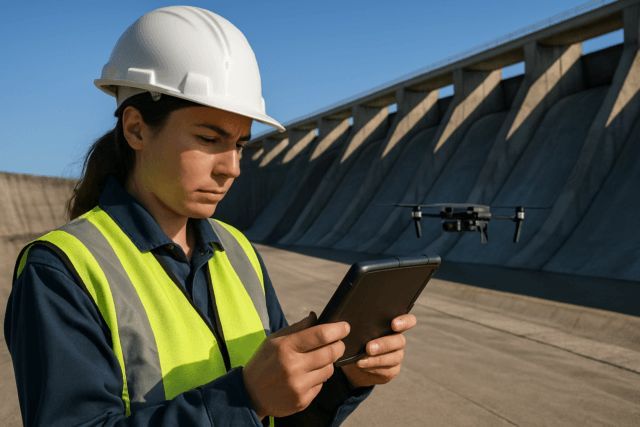

The promise of drone delivery—swift, efficient, and often contactless—is rapidly transforming logistics and last-mile services. However, realizing this vision demands meticulous adherence to complex airspace management regulations designed to ensure safety, security, and the harmonious integration of unmanned aerial vehicles (UAVs) with traditional aviation. As drones increasingly populate lower airspace, delivery services are deploying a sophisticated array of technologies and operational protocols to comply with evolving global standards.
The Evolving Regulatory Landscape for Drone Delivery
Drone delivery services operate within a dynamic regulatory environment, primarily overseen by national and international aviation authorities. These bodies, such as the Federal Aviation Administration (FAA) in the United States and the European Union Aviation Safety Agency (EASA), establish the fundamental rules governing drone operations, particularly for commercial purposes.
FAA Regulations in the United States
In the U.S., commercial drone delivery typically falls under a combination of FAA regulations, with Part 107 forming the backbone for many operations. Key requirements include:
- Remote Pilot Certificate: Operators must possess a Part 107 remote pilot certificate.
- Visual Line of Sight (VLOS): Historically, Part 107 operations generally required drones to remain within the pilot’s visual line of sight. However, for scaled drone delivery, Beyond Visual Line of Sight (BVLOS) operations are crucial. Routine approval processes for BVLOS are expanding, often requiring approved detect-and-avoid systems and airspace authorization.
- Altitude and Speed Limits: Drones must generally stay below 400 feet above ground level (AGL) and not exceed 87 knots (100 mph), unless flying within a 400-foot radius of a structure and not exceeding 400 feet above that structure’s uppermost limit.
- Operations Over People and Moving Vehicles: Part 107 generally prohibits flights over non-participating persons or moving vehicles without specific waivers.
- Part 135 Certification: For drone delivery services carrying the property of another for compensation beyond visual line of sight (BVLOS), a more stringent Part 135 Air Carrier and Operator Certificate is the regulatory path. This certification involves a comprehensive review of documentation, manuals, and management personnel, including hazardous materials training if applicable.
EASA Framework in Europe
The European Union Aviation Safety Agency (EASA) has established a comprehensive regulatory framework for drone services, including parcel delivery, categorizing operations by risk. EASA’s rules apply across EU Member States, ensuring a harmonized approach.
- Specific Category Operations: Drone delivery in urban environments is often categorized as “medium risk” in the specific category, requiring operational authorization.
- Geographical Zones: EASA Member States are required to make information on geographical zones for “geo-awareness” available in a digital, harmonized format.
- “Open” Category Restrictions: For less complex operations, the “Open” category has strict limitations, including not flying over uninvolved people and maintaining specific horizontal distances from them.
UAS Traffic Management (UTM): The Digital Highway for Drones
Central to ensuring compliance and enabling the scalability of drone delivery is the development and implementation of Unmanned Aircraft System Traffic Management (UTM) systems. UTM is a collaborative, digital ecosystem designed to safely manage drone operations at low altitudes, complementing traditional air traffic control services.
Key Functions of UTM
- Flight Planning and Authorization: UTM systems facilitate pre-flight planning and real-time airspace authorization, allowing operators to submit flight plans and receive dynamic clearance.
- Collision Avoidance: By coordinating drone operations, UTM helps prevent collisions between drones and with manned aircraft, ensuring safe proximity.
- Dynamic Geofencing: UTM systems can enforce dynamic geofencing, preventing drones from entering restricted or unauthorized airspace in real-time.
- Data Sharing: Essential data, such as real-time drone location and intent, is shared between drone operators, UTM service providers, and aviation authorities like the FAA to maintain situational awareness.
- Scalability and Fairness: UTM is crucial for allowing more drones to operate simultaneously without conflict, providing a structured way for all operators to share airspace fairly.
The FAA envisions UTM as a cooperative ecosystem where the FAA provides real-time constraints, and UAS operators manage their flights safely within those limits without direct air traffic control.
Technological Pillars of Compliance
Beyond regulatory frameworks and UTM, several core technologies are instrumental in enabling drone delivery services to comply with airspace management regulations.
Remote Identification (Remote ID)
Remote ID acts as a “digital license plate” for drones, broadcasting critical identification and location information during flight. This information can be received by other parties, including the FAA, law enforcement, and other aircraft, enhancing security and safety.
- Broadcast Data: Remote ID broadcasts include the drone’s unique identifier, the control station’s (pilot’s) location or the drone’s takeoff point, the drone’s current location, altitude, velocity, and a timestamp.
- Mandatory Compliance: In both the U.S. and EU, most drones weighing over 0.55 pounds (250 grams) are required to be equipped with Remote ID capabilities. The FAA has mandated that all commercial drones broadcast Remote ID data starting in 2025.
Geofencing
Geofencing uses GPS technology to create virtual boundaries, preventing drones from entering or exiting specific geographic areas. For drone delivery, this is vital for:
- Restricted Airspace: Automatically deterring drones from flying into sensitive zones like airports, military installations, or temporary flight restrictions.
- Automated Route Adherence: Ensuring drones stay within pre-approved flight corridors, especially in urban environments.
- Privacy Protection: Geofencing can also play a role in preventing drones from entering private property without consent, addressing privacy concerns.
Robust Communication Protocols
Reliable and low-latency communication is paramount for safe and compliant drone delivery operations. Drones rely on robust communication protocols to:
- Maintain Command and Control (C2): Ensuring the ground control station can send commands and receive telemetry data from the drone in real-time.
- Share Positional Data: Transmitting precise location, altitude, and velocity data to UTM systems and for Remote ID broadcasts.
- Facilitate Detect-and-Avoid: Enabling drones to sense and avoid other aircraft and obstacles, a critical component for BVLOS operations.
- Network Technologies: Drone communication often utilizes a combination of radio frequencies, Wi-Fi, and cellular networks (including 5G for its ultra-reliable low-latency capabilities). Protocols like MQTT (Message Queuing Telemetry Transport) and UDP-based protocols are optimized for lightweight, low-latency data exchange in drone systems.
The Path Forward: Integration and Harmonization
While significant progress has been made, integrating drone delivery services into existing airspace management systems presents ongoing challenges. Regulatory complexities, the need for seamless technology integration, and managing public perception regarding noise and privacy are crucial considerations.
Aviation authorities are actively working with industry stakeholders to refine regulations, develop performance-based standards, and promote the harmonization of rules across jurisdictions. This collaborative approach, coupled with advancements in UTM, Remote ID, and communication technologies, is paving the way for a future where drone delivery is a safe, routine, and compliant aspect of modern logistics.