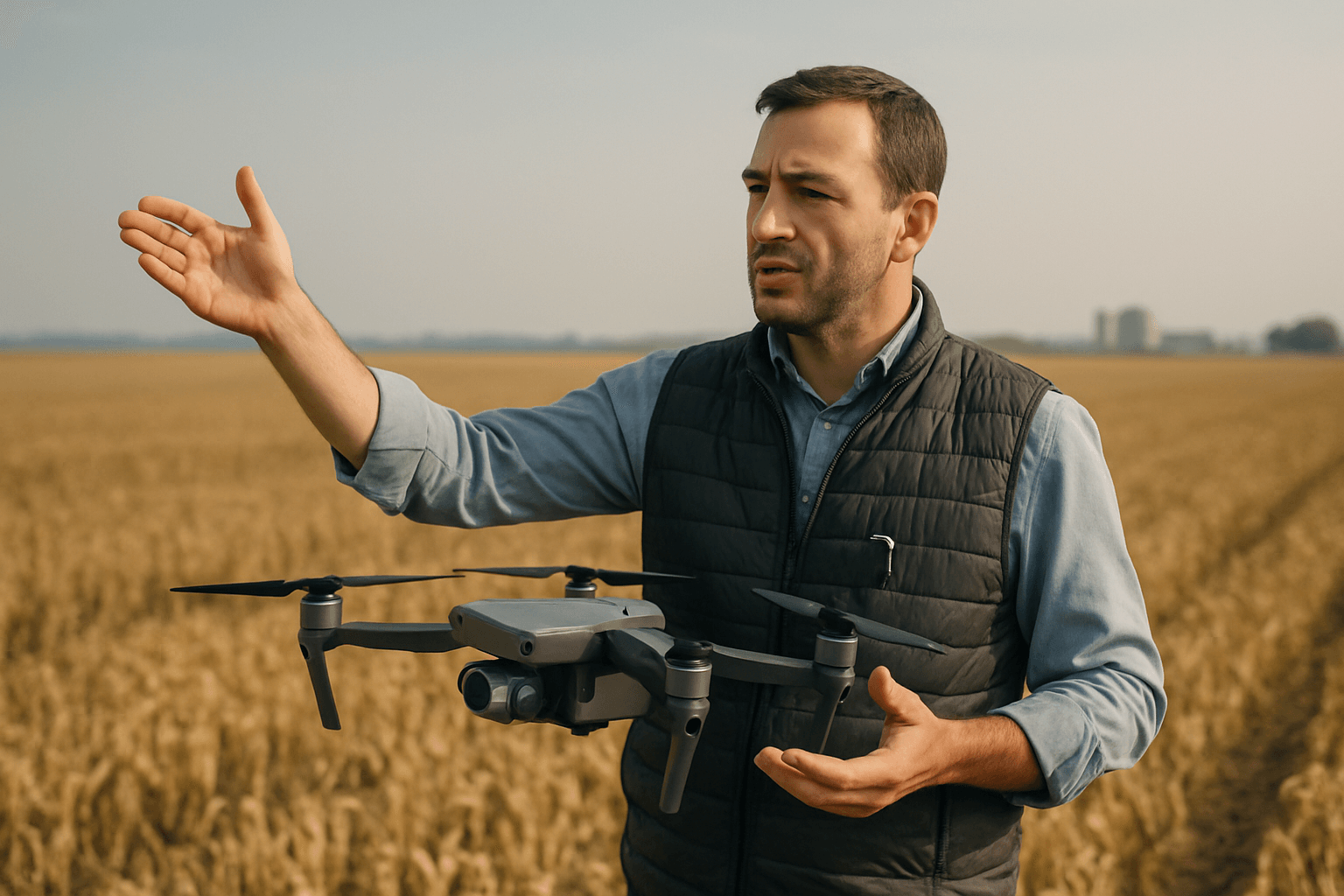
The integration of drone technology into agriculture is revolutionizing farming practices, offering unprecedented precision in tasks like crop monitoring, spraying, and data collection. However, unlocking the full potential of these aerial tools requires a thorough understanding of the complex legal landscape governing their operation. From pilot certification to specific exemptions for chemical application, agricultural drone operators must navigate a patchwork of regulations that vary by region.
Understanding the Regulatory Framework for Agricultural Drones
Agricultural drones, often referred to as Unmanned Aerial Systems (UAS) or Remotely Piloted Aircraft Systems (RPAS), are subject to aviation laws because they operate within national airspace. These regulations aim to ensure safety, prevent conflicts with other aircraft, protect privacy, and manage the environmental impact of aerial applications. The specific requirements can differ significantly between countries and even at state or local levels within a single nation.
Key Regulatory Categories
Most jurisdictions categorize drone operations based on factors such as drone weight, the purpose of the flight (recreational vs. commercial), and the nature of the operation (e.g., spraying chemicals, collecting data).
United States Regulations: A Detailed Look
In the United States, the Federal Aviation Administration (FAA) is the primary regulatory body for drone operations. Farmers and agricultural service providers utilizing drones for commercial purposes must adhere to several key FAA regulations.
FAA Part 107 Remote Pilot Certificate
The foundation for all commercial drone operations in the U.S. is the FAA Part 107 Remote Pilot Certificate. This certification demonstrates that the operator possesses a strong understanding of FAA regulations, operating requirements, and safety protocols for drone flights. To obtain this certificate, individuals must:
- Be at least 16 years old.
- Be able to read, speak, write, and understand English.
- Be in sound physical and mental condition.
- Pass an aeronautical knowledge test at an FAA-approved facility, scoring at least 70%. The test costs approximately $175.
This certificate needs to be renewed every 24 months.
Drone Registration and Remote ID
All drones weighing 0.55 pounds (250 grams) or more, used for commercial purposes, must be registered with the FAA. Each registered drone receives a unique identification number (N-number) that must be visibly displayed on the aircraft. This registration is typically valid for three years. Remote ID capabilities are also becoming increasingly important for airspace awareness and security.
FAA Part 137: Agricultural Aircraft Operator Certificate (AAOC)
For agricultural operations involving the dispensing of chemicals or other substances (e.g., pesticides, fertilizers, seeds), an FAA Part 137 Agricultural Aircraft Operator Certificate (AAOC) is mandatory. This specialized license governs the use of aircraft, including drones, for aerial application. Operators must submit an application to the FAA detailing their operations, the substances they intend to apply, and their operational area. Compliance with stringent safety protocols, including proper handling and storage of materials and environmental contamination prevention, is also required. The FAA considers dispensing economic poisons or substances for plant nourishment, soil treatment, plant propagation, or pest control as agricultural operations under Part 137.
Exemption for Heavy Drones (Section 44807)
Many agricultural spraying drones, especially when fully loaded with chemicals, exceed the 55-pound weight limit typically associated with Part 107 operations. For drones weighing 55 pounds or more, operators must file for a Section 44807 exemption from the FAA. This exemption allows for the legal operation of heavier drones for agricultural purposes, requiring detailed safety assessments, operational procedures, and maintenance plans.
FAA Medical Certificate
For day operations involving a single heavy agricultural drone (55 pounds or more) where the Remote Pilot In Command (RPIC) has continuous visual line of sight and no visual observer is used, a third-class medical certificate is required. However, this requirement may be waived if the UAS is operated in a highly automated manner, with minimal manual control for launch, recovery, or abnormal situations.
State and Local Applicator Licenses
Beyond federal regulations, state and local authorities often have their own requirements for chemical applicator licenses. These typically involve demonstrating knowledge and training in safe and effective pesticide application, passing exams, and potentially completing hands-on training or apprenticeships.
Operational Limitations and Safety Guidelines
Regardless of the specific certifications, all agricultural drone operators in the U.S. must adhere to general flight rules, including:
- Visual Line of Sight (VLOS): The drone must always remain within the visual line of sight of the remote pilot or a visual observer.
- Altitude Limits: Operations are generally limited to 400 feet above ground level (AGL), unless special authorization is obtained. Spray drones often operate between 10 and 50 feet above the crop canopy.
- Airspace: Most agricultural spraying occurs in Class G (uncontrolled) airspace, which does not require prior FAA authorization. Operations in controlled airspace (Classes B, C, D, or E) require FAA approval.
- Night Operations: Night operations are covered under Part 107.
- Hazardous Materials: Drones are generally prohibited from carrying hazardous materials unless specific exemptions are obtained.
- Right of Way: Drones must yield the right of way to other aircraft.
- Proximity to People: Operations over people not directly involved in the flight or not under a covered structure/vehicle are restricted.
European Union Regulations: A Harmonized Approach
The European Union, through the European Aviation Safety Agency (EASA), has implemented a harmonized framework for drone operations across its member states and other associated countries (e.g., Iceland, Norway). These regulations employ a risk-based approach, categorizing operations into “Open,” “Specific,” and “Certified” categories.
Operator Registration and Pilot Competency
All operators of drones above 250 grams must register with their country’s National Aviation Authority (NAA). This registration is recognized across all EU member states. Depending on the drone’s weight and the nature of the operation, remote pilots need to obtain proof of examination (e.g., A1/A3, A2 qualifications) or a certificate of remote pilot competency. For more complex agricultural operations, such as spraying, advanced training and certifications are often required.
Specific Category for Agricultural Spraying
Agricultural spraying operations in the EU typically fall under the “Specific Category” due to the drones often exceeding 25 kg in weight or involving the dispensing of materials. This requires either an Operational Authorization (OA) from the NAA or a Light UAS Operator Certificate (LUC). The OA is valid for a limited time and number of operations, while a LUC is indefinite and allows the operator to self-authorize operations under a safety management system. EASA has published Pre-Defined Risk Assessments (PDRAs) to assist with the authorization process for agricultural operations.
Payload Capacity and Chemical Regulations
EU regulations permit chemical tanks up to 25 kg (55 lbs), enhancing the efficiency of fertilizer and pesticide application. Drones carrying chemicals must also comply with EU pesticide regulations (EC 1107/2009) and national environmental rules, alongside specific operator training requirements. Each member state may have additional national regulations regarding aerial spraying, with some, like Germany, having very strict limitations on where and how drones can spray.
Operational Limitations in the EU
General operational limitations in the EU’s “Open Category” include a maximum altitude of 120 meters above ground level (AGL) and maintaining visual line of sight (VLOS). For Class 3 drones (under 25 kg), operations are limited to areas where no uninvolved persons are present, with a mandatory 150-meter minimum horizontal distance from residential, commercial, and industrial areas.
Canadian Regulations: Balancing Innovation and Safety
In Canada, Transport Canada oversees aviation safety and security, while Health Canada is responsible for pesticide regulations.
Drone Registration and Pilot Certificate
Drones weighing over 250 grams must be registered with Transport Canada, and the registration number must be displayed on the drone. Pilots must obtain a drone pilot certificate, either for Basic Operations or Advanced Operations, depending on the drone’s weight and planned use. For drones in the 25-150 kg range, new regulations are expected to simplify the process, requiring an advanced pilot certificate instead of a Special Operations Flight Certificate (SOFC) for rural operations, effective Fall 2025.
Pesticide Application
Currently, the application of registered agricultural pesticides by drone is generally illegal in Canada, as most pesticides are not approved for this method. Health Canada distinguishes between pesticides approved for traditional aircraft and those for drone application. Only products explicitly labeled with “Remotely Piloted Aircraft System” or “RPAS” are allowed for drone use under the Pest Control Products Act. While some fertilizers and seeds can be applied legally, regulatory changes from Health Canada are still awaited for broader pesticide application.
Operational Rules
Canadian regulations also emphasize maintaining a visual line of sight and prohibit operating more than one spray drone simultaneously without FAA exemptions. Drone operators must be aware of restricted airspaces and adhere to best practices for chemical spraying, including considering wind speed, weather conditions, and buffer zones.
Australian Regulations: CASA Oversight
In Australia, the Civil Aviation Safety Authority (CASA) regulates drone use.
Remote Pilot License (RePL) and Remote Operator’s Certificate (ReOC)
For commercial agricultural operations, especially with drones over 2 kg, a Remote Pilot License (RePL) issued by CASA is generally required. This involves theory and practical training. If operating drones as part of a business or organization, a Remote Operator’s Certificate (ReOC) from CASA is also necessary. However, for drones under 25 kg used on one’s own land, operators might qualify under the “excluded category,” which simplifies requirements but still necessitates notifying CASA.
Drone Registration
Mandatory drone registration applies to all drones weighing over 250 grams in Australia. Any drone used for business purposes must be registered, regardless of weight.
Chemical Application Licenses
When drones are used for chemical applications like fertilizer spreading or weed control, additional state-specific licenses are often required. For example, Victoria requires an Agricultural Chemical User Permit (ACUP), and Queensland mandates an Aerial Distribution Licence.
Airspace and Privacy
CASA outlines specific airspace restrictions, requiring operators to avoid airports, helipads, military bases, and emergency response areas without prior approval. Operators must also respect privacy laws and avoid capturing images or recording individuals without consent.
The Importance of Compliance and Best Practices
Navigating the legal requirements for agricultural drones can be complex, but adherence to regulations is crucial for several reasons:
- Legal Compliance: Avoiding significant penalties, fines, and legal repercussions.
- Safety: Ensuring the safe operation of drones, protecting people, property, and other airspace users.
- Environmental Protection: Minimizing the risk of chemical drift and environmental contamination.
- Insurance: Maintaining eligibility for insurance coverage, which is vital in a litigious society.
- Business Credibility: Building trust with clients and securing better contracts.
Operators should always consult their national, state, and local aviation authorities for the most current and specific regulations. It is also advisable to work with legal professionals or drone service providers specializing in agricultural regulations to ensure full compliance. The landscape of drone regulations is continually evolving, with new rules and clarifications frequently emerging to adapt to the rapid advancements in drone technology.