
Unmanned Aerial Systems (UAS), commonly known as drones, have become indispensable tools in Search and Rescue (SAR) operations, offering unparalleled speed, versatility, and access to challenging terrains. From locating missing persons in dense forests or collapsed structures to assessing damage in disaster zones, drones provide a crucial aerial perspective that enhances situational awareness and significantly improves the efficiency and safety of rescue teams. However, the effectiveness of these missions hinges entirely on the readiness and reliability of the drone equipment. This requires meticulous maintenance practices and comprehensive pre-flight checks, ensuring that every UAS is mission-ready when seconds count.
The Critical Role of Drones in Search and Rescue
Drones revolutionize SAR by offering capabilities far beyond traditional methods. They can quickly scan vast areas with attached cameras, including thermal (infrared) payloads that detect heat signatures, even in low visibility conditions like smoke, fog, or darkness. This bird’s-eye view allows teams to identify potential subjects and hazards from a safe distance, reducing risks to human rescuers. Beyond visual and thermal reconnaissance, advanced drones can deliver emergency supplies, create detailed maps of disaster areas, and act as communication relays.
Comprehensive Drone Maintenance Best Practices for SAR Operations
Maintaining SAR drones goes beyond simple cleaning; it’s a set of rigorous practices that guarantee the reliability of the device, the accuracy of its sensors, and the safety of operations. A well-maintained drone retains its performance, minimizes the risk of failure, and extends its operational lifespan.
Regular Cleaning and Inspection
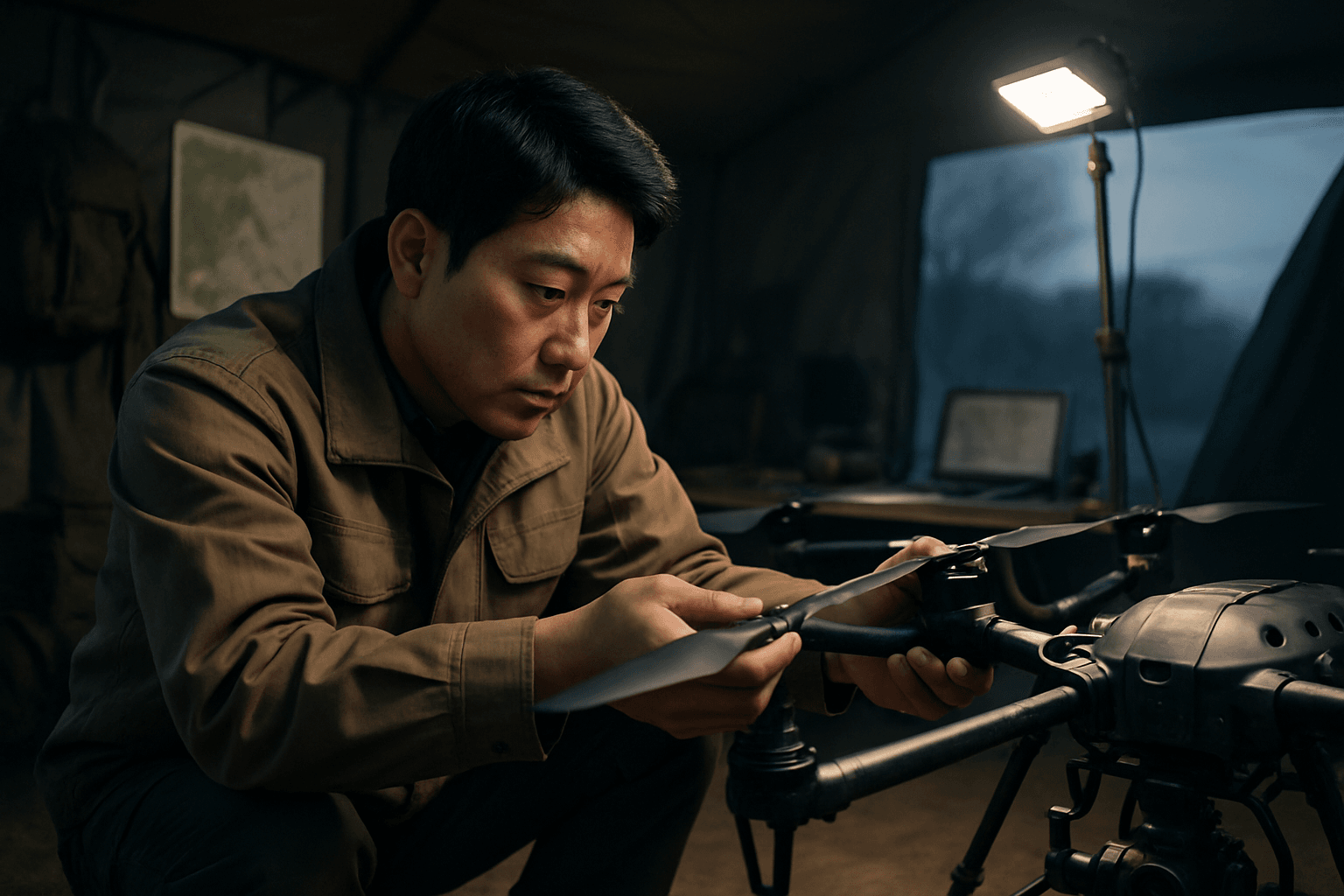
After each mission, especially in demanding SAR environments, simple but rigorous cleaning is essential. Drones accumulate dust, particles, sand, moisture, or residues that can disrupt sensors, joints, or motors. A thorough cleaning of the unit, wiping sensitive surfaces, clearing vents, and visually inspecting critical areas like the chassis, motors, and landing gear will help maintain optimal operation. Propellers should be replaced as soon as they show any signs of micro-cracks, deformations, or impact marks.
Battery Care and Management
Drone batteries, typically Lithium Polymer (LiPo), are critical to flight performance and safety. Proper battery care is paramount for SAR readiness. Best practices include:
- Storage Charge: When not in use for extended periods, store batteries at a “storage charge,” typically around 30-65% capacity, rather than fully charged or fully discharged. This helps maximize their lifespan.
- Charging Practices: Avoid overcharging or over-discharging batteries. Allow batteries to cool down between flights and before recharging. Charge in a clean, uncluttered, well-ventilated area, away from flammable materials, and never leave them unattended while charging.
- Inspection: Regularly check batteries for bulging, swelling, cracks, or signs of electrical arcing. Damaged batteries should be safely discarded.
- Documentation: Label batteries and track their health over time in a logbook.
- Environmental Considerations: Store batteries in a cool, dry place, away from direct sunlight or heat sources. For transport, use fireproof containers like LiPo bags or metal ammo boxes. Avoid exposing batteries to extreme temperatures during storage or operation, as low temperatures can significantly reduce discharge performance.
Propeller and Motor Health
Propellers convert motor rotation into thrust and are prone to wear and tear. Regular inspection for nicks, cracks, or bending is crucial, and damaged propellers should be immediately replaced. Motors should be kept clean and free from dirt or moisture. Regular testing of motors and propellers can help identify components nearing the end of their lifespan and ensure optimal flight performance and safety.
Software and Firmware Updates
Keeping drone software and firmware updated to the latest stable versions is essential for optimal performance, security, and to prevent in-field connection issues. Manufacturers’ guidelines should be consulted for specific update procedures. This applies to both the drone and the remote controller.
Payload and Sensor Calibration
Payloads such as thermal cameras, LiDAR, and RGB cameras are vital for SAR operations. These sensors require regular calibration to ensure accuracy and reliability.
- IMU and Compass Calibration: The Inertial Measurement Unit (IMU) and compass are critical for stable flight and accurate navigation. Calibrate them on a level surface, free from magnetic interference, following manufacturer instructions.
- Payload-Specific Calibration: Thermal cameras require lens cleaning and calibration using temperature reference sources. LiDAR sensors need to be calibrated with flat, reflective surfaces at measured distances. Cameras may use checkerboard patterns for distortion correction. Verify calibration settings before each mission.
Documentation and Logging
Maintaining detailed logbooks for each drone is a fundamental best practice. These logs serve as a “health record” for the aircraft, providing crucial information on past performance and maintenance work. Required by regulatory bodies like the FAA, detailed logs include:
- Flight hours and battery cycles.
- Records of cleaning, inspections, repairs, and part replacements.
- Dates of software and firmware updates.
- Troubleshooting results and any encountered issues.
This documentation aids in predicting potential problems, optimizing maintenance schedules, supporting warranty claims, and demonstrating compliance during audits or incident investigations.
Essential Pre-Flight Checks for SAR Readiness
Pre-flight checks are a systematic approach to ensuring a drone is safe and ready for a mission, especially under the urgent and often challenging conditions of SAR operations.
Environmental Assessment
Before any SAR flight, a thorough environmental assessment is critical.
- Weather Conditions: Check forecasts for wind speed, precipitation, and temperature, ensuring they are within the drone’s operational limits. Avoid flying in high winds, low clouds, or extreme temperatures.
- Terrain and Obstacles: Evaluate the terrain for potential hazards like trees, buildings, power lines, and other aircraft. Power lines, in particular, can interfere with a drone’s compass and pose a collision risk.
- Airspace Restrictions: Confirm that the planned flight route does not coincide with any no-fly zones and obtain necessary authorizations if operating in restricted airspace.
Power System Verification (Drone & Controller)
Reliable power is non-negotiable for SAR missions.
- Battery Levels: Verify that the drone, remote controller, and any connected mobile devices (tablet/phone) are fully charged. Carry enough spare batteries for the entire planned operation.
- Battery Insertion: Ensure the drone battery is securely inserted, often indicated by an audible click.
- Controller Charge: Confirm the remote controller has sufficient charge.
Airframe Integrity Check
A visual inspection of the drone’s physical components is vital.
- Frame and Arms: Inspect for any damage, cracks, or loose connections.
- Propellers: Confirm propellers are free of nicks, securely fastened, and undamaged. Carry extra propellers.
- Landing Gear: Ensure the landing gear is intact, not bent or cracked, and that all shock absorbers are functional.
Payload and Sensor Functionality
The specialized sensors are the drone’s “eyes and ears” in SAR.
- Sensor Cleanliness: Clean all vision, infrared, and other sensors to ensure unobstructed data collection.
- Payload Security: Confirm that the camera or sensor payload is firmly mounted, and all cables are secured to prevent snags.
- Gimbal Check: Remove the gimbal cover and carefully rotate the gimbal to ensure it moves freely without obstruction.
- SD Card: Verify that the SD card is installed, correctly formatted, and has sufficient storage space for the mission’s data.
Communication and Navigation Systems
A stable connection and accurate navigation are essential for safe and effective operations.
- Controller Connection: Connect the drone to its controller and confirm a stable connection.
- Firmware Check: Perform a quick check to confirm the drone and controller are on the latest stable firmware.
- GPS Mode & Home Point: Wait for the GPS signal to be strong and for the home point to be accurately recorded before takeoff.
- Communication Links: Verify that communication systems between team members, the ground control station, and the drone are functioning correctly.
Emergency Procedures Review
Before takeoff, mentally rehearse emergency procedures.
- Abort Plan: Know how to interrupt an automated mission and disarm motors in an emergency.
- Return-to-Home (RTH): Ensure the RTH altitude is set safely above all known obstacles.
- Emergency Contact Info: Have emergency contact information readily available (e.g., police, hospitals).
Training and Team Readiness
Beyond equipment, the human element is paramount. Comprehensive training for drone operators in SAR operations emphasizes situational awareness, mission planning, risk assessment, and emergency response. This includes learning search patterns, optimal flight paths, and contingency strategies. Designating a visual observer to assist the pilot in identifying hazards is also a best practice. Post-flight debriefing and continuous training are essential to hone skills and adapt to new technologies, ensuring preparedness for demanding situations.
By adhering to these rigorous maintenance practices and pre-flight checks, SAR teams can maximize the reliability and effectiveness of their drone fleets, ultimately enhancing their ability to save lives and provide critical assistance during emergencies.