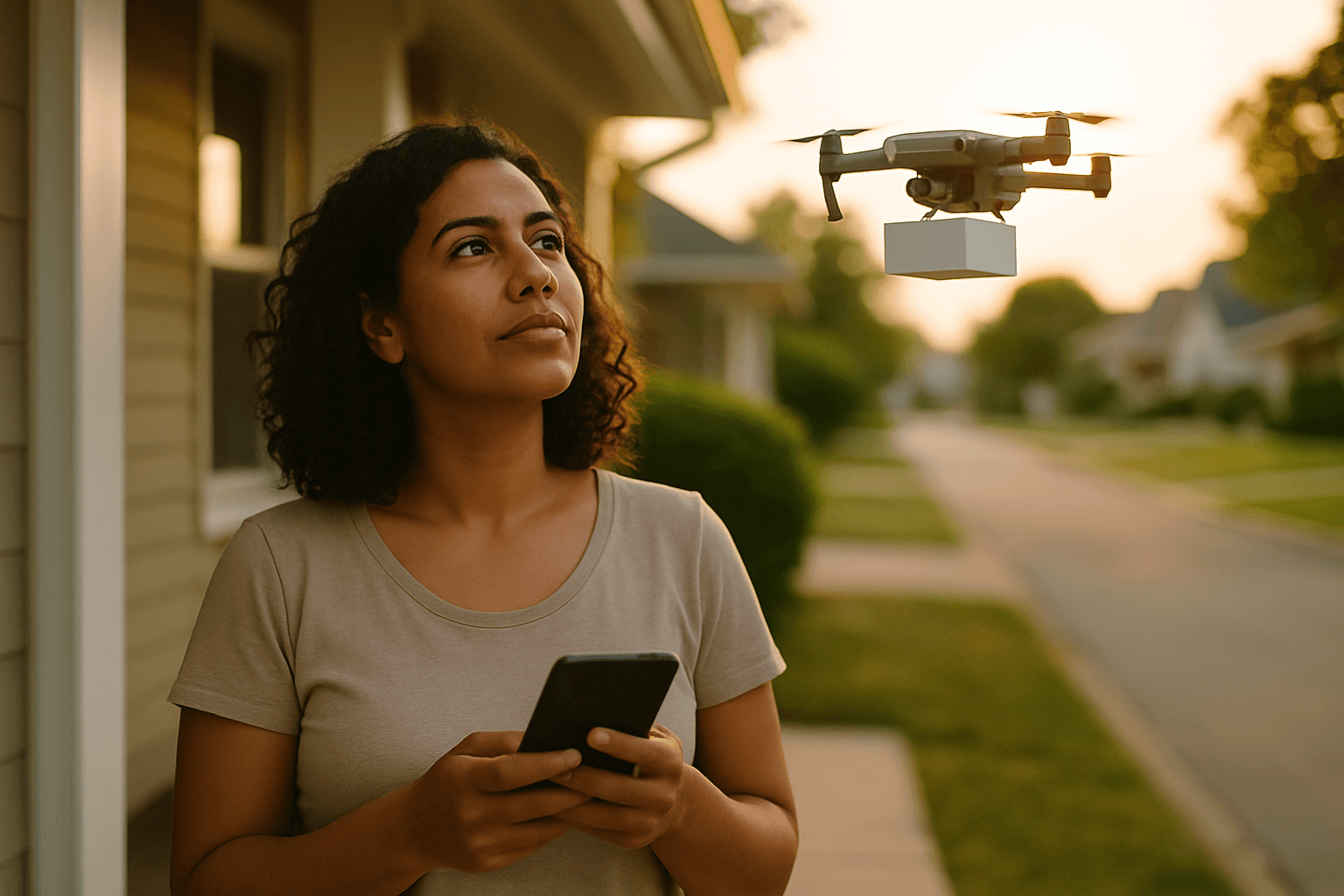
Imagine a world where your online order arrives not by a delivery van, but by a whirring, autonomous craft gently descending from the sky. This vision of drone delivery is rapidly becoming a reality, and at its core lies the sophisticated challenge of the “last meter” – how Unmanned Aerial Vehicles (UAVs) safely and securely transfer packages to waiting recipients. From precision drops to secure lockers, the technology behind these automated handoffs is both ingenious and continuously evolving, promising to reshape the future of logistics.
Diverse Mechanisms for Drone Package Handoff
The process of a drone delivering a package is far more nuanced than simply dropping an item. Various mechanisms are being developed and deployed, each designed to address different environments, package types, and security considerations. Companies like Amazon, Walmart, and Alphabet (Google) are actively trialing and refining these methods across the globe.
Winch or Tethered Drop Systems
One of the most common and widely implemented methods involves a winch or tethered system. When the drone arrives at the delivery location, it hovers at a safe altitude and lowers the package to the ground using a cable. This method offers several advantages:
- Precision: Drones can scan the area to ensure it’s safe before lowering the parcel to a designated spot. Cameras and altitude sensors guide the package’s descent with accuracy.
- Safety: The drone remains airborne, minimizing the risk of collision with ground obstacles, people, or pets. This is particularly useful in urban environments with obstacles or uneven terrain.
- Flexibility: It allows for deliveries to balconies or fenced areas where a full landing might be impossible.
Companies like Droneup, Flytrex, Manna, SkyDrop, Wing, and Wingcopter are utilizing tether systems in their latest generation drones.
Autonomous Landing and Release
For larger packages, pre-designated drone landing zones, or industrial locations, drones can be programmed to land completely to release the package. After a safe landing, the parcel is autonomously released at the designated point.
- High Payload Capacity: This method can accommodate heavier or bulkier items more easily.
- Simplified Drop Logic: The drone simply lands and releases, often a more straightforward operation than a tethered drop in suitable environments.
However, challenges include ensuring the landing zone is clear and maintaining communication with the control center during the landing process.
Parachute Release
For lightweight packages and open-area drops, such as in rural fields, a parachute release can be employed. The drone flies to the delivery site, hovers at a safe altitude, and releases the package mid-air, allowing it to gently float to the ground.
- Speed and Efficiency: This method allows for quick drop-offs without the need for the drone to land, reducing power consumption.
- Reduced Ground Interaction: Like winch systems, the drone doesn’t need to make ground contact.
The main disadvantage is that the drop-off point may not be as accurate, and it is highly dependent on weather conditions like wind.
Secure Delivery Receptacles (Smart Lockers)
To address security concerns and the lack of a clear, safe landing area at many homes (e.g., covered porches, backyards with pets), some companies are exploring secure “smart lockers” or dedicated drone delivery pads. These specialized receptacles would receive and secure the package until the recipient can retrieve it.
- Enhanced Security: Smart lockers can combat “porch piracy” and protect packages from weather elements.
- Designated Landing: They provide a clear, safe, and controlled environment for the drone to deliver.
Volatus Aerospace’s DBX system, for instance, offers climate-controlled package management and storage, and can serve as a delivery destination in urban areas, including apartments and multi-dwelling communities.
Human-Assisted Handoff
In some scenarios, particularly for emergency supply drops or at remote stations, a human may interact with the drone at the delivery point. The drone lands, and a human manually picks up or unloads the package. While less automated, this method is advantageous for situations requiring on-site collaboration or where full automation is not feasible.
Nested Drone (Zipline) Systems
A more advanced, “drone-in-a-drone” approach involves a larger mothership drone hovering above the delivery site while a smaller, detachable drone or glider descends to make the final delivery. Zipline is a prominent example of this technology, specializing in on-demand delivery for critical items like medical supplies.
- Extended Range: The mothership can cover longer distances, deploying smaller drones for precise local deliveries.
- Minimized Ground Risk and Noise: The main drone stays airborne, reducing noise and risk at ground level.
The Role of Advanced Technology in Handoff
Beyond the physical mechanisms, sophisticated technology underpins every drone package handoff.
Navigation and Sensors
Drones utilize a combination of GPS, advanced sensors, and cameras to navigate and pinpoint delivery locations. They scan the area upon arrival to ensure it’s safe to drop the parcel. Some systems even use patterned landing mats that the drone’s camera locks onto like a homing beacon to improve accuracy.
Artificial Intelligence and Machine Learning
AI and machine learning play a crucial role in real-time decision-making for optimal and safe package placement. This includes identifying suitable drop zones, detecting obstacles, and adapting to dynamic environmental conditions.
Security and Authentication
Ensuring that only authorized recipients can access packages is paramount. Authentication protocols being explored include:
- Biometric Authentication: Facial recognition or fingerprint scanning to verify the recipient’s identity.
- One-Time Password (OTP) Systems: The recipient recites a password sent to their phone, and the drone’s voice recognition system verifies it before releasing the package.
- RFID-based Security: RFID systems can seal the payload, providing tamper-proof security and acting as “keys” for authorized customers.
Challenges and Future Outlook
While drone delivery offers tremendous potential for speed, efficiency, and reaching remote areas, several challenges persist in optimizing package handoff.
- Safety and Regulations: Ensuring the safety of people and property on the ground, as well as adherence to evolving airspace regulations, remains a top priority for aviation authorities like the FAA. Drones must avoid flying over crowds and maintain safe altitudes.
- Environmental Factors: Wind, rain, and other weather conditions can affect the stability of drone operations and the accuracy of package drops, particularly for parachute and winch systems.
- Noise and Public Acceptance: The noise generated by drones and public comfort with their presence in neighborhoods are considerations for widespread adoption.
- Infrastructure: The need for designated landing pads or secure receptacles requires collaboration with customers and potentially local governments.
- Payload Limitations: While professional drones can carry up to 20-30 kg, consumer-level drones typically have a lower weight capacity, limiting the size and weight of deliverable packages.
Despite these hurdles, the continuous advancements in UAV technology, coupled with ongoing trials by major companies and the development of robust safety protocols, suggest a future where automated drone package handoff will become an increasingly common and reliable aspect of last-mile delivery. The seamless integration of drone delivery into daily life hinges on innovative solutions to these handoff challenges, ultimately enhancing speed, accessibility, and convenience for consumers.