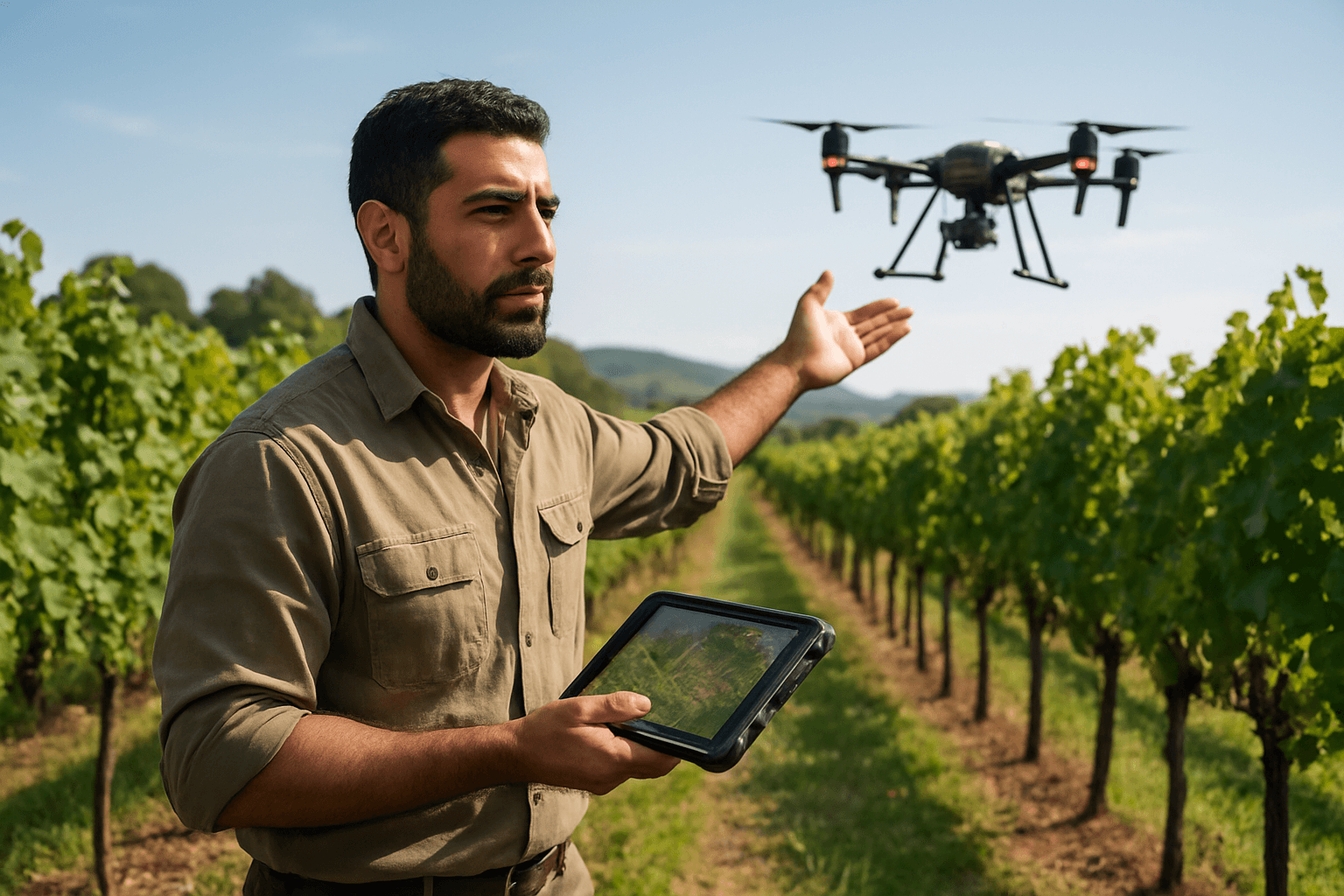
Vineyard management has historically been a labor-intensive and often challenging endeavor, with grape growers meticulously monitoring vast expanses of land to ensure optimal vine health and yield. Traditional methods, reliant on manual scouting, ground machinery, or satellite imagery, frequently face limitations due to terrain, time, and resolution. However, the advent of drone technology is ushering in a new era for viticulture, transforming these age-old practices into a precise, efficient, and sustainable science. Unmanned aerial vehicles (UAVs), commonly known as drones, are no longer a futuristic concept but a vital tool, offering unparalleled insights and operational advantages to vineyards worldwide.
The Rise of Precision Viticulture with Drones
Precision viticulture is an agricultural approach that utilizes technology to observe, measure, and respond to variability within and between vineyard blocks. Drones are at the forefront of this movement, providing a dynamic platform for data collection and application that surpasses traditional methods in accuracy and speed. They enable vineyard managers to shift from a broad, reactive approach to a targeted, proactive one, optimizing every aspect of grape cultivation.
Key Benefits of Drone Technology in Vineyards
The integration of drones into vineyard management offers a multitude of advantages, significantly impacting efficiency, sustainability, and overall crop quality.
Enhanced Efficiency and Data Collection
Drones can rapidly cover large vineyard areas, collecting high-resolution images and data far more efficiently than manual scouting or even satellite imagery. This extensive data collection provides vineyard managers with a comprehensive understanding of their vines, allowing for a detailed and timely assessment of conditions. Compared to traditional crop monitoring expenses, drones can offer cost savings of up to 80%.
Targeted Interventions and Resource Optimization
One of the most valuable aspects of drone technology is its ability to facilitate precision interventions. Detailed data from drones allows managers to identify specific areas requiring attention, such as those with water stress, nutrient deficiencies, or pest infestations. This enables targeted application of water, fertilizers, and pesticides, significantly reducing chemical waste and minimizing environmental impact.
Improved Worker Safety and Reduced Labor Costs
Traditional vineyard tasks, like spraying, often expose workers to hazardous chemicals and demanding physical conditions, especially on challenging terrain. Drones can carry out these tasks autonomously, reducing the need for manual labor and mitigating health risks for vineyard personnel. This automation also leads to substantial savings in labor costs.
Environmental Sustainability
By reducing the overuse of chemicals and improving irrigation efficiency, drones contribute directly to more sustainable farming practices. They minimize fuel consumption, decrease pesticide application, and lessen soil disturbance compared to heavy ground equipment, thereby preserving soil integrity and reducing erosion.
Accessibility to Difficult Terrain
Vineyards are often located on slopes or uneven terrain where traditional machinery struggles. Drones, with their agility and aerial perspective, can navigate these challenging landscapes with ease, providing consistent monitoring and treatment in otherwise inaccessible areas.
Applications of Drones in Vineyard Management
Drones offer diverse applications throughout the entire vineyard lifecycle, from budburst to berry ripening.
Vine Health Monitoring
Drones equipped with advanced sensors can quickly identify and address issues affecting vine health.
- Pest and Disease Detection: High-resolution cameras and multispectral sensors can detect early signs of diseases (like powdery mildew) or pest infestations before they become widespread. This early detection allows for swift, targeted action, reducing crop loss.
- Nutrient Deficiencies: By analyzing changes in leaf density and chlorophyll content, drones can pinpoint areas suffering from nutrient imbalances, enabling precise fertilization.
- Water Stress Detection: Thermal sensors can measure temperature differences across the vineyard, indicating areas of water stress that might not be visible to the naked eye. This data is crucial for optimizing irrigation schedules and preventing both under and overwatering.
Soil Analysis and Mapping
Drones facilitate the creation of detailed 3D topographical maps, analyzing the lay of the land, soil types, and altitude variations. Soil electrical conductivity sensors, when used in conjunction with GPS, can generate data about soil properties, helping to define the specific needs of different vineyard zones. This precision mapping aids in informed decisions about planting strategies, vineyard design, and maximizing sunlight exposure.
Precision Spraying and Treatment Application
One of the most valuable applications is precision spraying. Drones can deliver fungicides, pesticides, and foliar nutrients with exceptional accuracy, targeting only the necessary areas. This reduces chemical use by up to 30-40% compared to traditional ground sprayers, ensuring better coverage and minimizing environmental harm. Drones can even operate shortly after rain, minimizing delays that might lead to crop loss.
Canopy Management
Drones serve as an effective scouting tool for canopy management, allowing growers to identify rows that require more thinning or specific adjustments to optimize light exposure and air circulation, both critical for grape quality.
Yield Estimation and Harvest Prediction
In the crucial lead-up to harvest season, drones can provide detailed data on the size, color, and condition of grapes. Using thermal imaging and other sensor data, they help estimate grape ripeness and yield potential across the entire vineyard, enabling more accurate harvest predictions and efficient planning of labor and logistics.
Biocontrol Release
Drones can also be utilized for augmentative biocontrol, releasing beneficial insects (natural enemies of pests like mealybugs and leafhoppers) across vineyards. This method provides easy access to difficult terrains and ensures a more uniform application than manual release, contributing to a resilient growing system and reducing reliance on chemical pesticides.
Technology Behind Vineyard Drones
The capabilities of drones in viticulture are powered by sophisticated hardware and software.
Types of Drones
Both fixed-wing drones and quadcopters are employed. Fixed-wing drones like the eBee SQ are suited for covering large areas for multispectral imaging, while quadcopters such as the DJI Phantom 4 RTK offer high-precision GPS and multispectral capabilities for detailed data.
Advanced Sensors
A variety of sensors are critical to drone-assisted vineyard management:
- RGB Camera Sensors: Standard visual cameras capture high-resolution images for general vineyard overview and visual assessment.
- Multispectral Sensors: These capture light beyond the visible spectrum (e.g., near-infrared), assessing plant reflectance patterns linked to crop health. They are used to generate indices like NDVI (Normalized Difference Vegetation Index) and EVI (Enhanced Vegetation Index) to visualize vine vigor and health.
- Thermal Sensors: These measure temperature differences, identifying heat patterns in soil and crops that can indicate water stress or microclimates.
- Hyperspectral Sensors: While still an emerging area for widespread commercial use, these advanced sensors offer the potential for more precise diagnosis of specific problems and even early detection of viruses by identifying unique spectral patterns on vines.
- LiDAR Sensors: Light Detection and Ranging sensors provide highly accurate 3D mapping and terrain analysis.
- Barometric Pressure Sensors: Crucial for altitude stabilization, enabling precise hovering and flight paths.
Data Processing and AI Integration
The raw data collected by drone sensors is processed using specialized software like Pix4Dmapper and QGIS to create actionable maps and insights. Artificial intelligence (AI) and machine learning algorithms play an increasingly important role, analyzing drone imagery to automatically detect diseases, pest infestations, and crop stress indicators, further enhancing decision-making and intervention accuracy.
Challenges and Considerations
Despite the numerous benefits, the widespread adoption of drone technology in vineyards still faces certain hurdles.
- Initial Investment: The cost of purchasing drones, advanced sensors, and the necessary software, along with training staff, can be a significant barrier for some vineyards. However, as the technology becomes more accessible and affordable, adoption is expected to grow.
- Regulatory Landscape: Drone operation is subject to regulations that can vary by country and region, potentially limiting flight beyond visual line of sight or over populated areas.
- Data Interpretation Expertise: While drones excel at data collection, the subsequent interpretation of this complex data requires specialized agronomic and technical expertise to translate it into effective vineyard management strategies.
- Battery Life and Flight Time: For very large vineyards, battery life and limited flight time can still be a logistical challenge, although advancements are continuously being made.
The Future of Drone-Assisted Viticulture
The future of drone-assisted viticulture is promising, with continuous advancements poised to make these technologies even more integral. The drone market in agriculture is projected for significant growth, with a growing number of wineries embracing the technology. We can anticipate even more sophisticated autonomous operations, further integration of AI for real-time analysis and predictive analytics, and the development of more advanced, cost-effective sensors. As technology evolves, drones will continue to empower vineyard managers to make more informed, precise, and sustainable decisions, ensuring healthier vines, higher quality grapes, and a more resilient wine industry for years to come.