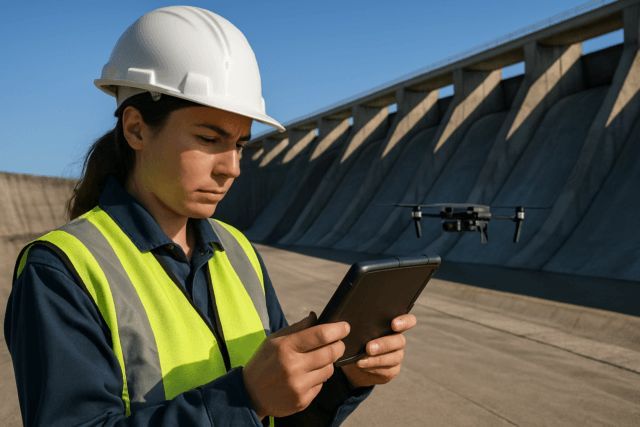

Offshore platforms, vital arteries of the global energy supply, operate in inherently challenging and isolated environments. These critical assets face a spectrum of persistent security threats, from piracy and terrorism to espionage and sabotage, alongside the ever-present risks of industrial accidents and environmental hazards. Traditionally, safeguarding these extensive maritime territories has relied on costly and often dangerous manned patrols and inspections. However, a revolutionary shift is underway: the increasing deployment of Unmanned Aerial Vehicles (UAVs), commonly known as drones, is transforming offshore security and surveillance, offering a safer, more efficient, and cost-effective solution to these complex challenges.
The Unique Security Landscape of Offshore Platforms
The remoteness and extensive nature of offshore installations present distinct security vulnerabilities. These platforms are attractive targets due to their strategic importance and the potential for significant economic and environmental impact from disruptions.
Persistent Threats in the Maritime Environment
- Piracy and Maritime Terrorism: Offshore energy installations are susceptible to hijacking, sabotage, and armed assaults, which can lead to loss of life, infrastructure damage, and energy supply chain disruptions.
- Espionage and Sabotage: Unidentified or unauthorized drones near oil and gas platforms are an increasing concern, potentially used for industrial espionage or deliberate attempts to disrupt operations. Such incidents have been reported around Norwegian rigs, particularly amidst heightened geopolitical tensions.
- Cyber Threats: The convergence of information technology (IT) and operational technology (OT) systems on offshore platforms creates significant cybersecurity risks. Malware, ransomware, and phishing attacks targeting critical control systems can compromise safety protocols, potentially leading to environmental catastrophes and endangering personnel.
- Environmental Monitoring: Beyond malicious acts, offshore platforms also require constant monitoring for gas emissions, oil spills, and structural integrity, all of which pose risks to personnel, the environment, and operations.
Limitations of Traditional Security Methods
Conventional security measures often involve deploying personnel into hazardous environments, such as at great heights, in confined spaces, or near volatile equipment. These methods are not only expensive and time-consuming but also expose workers to significant risks.
The Drone Advantage: How UAVs Enhance Offshore Security
Drones act as a force multiplier in the security field, extending visibility, reducing response times, and minimizing risks for human personnel. Their operational efficiency, speed, and mobility enable improved surveillance and quick response at a fraction of the cost of traditional methods.
Enhanced Situational Awareness and Surveillance
Drones provide a bird’s-eye view, allowing security teams to monitor large or complex offshore environments in real time.
- High-Resolution Imaging and Thermal Capabilities: Equipped with optical zoom, high-resolution cameras, and thermal imaging, drones can reveal details that would otherwise remain hidden, even detecting anomalies like rust, loose bolts, insulation breaks, or overheating electrical components.
- Perimeter and Area Patrols: UAVs can conduct aerial perimeter checks, scan for intrusions, and use thermal cameras to identify unusual activity, covering vast areas quickly and continuously. This is particularly effective for detecting smuggling, piracy, or trespassing.
- Real-time Data Transmission: Drones stream real-time data to operators, significantly strengthening situational awareness and enabling faster interventions.
Specific Security Applications of UAVs
Beyond general surveillance, drones are deployed for a variety of specialized security tasks on offshore platforms:
- Perimeter Monitoring: Establishing and maintaining a secure exclusion zone around platforms is crucial. Drones can continuously patrol these zones, detecting unauthorized vessels or aircraft.
- Threat Detection and Identification: Advanced sensors allow drones to identify suspicious activities or objects at sea, including potential threats like unauthorized boats or underwater drones.
- Infrastructure Inspection: While primarily for maintenance, detailed structural inspections contribute directly to security by identifying vulnerabilities. Drones can inspect flare stacks, pipelines, and other structures for damage or abnormalities without endangering human inspectors. Thermal imaging can detect hotspots signaling failing components before they cause outages.
- Environmental Compliance and Emergency Response: Drones equipped with gas detectors can sniff out methane leaks, quantify greenhouse gas emissions, and quickly detect oil spills, aiding in rapid response and environmental protection. They can also assist in search and rescue operations by quickly locating individuals in distress using thermal cameras and GPS.
Types of Drones and Their Capabilities
The offshore industry utilizes various types of drones, each suited for different tasks and environmental conditions:
- Multirotor Drones (e.g., DJI Matrice series, Flyability Elios): These are highly maneuverable and often used for close-up visual and thermal inspections of complex structures. Models like the DJI Matrice 30T offer high-resolution cameras, thermal imaging, laser rangefinders, and good flight times, while the Flyability Elios 2 is designed for confined spaces and collision resilience.
- Fixed-Wing Drones: While less agile for close inspections, fixed-wing drones offer greater autonomy and endurance, making them suitable for covering large maritime areas for long-range surveillance. Hybrid VTOL (Vertical Take-Off and Landing) drones combine the benefits of both, offering vertical lift with long-range efficiency.
- Tethered Drones: These drones are physically connected to a ground station, providing continuous power and secure data transmission, ideal for long-duration surveillance in a fixed area.
- Underwater ROVs (Remotely Operated Vehicles): Although not aerial, these are crucial for sub-surface inspections of hulls, underwater infrastructure, and pipelines, equipped with cameras, sonar, and other sensors.
Advanced drones are increasingly equipped with AI and machine learning for obstacle avoidance, autonomous navigation, and real-time data analysis, further enhancing their effectiveness.
Challenges and Considerations in Drone Deployment
Despite the significant advantages, the deployment of drones in offshore environments is not without its hurdles:
- Harsh Environmental Conditions: Offshore platforms are exposed to high winds, saltwater corrosion, unpredictable weather, and extreme temperatures, which can affect drone stability, battery life, and performance.
- Regulatory Frameworks: Operating drones in international waters and across different jurisdictions can be complex. While guidelines like those from Oil & Gas UK exist, specific permissions for drone operations are often required in each country, and rules are constantly evolving. Restricted Petroleum Zones around platforms often prohibit unauthorized drone flights, with severe penalties.
- Connectivity and Data Security: Drones depend on robust communication networks, which can be challenging in remote offshore locations. Data collected by drones is sensitive, requiring strong encryption and cybersecurity measures to prevent theft or manipulation.
- Electromagnetic Interference: High-voltage power lines and heavy machinery on platforms can disrupt GPS signals and drone communication.
- Explosive Atmospheres (ATEX Zones): Areas with flammable gases require specialized, intrinsically safe drones, which are currently expensive and limited in availability.
- Operational Constraints: Drones typically have limited flight times (e.g., 20-40 minutes), necessitating frequent battery swaps and potentially limiting large-scale, continuous surveillance without multiple units. Stabilized drone platforms on motherships are being developed to facilitate safe take-off and landing in rough sea conditions.
The Future of Drone Technology in Offshore Security
The integration of drones into offshore security is a rapidly evolving field. Future developments are expected to focus on:
- Increased Autonomy and AI: Greater use of artificial intelligence and machine learning will enable drones to make real-time decisions, enhance obstacle avoidance, and perform more complex tasks autonomously.
- Improved Battery Technology: Advancements in battery energy density will lead to longer flight times and extended operational ranges.
- Advanced Sensor Payloads: Miniaturized and more sophisticated sensors will allow for even more detailed data collection, including advanced gas detection, LiDAR for precise 3D mapping, and multi-spectral imaging.
- Integrated Systems: Seamless collaboration between aerial drones (UAVs), unmanned surface vessels (USVs), and remotely operated vehicles (ROVs) will provide a comprehensive, multi-layered security and inspection solution for both above and below the waterline.
- Counter-UAS Solutions: As drone use proliferates, so does the need for effective counter-UAS radar and defense systems to detect, classify, and mitigate unauthorized drone threats around critical infrastructure.
Major players in the oil and gas sector, including Chevron, Equinor, Shell, and Saudi Aramco, have already adopted drones for various applications, signaling a clear industry trend towards this technology.
Conclusion
Drone deployment for security on offshore platforms represents a significant leap forward in safeguarding these vital global assets. By offering enhanced situational awareness, improved safety for personnel, cost efficiencies, and superior data collection, UAVs are proving indispensable in mitigating the multifaceted threats faced in the maritime environment. While challenges related to regulation, harsh conditions, and technological limitations persist, ongoing advancements in drone technology, particularly in AI and battery life, promise an even more transformative role for these unmanned guardians in the future of offshore security and surveillance.