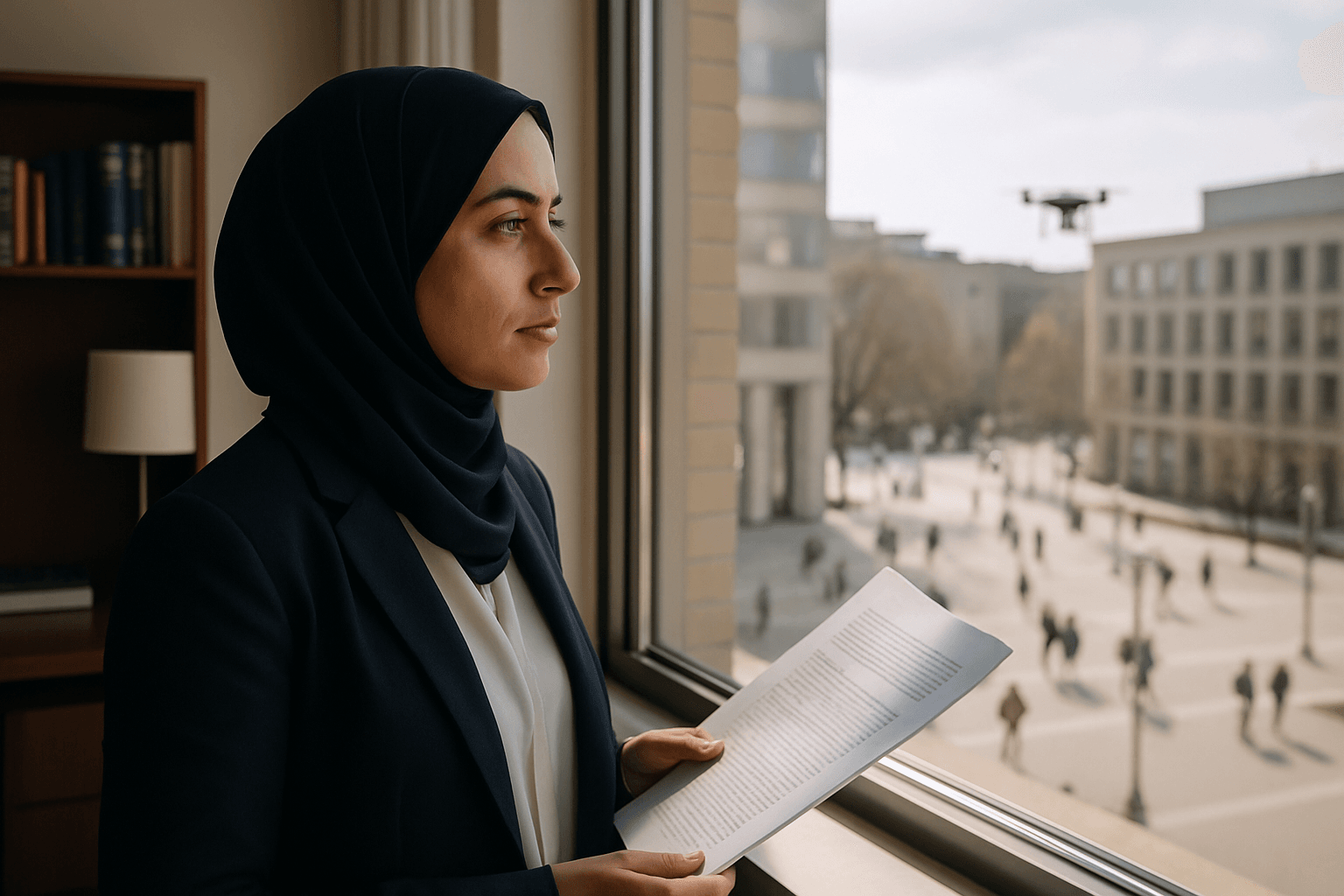
The proliferation of Unmanned Aerial Vehicles (UAVs), commonly known as drones, has ushered in an era of unprecedented aerial capabilities. From stunning cinematic shots to efficient infrastructure inspections, drones offer myriad benefits. However, their increasing use for surveillance in public spaces has ignited a complex debate surrounding privacy, civil liberties, and the evolving legal landscape. As these technologically advanced devices become more accessible, understanding the intricate web of legal considerations is crucial for both operators and the public.
The Rise of Drone Surveillance and Emerging Concerns
Modern drones, equipped with high-resolution cameras, thermal imaging, and advanced sensors, have become powerful tools for both governmental entities and private actors. These capabilities allow for detailed monitoring without physical intrusion, raising significant questions about what constitutes reasonable surveillance and where the line should be drawn to protect individual privacy. The fear of pervasive monitoring, often described as a “chilling effect,” is a growing concern, particularly as law enforcement agencies increasingly adopt drone technology.
Navigating the Legal Landscape: A Patchwork of Regulations
The legal framework governing drone surveillance in public spaces is a complex interplay of federal, state, and local regulations, often struggling to keep pace with rapid technological advancements.
Privacy Concerns and the Expectation of Privacy
At the heart of the debate is the “reasonable expectation of privacy.” The Fourth Amendment of the U.S. Constitution protects individuals from unreasonable searches and seizures by the government. However, Supreme Court precedents from the 1980s (e.g., California v. Ciraolo and Florida v. Riley) established that warrantless aerial surveillance by manned aircraft in publicly navigable airspace does not inherently violate the Fourth Amendment, as there is no reasonable expectation of privacy from what is visible from the sky.
This precedent creates a significant challenge for drone surveillance, as drones can operate at much lower altitudes, enter intimate spaces, and conduct surveillance more surreptitiously than traditional manned aircraft. While a subjective expectation of privacy might exist, proving it is “one society as a whole is prepared to accept as reasonable” becomes difficult with evolving technology. Many argue that current Fourth Amendment jurisprudence is ill-equipped to address the intrusive nature of drone technology.
Federal Regulations: FAA and Beyond
The Federal Aviation Administration (FAA) holds exclusive authority over the national airspace, primarily focusing on aviation safety rather than privacy issues. Key FAA regulations for drones include:
- Registration and Certification: Most drones must be registered with the FAA. Commercial drone pilots require a Remote Pilot Certificate (Part 107 certification), while recreational flyers must pass a basic safety knowledge test.
- Operational Limitations: General rules include flying below 400 feet, maintaining visual line of sight, and avoiding other aircraft. Waivers can be obtained for operations beyond visual line of sight or at night with proper lighting.
- No-Fly Zones and Temporary Flight Restrictions (TFRs): Drones are prohibited in controlled airspace around airports without authorization, over designated national security sensitive facilities, and in areas covered by TFRs, which can be issued for major sporting events, political gatherings, or security operations. The FAA explicitly states it does not regulate privacy, leaving this gap to state and local laws.
State and Local Laws: A Jurisdictional Maze
Given the FAA’s focus on airspace safety, state and local governments have stepped in to address the privacy implications and ground-level activities of drones. This has resulted in a “patchwork of rules” that vary significantly by jurisdiction.
Many states have enacted laws concerning drone surveillance, particularly by law enforcement and private citizens:
- Warrant Requirements: At least 18 states have passed legislation requiring law enforcement to obtain a search warrant for drone surveillance, with exceptions for exigent circumstances like emergencies or searching for missing persons. For instance, Alabama and Iowa require a warrant for law enforcement to use drones for surveillance where there’s a reasonable expectation of privacy. Florida also requires a warrant for police drone surveillance.
- Restrictions on Private Surveillance: Numerous states have laws prohibiting private citizens from using drones to invade privacy, often by recording images or videos of individuals in places where they have a reasonable expectation of privacy. For example, Idaho law prohibits surveillance and recording of a person or their property via drone without written consent. Oklahoma makes it a misdemeanor to fly a drone less than 400 feet over private property to surveil or eavesdrop, or to record someone with a reasonable expectation of privacy. Pennsylvania prohibits surveillance of another person in a private place.
- No-Fly Zones for Specific Facilities/Events: Some states prohibit drones near critical infrastructure facilities (e.g., chemical plants, electrical substations), correctional facilities, schools, and large public events. Delaware, Minnesota, Missouri, Tennessee, and Texas have specific laws prohibiting drones near stadiums or open-air events.
- Trespass Laws: While the FAA controls airspace, states can regulate take-off and landing locations, and many have laws against flying low over private property to take photos without permission, classifying it as a form of trespass.
Key Legal Precedents and Challenges
While Ciraolo and Riley set precedents for manned aircraft, courts are increasingly grappling with how these apply to drones. Some courts have distinguished drones from manned aircraft, noting their ability to navigate at lower heights and into more intimate spaces, where individuals would reasonably expect privacy. This distinction could lead to different interpretations of Fourth Amendment rights regarding drone surveillance.
A notable example is the Long Lake Township v. Maxon case, where a court concluded that persons have a reasonable expectation of privacy against drone surveillance, suggesting that governmental entities should obtain a warrant or satisfy a traditional exception. This highlights the ongoing legal uncertainty and the need for more defined rules.
Balancing Security, Privacy, and Public Interest
The use of drones for public safety, such as search and rescue, disaster response, and evidence gathering by law enforcement, offers significant benefits. However, these applications must be balanced against the public’s right to privacy and freedom from pervasive surveillance. Civil liberties groups, like the ACLU, have voiced concerns about potential abuse, advocating for responsible and ethical regulation to prevent a “surveillance state” and discriminatory targeting. Transparency, accountability, and public feedback on drone policies are crucial for maintaining public trust.
Future Outlook: Evolving Laws and Technologies
The legal landscape for drone surveillance in public spaces is still evolving. As drone technology advances, with capabilities like facial recognition and enhanced thermal imaging becoming more common, the challenges to established privacy norms will intensify. Lawmakers face the task of crafting legislation that protects privacy interests without unduly hindering the beneficial applications of drone technology.
Recommendations often include:
- Warrant Requirements for Targeted Surveillance: Implementing clear guidelines for when law enforcement needs a warrant for specific surveillance operations.
- Property-Centric Limitations: Defining clearer rights for landowners regarding the airspace immediately above their property, potentially up to a certain altitude (e.g., 350 feet).
- Public Dialogue and Transparency: Fostering public awareness and engagement in the development of drone policies to ensure societal expectations of privacy are considered.
- Uniformity in Laws: Addressing the fragmented nature of state and local laws through more consistent federal guidelines, particularly concerning privacy.
As drones become an increasingly integrated part of public life, ongoing legislative efforts and judicial interpretations will be critical in shaping the balance between security, innovation, and individual privacy rights in the skies above our public spaces.