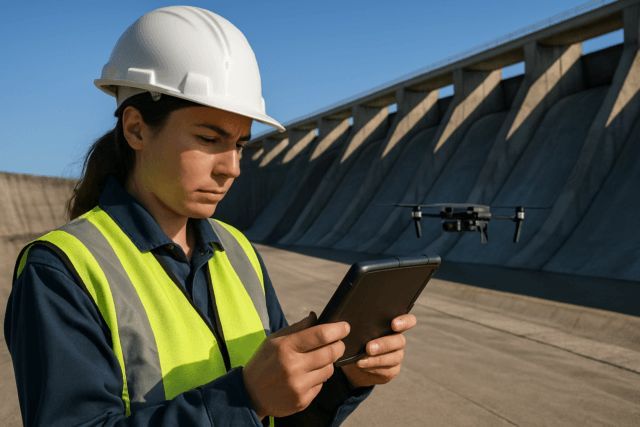

In the aftermath of disasters—ranging from industrial accidents and chemical spills to collapsed structures—Search and Rescue (SAR) operations face immediate, life-threatening challenges. Responders often confront unknown chemical hazards that can critically endanger their lives and hinder rescue efforts. Unmanned Aerial Systems (UAS), commonly known as drones, have emerged as transformative tools in these high-risk environments, offering a safer and more efficient means to conduct reconnaissance and, crucially, to detect hazardous chemicals without exposing human personnel to immediate danger.
The integration of specialized chemical detection payloads on drones allows SAR teams to quickly assess contamination zones, identify hazardous substances, and map their dispersion in real-time. This capability is paramount for informed decision-making, enabling rapid evacuation plans, targeted interventions, and ultimately, saving lives while protecting first responders.
The Critical Role of UAS in Hazardous Environments
Traditional emergency response methods often necessitate human entry into hazardous areas, which is time-consuming and fraught with danger due to unstable environments, unknown chemical substances, and potential radiation or nuclear contamination. Drones mitigate these risks by providing a remote sensing platform that can access hard-to-reach or unsafe areas, significantly enhancing responder safety.
Benefits of deploying drones with chemical detection capabilities in SAR include:
- Enhanced Safety: Drones keep human responders out of direct contact with toxic plumes, explosive gases, or radioactive materials.
- Rapid Deployment and Assessment: UAS can be quickly launched to provide immediate situational awareness and gather critical data in time-sensitive situations.
- Access to Inaccessible Areas: Drones can navigate complex terrains, collapsed buildings, or contaminated zones that are too dangerous or difficult for human teams or ground vehicles.
- Real-time Data and Mapping: Equipped with advanced sensors, drones can provide instantaneous information on chemical types, concentrations, and dispersion patterns, crucial for dynamic decision-making.
- Cost-Effectiveness and Efficiency: Compared to manned aircraft or extensive ground operations, drones offer a more economical and efficient solution for surveying large areas.
Key Chemical Detection Payload Options for Drones
A variety of sophisticated sensors can be integrated into drone platforms, each designed to detect specific types of chemical threats. The selection of the optimal payload depends heavily on the specific SAR mission and the potential hazards involved.
1. Photoionization Detectors (PIDs)
PIDs are widely used for detecting volatile organic compounds (VOCs) and other toxic industrial gases. They operate by using ultraviolet (UV) light to ionize molecules, which then generate an electrical current proportional to the concentration of the detectable compounds. Zytekno drones, for instance, are equipped with highly sensitive chemical sensors, including PIDs, for real-time monitoring of various toxic and harmful gases.
2. Electrochemical (EC) Sensors
Electrochemical sensors detect chemical species via redox reactions that produce electrical signals proportional to gas concentration. These sensors are compact and energy-efficient, making them well-suited for UAV integration. They are commonly used for detecting specific gases such as carbon monoxide (CO), nitrogen dioxide (NO2), sulfur dioxide (SO2), hydrogen sulfide (H2S), and ammonia (NH3). Some systems, like the ChemDet, feature multiple electrochemical modules configurable for different gases based on mission requirements.
3. Gas Chromatography (GC) Sensors
Gas chromatography sensors offer a more detailed analysis by separating and identifying different components within a gas sample. This provides precise identification of leaked substances and their dispersion range. While traditionally larger, ongoing miniaturization efforts aim to make these powerful analytical tools more viable for drone integration.
4. Optical Gas Imaging (OGI) Payloads
OGI cameras, particularly those using long-wave infrared (LWIR) technology, can visualize gas leaks that are invisible to the naked eye. The MFE Detect LW is an example of such a pioneering LWIR optical gas imaging camera designed for DJI drones, effective for aerial methane leak detection. These payloads are crucial for industrial inspections and pipeline monitoring in SAR contexts, such as after an explosion.
5. Tunable Diode Laser Absorption Spectroscopy (TDLAS)
TDLAS technology utilizes absorption spectroscopy to identify and measure gas concentrations with high precision, even at very low levels and longer distances. This method is highly selective and sensitive, making it an excellent choice for detecting specific gases like methane.
6. Electronic Noses (E-Noses)
“Electronic noses” are emerging devices designed to detect complex scent patterns. In SAR, they are being developed to identify chemical substances indicating human presence, such as specific compounds exhaled or released from the skin, aiding in the location of survivors trapped under debris. These devices could complement or even partially replace search-and-rescue dogs in certain scenarios.
7. Radiation Detection Sensors
In scenarios involving potential radiological or nuclear threats (CBRNE events), specialized sensors are critical. Drones can be equipped with detectors for gamma rays and neutron radiation to assess the scope and intensity of nuclear leaks, providing vital data for personnel safety and response strategies. These systems can remotely monitor dose fields and map hotspots, minimizing human exposure.
8. Passive Smart Dust (Colorimetric Indicators)
An innovative approach involves deploying “passive smart dust” – cheap, biodegradable sensors (e.g., paper-based confetti-like chemosensors) that change color in the presence of specific hazardous chemicals like strong acids. A conventional drone-mounted camera can then detect these color changes from a safe distance, enabling flexible, sensitive, and rapid hazard localization without requiring complex onboard analytical equipment.
Applications in Search and Rescue Scenarios
Drone-based chemical detection is invaluable across a spectrum of SAR situations:
- Industrial Accidents and Chemical Spills: Drones monitor spill zones for airborne toxins, assess environmental safety, and identify the types and dispersion of leaked substances, minimizing exposure risk for rescue teams.
- CBRNE Events: For chemical, biological, radiological, nuclear, and explosive threats, UAS with appropriate sensors can detect, identify, and monitor hazardous substances, providing crucial intelligence without risking human responders.
- Post-Explosion Assessment: After events like port explosions or pipeline incidents, drones can rapidly assess the site for chemical leaks, gas accumulations, and structural damage, informing emergency command decisions.
- Mining Accidents: In confined or unstable mine environments, drones can detect hazardous gases like methane or carbon monoxide, which are common risks in such incidents.
- Survivor Detection: Specialized chemical sensors, like e-noses, can detect trace volatile compounds emitted by humans, helping to locate trapped survivors in collapsed buildings.
- Environmental Monitoring: Drones can assess the environmental impact of spills or leaks, providing real-time data to direct cleanup efforts and mitigate further damage.
Challenges and Considerations
Despite the significant advantages, integrating chemical detection payloads into SAR drones presents several challenges:
- Payload Capacity and Miniaturization: Small UAS have weight constraints, necessitating the development of lightweight, compact, and low-power sensors capable of sensitive detection.
- Flight Time and Endurance: Limited battery life restricts drone flight durations, impacting the area that can be covered and the persistence of monitoring.
- Environmental Factors: Weather conditions such as wind, rain, fog, and even urban obstructions can affect drone stability, sensor accuracy, and the dispersion patterns of chemicals.
- Rotor Wash and Air Turbulence: The air turbulence created by drone propellers can disrupt chemical plumes and interfere with accurate gas sampling and sensor readings. Innovative sampling systems, such as funnels or extended probes, are being developed to mitigate these effects.
- Sensor Selectivity and Sensitivity: The high diversity of potential chemical hazards often requires highly specific sensors, and achieving broad detection capabilities in a single, compact payload remains a challenge. Sensors must be capable of detecting substances at very low concentrations (parts per billion or even trillion).
- Data Interpretation and Integration: Real-time processing and effective visualization of complex chemical data, often overlaid with 3D maps and GIS, are crucial for actionable intelligence.
- Regulatory Landscape: Restrictions on drone operations in certain areas or specific weather conditions can limit their deployment in emergency scenarios.
Future Outlook
The field of drone-based chemical detection for SAR is continuously evolving. Future advancements are expected to focus on:
- Enhanced Miniaturization: Further reducing the size, weight, and power (SWaP) requirements of advanced chemical sensors will allow for more versatile deployments on smaller UAS platforms.
- Multi-Sensor Integration and Fusion: Combining various sensor types (e.g., PIDs, EC sensors, OGI, thermal cameras) into integrated payloads will enable comprehensive detection of multiple threats simultaneously, improving the efficiency and comprehensiveness of emergency response.
- Autonomous Capabilities and Swarming: Developing drones with advanced autonomy for intelligent navigation, environmental sensing, and even swarming capabilities could enable a fleet of drones to quickly detect and map chemical plumes with minimal human input.
- Improved Sampling Technologies: Innovations in sampling mechanisms will address challenges posed by drone-induced turbulence, ensuring more accurate and consistent readings.
- Broader Chemical Libraries: Ongoing research aims to expand the range of chemicals that can be reliably detected by drone-mounted sensors, including biological agents and emerging threats.
By overcoming current limitations and embracing technological innovations, unmanned aerial systems equipped with chemical detection payloads are poised to become an indispensable asset in modern Search and Rescue operations, creating safer environments and enhancing the effectiveness of emergency response worldwide.