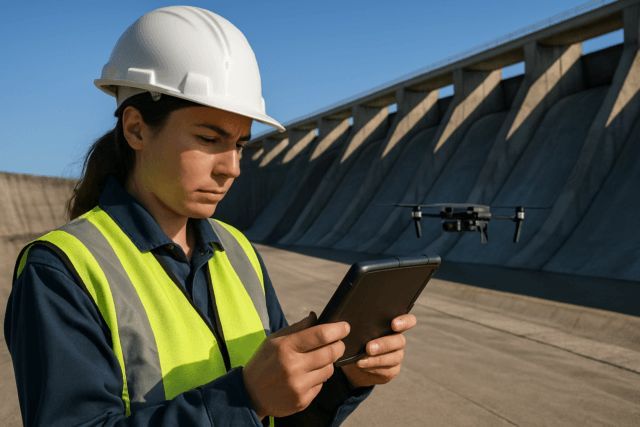
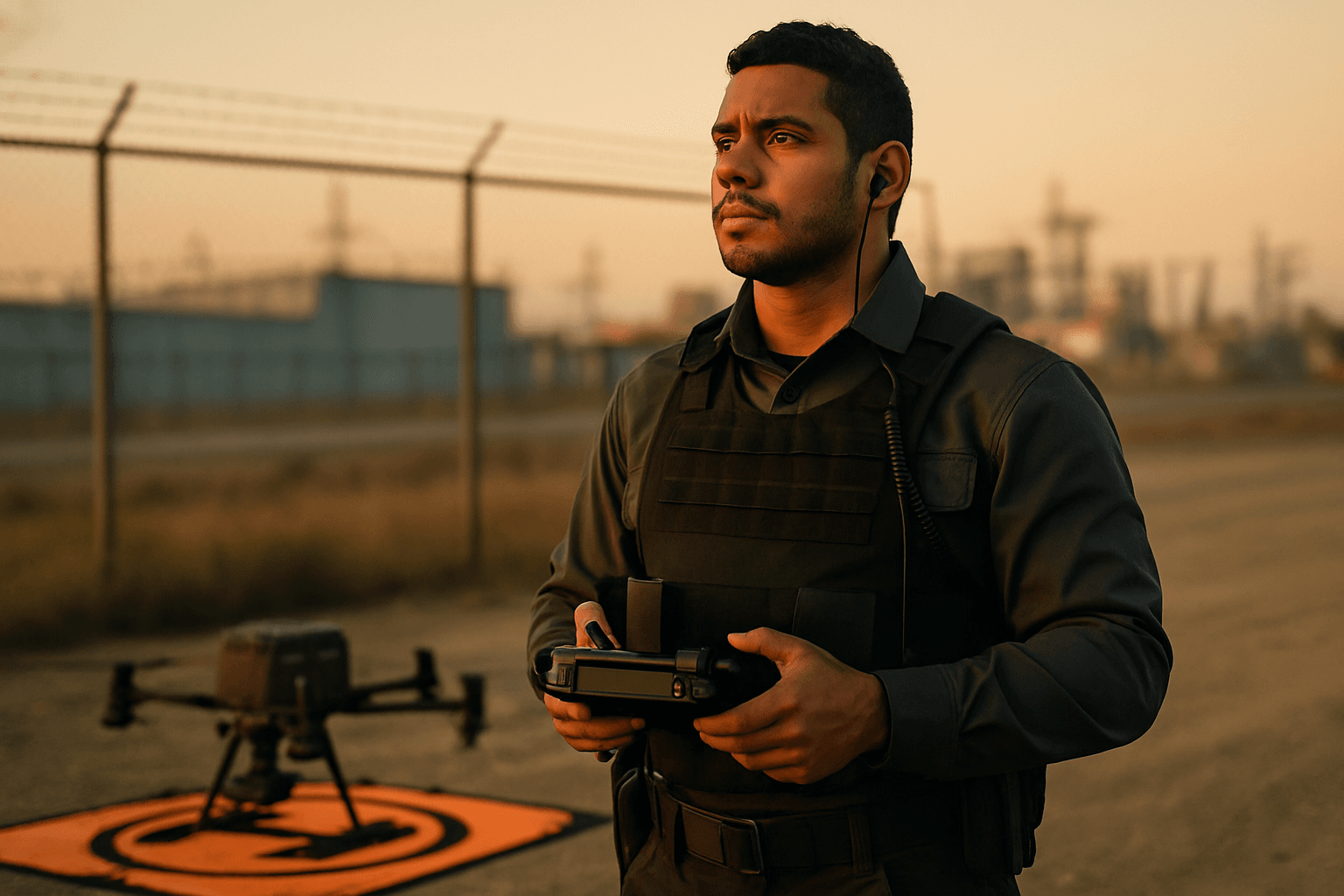
In an era where security threats are becoming increasingly sophisticated and perimeters stretch across vast, complex terrains, traditional security measures often struggle to provide comprehensive and timely protection. Fences can be breached, static cameras have blind spots, and human patrols, while essential, can be resource-intensive and limited in their reach and speed. This evolving landscape has created an urgent need for adaptable, efficient, and technologically advanced solutions. Enter unmanned aerial vehicles (UAVs), or drones, which are rapidly transforming perimeter security by offering an unparalleled aerial perspective, swift response capabilities, and continuous surveillance, effectively filling the gaps left by conventional methods.
The Evolving Landscape of Perimeter Security
For decades, physical security relied heavily on static defenses like walls, fences, and gates, augmented by surveillance cameras and human guards. While these components remain foundational, their inherent limitations in covering expansive or challenging environments have become apparent. Large industrial sites, critical infrastructure, lengthy borders, and sprawling corporate campuses present significant challenges for ground-based security, often leading to blind spots and delayed response times. The sheer scale can make continuous human patrolling inefficient and expensive, and fixed cameras may not adapt to dynamic threats or provide the necessary overview. The integration of drones offers a dynamic, flexible, and proactive layer to address these vulnerabilities, shifting the security paradigm from reactive to anticipatory.
Key Advantages of Drone-Based Perimeter Security
Drones bring a multitude of benefits that enhance the effectiveness and efficiency of perimeter security operations.
Enhanced Coverage and Visibility
One of the most significant advantages of deploying drones for perimeter security is their ability to provide superior coverage and an elevated vantage point. Unlike ground patrols, drones can swiftly traverse large, hard-to-reach, or hazardous areas, offering a comprehensive bird’s-eye view that eliminates traditional blind spots. Equipped with high-resolution cameras, they can capture detailed imagery and video footage from various heights and angles, even in challenging environments. This aerial perspective allows for early detection of potential intruders or anomalies that might be missed by ground-level surveillance.
Rapid Response and Threat Assessment
In security incidents, every second counts. Drones can be deployed much faster than traditional manned patrols or aircraft, reaching incident sites within minutes to provide real-time aerial intelligence. This rapid assessment capability allows security teams to quickly verify alarms, gauge the severity of a situation, and gather critical situational awareness before ground personnel are deployed, leading to more effective and coordinated responses.
Cost-Effectiveness and Resource Optimization
Implementing drone-based security solutions can significantly reduce operational costs. Drones can automate routine, repetitive tasks that would otherwise require multiple human guards, thereby optimizing human resource allocation and lowering labor costs. Compared to expensive manned aircraft, UAVs offer a scalable and sustainable alternative for continuous surveillance and monitoring. The ability to cover vast areas efficiently also translates to reduced fuel and maintenance costs associated with traditional patrol vehicles.
Improved Safety for Personnel
Deploying human security personnel into potentially dangerous or hazardous environments always carries risks. Drones act as a crucial first line of observation, allowing operators to assess situations from a safe distance. This significantly reduces the exposure of security staff to dangerous situations such as investigating suspicious activity in remote areas, responding to alarms, or monitoring sites with environmental hazards like smoke or fire.
Continuous 24/7 Surveillance Capabilities
Modern security drones, especially when integrated with docking stations (also known as nests or charging stations), can provide continuous, 24/7 surveillance. These “Drone-in-a-Box” (DIB) systems allow drones to autonomously take off, execute patrols, land, recharge, and offload data, ensuring persistent monitoring without constant human intervention. Combined with advanced sensors, this capability ensures round-the-clock protection, even in low-light or adverse conditions.
Types of Drones for Security Patrols
The choice of drone type depends heavily on the specific security needs and the characteristics of the area to be protected.
Multirotor Drones
Multirotor drones, such as quadcopters, are the most common type used in security. Their key advantages include the ability to hover precisely in place, maneuver in tight spaces, and are generally easier to operate. These characteristics make them ideal for detailed inspections, surveillance in urban environments, event monitoring, and covering smaller, complex areas like industrial sites or construction zones.
Fixed-Wing Drones
Resembling small airplanes, fixed-wing drones are designed for long endurance and speed, making them suitable for patrolling vast, linear perimeters such as national borders, coastlines, or extensive pipelines. While they cannot hover like multirotors, their extended flight times and ability to cover large distances quickly make them highly efficient for broad-area surveillance.
Tethered Drones
Tethered drone systems are connected to a ground power source via a physical cable, which provides continuous power and a secure data link. This eliminates battery life concerns, allowing for indefinite hovering and continuous surveillance at a fixed altitude. They are particularly useful for long-duration monitoring at critical facilities, large events, or as fixed security points where persistent aerial oversight is required.
Drone-in-a-Box (DIB) Systems
DIB systems represent a significant leap in autonomous security. These solutions feature a drone housed within a weatherproof base station (the “box” or “dock”) that handles automated takeoff, landing, recharging, and data management. DIB systems enable fully autonomous and scheduled patrols, providing true 24/7 persistent surveillance with minimal human intervention. They can be integrated with existing alarm systems, automatically launching a drone in response to a triggered alert.
Advanced Strategies and Technologies in Drone Patrols
Modern drone-based perimeter security leverages cutting-edge strategies and technologies for maximum effectiveness.
Autonomous Patrol Routes and AI-Generated Flight Paths
Autonomous security drones can be programmed to follow predefined patrol routes, ensuring consistent and comprehensive coverage of perimeter boundaries. Advanced systems utilize AI to generate the most efficient flight paths based on real-time security needs, dynamically adjusting routes in response to detected movement or suspicious activity. Geofencing capabilities ensure drones operate within designated areas and avoid restricted airspace.
Advanced Sensor Payloads
The effectiveness of security drones largely depends on their sensor capabilities.
- High-Resolution Optical Cameras: Provide clear daytime visuals for identification and evidence gathering.
- Thermal Imaging Cameras (Infrared): Crucial for night operations and low-visibility conditions, thermal cameras detect heat signatures, making it easier to identify individuals or vehicles attempting to breach security boundaries, and can differentiate between humans, animals, and vehicles.
- LiDAR and Multispectral Sensors: For more advanced operations, these sensors can provide deeper insights, create 3D maps, perform site mapping, and conduct infrastructure inspections.
AI and Machine Learning for Threat Detection
Artificial Intelligence (AI) and machine learning are revolutionizing drone security by enhancing their ability to monitor, detect threats, and respond autonomously. AI-driven systems offer:
- Motion Tracking: Identify and follow moving objects, distinguishing between people, vehicles, and animals.
- Anomaly Detection: Use AI models to detect unusual activity and alert security teams in real time, minimizing false alarms.
- Predictive Analysis: Machine learning algorithms can analyze past security incidents to predict potential risks and enhance long-term security planning.
- Automated Decision-Making: Drones can be configured to initiate specific actions in real-time upon detecting threats, such as sending alerts or tracking suspects.
Integration with Existing Security Systems
For a unified and robust security posture, drones must integrate seamlessly with existing security infrastructure. This includes connecting with Video Management Systems (VMS), access control systems, perimeter sensors, and alarm systems. This integration allows for real-time data processing, live video analysis, and automated alerts, ensuring a coordinated response from a centralized command interface.
Swarm Intelligence
Some advanced systems are exploring swarm intelligence, where multiple AI-powered drones coordinate their movements to achieve maximum surveillance coverage efficiently. This allows for a more comprehensive and resilient security network, particularly over very large or complex areas.
Challenges and Considerations for Drone Security Patrols
Despite the numerous advantages, the widespread adoption of drone patrol strategies for perimeter security also faces several challenges.
Regulatory Landscape and Compliance
The regulatory environment for commercial drone operations is complex and varies by region. In the U.S., commercial UAV operations require an FAA Part 107 certification for pilots, and drones must be registered. Operational limitations, such as maintaining visual line-of-sight (VLOS), restrictions on night flights without waivers, and altitude limits, must be adhered to. For extended perimeter patrols, especially over long distances, Beyond Visual Line of Sight (BVLOS) operations are often necessary, but these require specific authorizations and are subject to evolving regulations. Similarly, in Europe, the European Union Aviation Safety Agency (EASA) sets regulations under “Open” and “Specific” categories. Organizations must navigate these regulations carefully to ensure legal and compliant drone deployments.
Privacy Concerns
The use of drones for surveillance raises significant privacy concerns among individuals and the public. The ability of drones to capture high-resolution imagery and video from above necessitates strict adherence to privacy laws and ethical considerations. Implementing clear policies on data collection, storage, and retention, as well as establishing transparent communication with affected communities, is crucial to mitigate legal challenges and maintain public trust.
Technical Limitations
While advancements are continuous, drones still have technical limitations. Battery life, though improving, can restrict flight duration for non-tethered drones, necessitating frequent recharges or battery swaps (addressed by DIB systems or tethered drones). Weather conditions such as high winds, heavy rain, or fog can compromise drone effectiveness and safety. Signal loss or equipment malfunctions are also potential risks that could compromise the security system. Furthermore, robust cybersecurity measures are essential to protect drones and their data from spoofing, hijacking, or unauthorized access, especially at critical infrastructure sites.
Counter-Drone Technologies
The proliferation of drones also brings the challenge of malicious drone intrusions. Facilities utilizing security drones must also consider counter-drone technologies to detect, track, and potentially mitigate unauthorized or hostile UAVs. The regulatory landscape for counter-drone measures, however, is often even more unsettled than for drone operations themselves, with concerns about interference with legitimate communications or air traffic.
The Future of Drone-Based Perimeter Security
The trajectory for drone-based perimeter security points toward increasingly autonomous, intelligent, and integrated systems. Continuous advancements in AI and machine learning will lead to drones capable of more sophisticated anomaly detection, predictive analysis, and autonomous decision-making, further reducing the need for human intervention while improving accuracy.
Improvements in battery technology will extend flight times and ranges, making drones even more effective for monitoring vast areas without frequent recharging. Enhanced integration with the Internet of Things (IoT) devices and broader smart city ecosystems will create interconnected security networks, allowing for seamless data sharing and faster, more informed responses to incidents. The regulatory frameworks are also expected to evolve, with ongoing public-private collaboration shaping policies that support advanced operations like BVLOS, further unlocking the full potential of drone security.
Conclusion
Aerial patrol strategies with drones are fundamentally reshaping perimeter security, offering a proactive, efficient, and highly effective layer of protection that traditional methods cannot match. By providing enhanced coverage, rapid response capabilities, cost-effectiveness, and improved safety for personnel, drones have become indispensable assets for safeguarding critical infrastructure, commercial properties, borders, and public spaces. As technology continues to advance, integrating AI, sophisticated sensors, and autonomous systems, drones will only become more intelligent and adaptable, poised to tackle the complex security challenges of tomorrow.