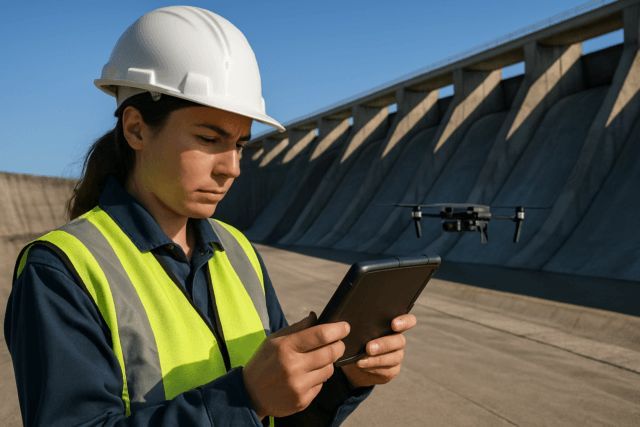
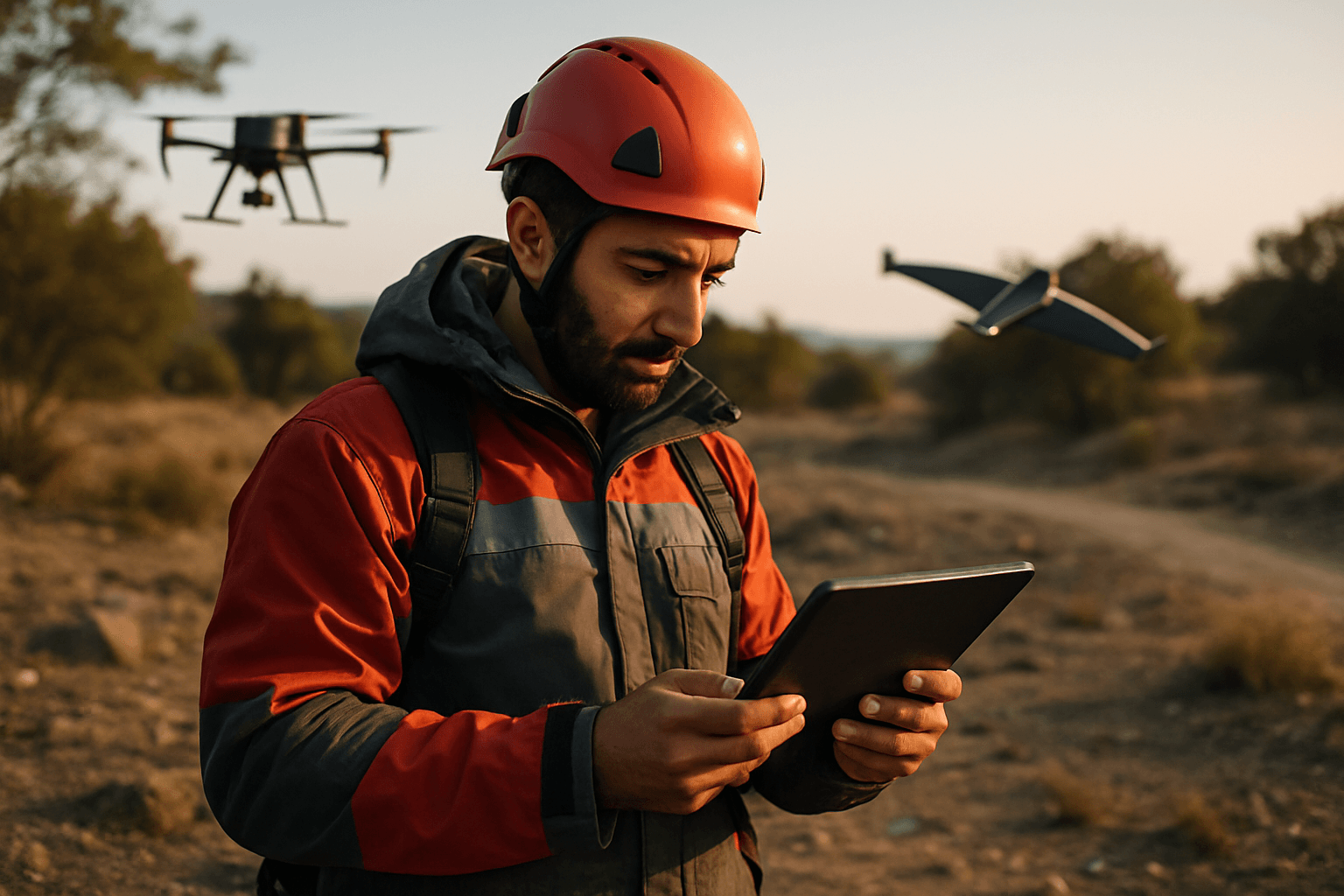
In the critical realm of Search and Rescue (SAR), where every second can mean the difference between life and death, Unmanned Aerial Systems (UAS), commonly known as drones, have emerged as indispensable tools. They offer unmatched speed, precision, and adaptability, proving to be a more cost-effective and rapidly deployable alternative to traditional manned aircraft like helicopters. By providing an aerial perspective, accessing remote or hazardous areas, and delivering real-time data, SAR drones significantly enhance the effectiveness and safety of rescue missions.
However, the diverse nature of SAR scenarios—from vast wilderness searches to urban disaster responses—demands a careful consideration of drone platforms. The primary contenders are multirotor and fixed-wing drones, each possessing distinct characteristics, advantages, and limitations. Understanding these differences is crucial for selecting the optimal tool for a given emergency.
Understanding Multirotor Drones in SAR
Multirotor drones, characterized by multiple propellers, are the most recognizable type of drone. They are essentially miniature helicopters, capable of vertical take-off and landing (VTOL) and the ability to hover stationary in the air. Their design grants them exceptional agility and maneuverability, making them highly versatile for various SAR tasks.
Advantages of Multirotor Drones for Search and Rescue
- Hovering and Precision: The ability to hover allows multirotors to focus intently on specific areas, providing stable imaging for detailed reconnaissance, scanning for survivors, or delivering aid with pinpoint accuracy. This is invaluable in situations requiring close-up inspection.
- Agility and Maneuverability: Multirotors excel at navigating complex and confined environments. They can easily maneuver through urban debris, collapsed buildings, narrow alleyways, or dense forests, reaching places inaccessible to ground teams or larger aircraft.
- Rapid Deployment: Often compact and portable, multirotor drones can be launched within minutes, providing immediate aerial support and critical situational awareness in time-sensitive operations.
- Real-Time Data and Payloads: Equipped with advanced cameras, thermal sensors, mobile phone detection systems, and sometimes gas sensors, multirotors provide live feeds to SAR teams. They can also carry and precisely drop essential supplies like food, water, medical kits, or life preservers to stranded individuals.
- Cost-Effectiveness: Generally, multirotor drones are more cost-effective than fixed-wing drones or traditional helicopters, both in initial purchase and operational costs.
Disadvantages of Multirotor Drones for Search and Rescue
- Limited Flight Time and Range: Due to the high power consumption required to maintain lift, multirotors typically have shorter flight times, often ranging from 20 to 30 minutes, though some professional models can reach up to 55 minutes. This limits their range and requires frequent battery swaps or recharging.
- Lower Speed and Coverage: Their slower speeds and more limited range make them less efficient for covering vast search areas compared to fixed-wing counterparts.
- Payload Limitations: While capable of carrying various sensors, their payload capacity is generally lower than fixed-wing or specialized heavy-lift drones.
- Weather Sensitivity: Multirotors can be more susceptible to strong winds, heavy rain, and other adverse weather conditions, which can impact stability and performance.
Exploring Fixed-Wing Drones in SAR
Fixed-wing drones operate much like traditional airplanes, generating lift through the forward motion of their wings. This aerodynamic design contributes to their superior efficiency and endurance over long distances.
Advantages of Fixed-Wing Drones for Search and Rescue
- Extended Flight Time and Range: Fixed-wing drones are significantly more energy-efficient in forward flight, allowing for much longer flight durations, often ranging from 1 to 5 hours, with some gas-powered models capable of 16 hours or more. This extended endurance translates to a greater range and the ability to cover vast areas efficiently.
- High Speed and Area Coverage: Their higher speeds enable rapid surveying of large landscapes, such as wilderness areas or extensive flood zones, making them ideal for initial reconnaissance and mapping.
- Higher Payload Capacity: Fixed-wing drones can often carry heavier and more sophisticated payloads, including high-resolution cameras, LiDAR systems, and multi-spectral imaging devices, expanding their data collection capabilities.
- Stability in Adverse Weather: Their aerodynamic design provides better stability and resilience against wind and other challenging weather conditions, making them suitable for prolonged missions.
Disadvantages of Fixed-Wing Drones for Search and Rescue
- Takeoff and Landing Requirements: Unlike multirotors, fixed-wing drones typically require a runway or a catapult launch system for takeoff and a larger clear area for landing. This limits their operational flexibility in confined or rugged terrain.
- Inability to Hover: Fixed-wing drones cannot hover or maintain a stationary position, which restricts their ability to perform detailed, close-up inspections or maintain focus on a specific point of interest.
- Less Maneuverable: They are less agile than multirotors and have a larger turning radius, making them less suitable for navigating tight spaces or rapidly changing directions.
- Operational Complexity and Cost: Fixed-wing drones can be more expensive in terms of upfront cost and may require more specialized pilot skills for takeoff, flight, and landing.
Comparing Drones in Different SAR Scenarios
The optimal drone choice often depends on the specific demands of the search and rescue environment.
Urban Search and Rescue (USAR)
In urban disaster zones, characterized by collapsed buildings, dense infrastructure, and debris, multirotor drones are generally preferred. Their VTOL capability, agility, and ability to hover allow them to navigate tight spaces, inspect structural integrity, identify gas leaks, and locate trapped survivors effectively. Compact multirotor models can be deployed quickly to assess damage and provide immediate situational awareness.
Wilderness and Mountainous Regions
Searching vast wilderness or rugged mountainous terrain presents a different set of challenges. Fixed-wing drones excel here due to their extended range and endurance, allowing them to rapidly cover large, difficult-to-access areas for initial reconnaissance and mapping. However, once a potential area of interest is identified, multirotor drones equipped with thermal imaging can then be deployed for detailed, slow-speed searches to detect heat signatures through dense foliage or ravines, even in darkness.
Maritime Search and Rescue
For SAR operations over water, particularly for long-range surveillance of coastal areas or open seas, fixed-wing drones offer advantages with their long endurance and speed, allowing them to cover extensive maritime zones. They can carry multi-sensor payloads, including Electro-Optical/Infrared (EO/IR) sensors and Maritime Patrol Radar (MPR), to detect vessels, life rafts, or persons in the water. However, specialized multirotor and hybrid VTOL drones are also increasingly being used for maritime applications, particularly as technology improves for challenging weather conditions.
Night Operations and Low Visibility
Both multirotor and fixed-wing drones can be equipped with thermal imaging cameras, which are crucial for SAR missions conducted at night, in fog, smoke, or dense vegetation. Thermal sensors detect body heat, allowing rescuers to locate missing individuals in conditions where visual sight is impossible. Many modern SAR drones, such as the DJI Matrice series, come with integrated thermal and visual cameras for comprehensive visibility.
The Rise of Hybrid Drone Solutions
Recognizing the strengths and weaknesses of both traditional platforms, hybrid drones are emerging as a compelling solution for SAR. These Vertical Take-Off and Landing (VTOL) hybrid platforms combine the best features of multirotors and fixed-wings.
Hybrid drones can take off vertically like a multirotor, eliminating the need for a runway, and then transition to forward flight, utilizing wings for efficient, long-endurance missions. This “best of both worlds” approach offers a small operational footprint combined with the extended range and coverage of fixed-wing aircraft. Examples like the JOUAV drones boast impressive flight times of up to 480 minutes and ranges of 200km, while still retaining the ability to hover. The Carrier H6 Hybrid, for instance, provides thermal imaging, real-time communication, and payload deployment with significant endurance.
However, hybrid drones come with their own set of considerations, including higher costs, increased operational complexity due to managing dual flight modes, and more intensive maintenance requirements.
Conclusion
The selection between multirotor and fixed-wing drones for search and rescue operations is not a matter of one being inherently “better” than the other, but rather aligning the drone’s capabilities with the specific demands of the mission. Multirotors excel in precision, agility, and rapid deployment in confined or complex spaces, while fixed-wing drones offer unparalleled endurance and speed for covering vast areas. Hybrid VTOL drones represent a promising evolution, seeking to blend these advantages into a single, highly versatile platform.
As drone technology continues to advance with improvements in battery life, AI integration for autonomous searching, swarm technology, and advanced payloads, their role in saving lives will undoubtedly expand. For SAR teams, a comprehensive understanding of these platforms, and potentially integrating both types or hybrid solutions into their toolkit, is key to maximizing efficiency, enhancing safety, and ultimately, increasing the success rate of critical rescue missions.