
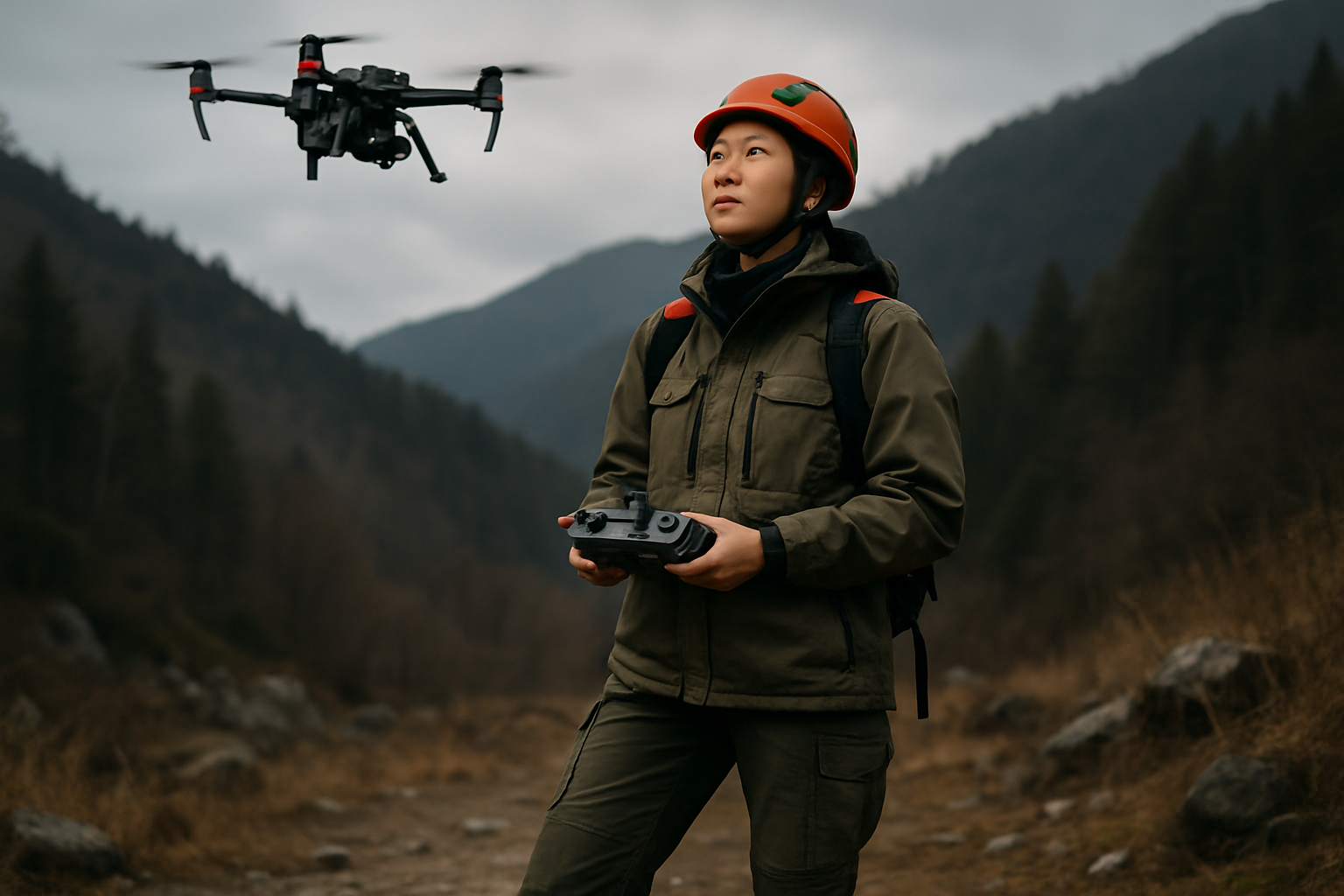
The integration of Unmanned Aerial Systems (UAS), commonly known as drones, has revolutionized Search and Rescue (SAR) operations, offering unprecedented speed, versatility, and access to challenging terrains. The true potential of these aerial assets in time-critical missions hinges on their ability to execute optimal flight paths, ensuring efficient and comprehensive area coverage. This involves a strategic blend of established search patterns, cutting-edge technology, and adaptive planning to maximize the probability of detection while minimizing operational time and resources.
The Critical Role of Drones in Modern SAR
Drones provide a crucial aerial perspective, significantly enhancing situational awareness and improving the chances of a successful outcome in SAR missions. They can cover vast areas more quickly than ground teams, deploy within minutes, and are equipped with advanced sensors such as thermal imaging cameras that can detect heat signatures in low visibility or at night. This capability allows rescue teams to scan wide areas and identify potential targets that might be obscured from a ground-level view.
Understanding Optimal Flight Path Principles for SAR
Effective SAR drone operations rely on systematic flight patterns designed to ensure thorough coverage of a designated area. The choice of pattern often depends on the specifics of the mission, terrain, and available information about the missing subject.
Grid Patterns: Systematic Search
The “lawnmower” or grid pattern is a fundamental search methodology where a drone flies back and forth in parallel lines to systematically scan a defined area. This approach ensures comprehensive coverage, especially when paired with appropriate overlap settings (e.g., 60-70% overlap) to prevent missing crucial details between passes. This method is particularly effective for broad area searches where a specific point of interest is not yet identified.
Expanding Square and Sector Search: Localized Operations
When a high-priority point, such as an Initial Planning Point (IPP) or the last known position, is identified, spiral or expanding square patterns are often employed. The drone flies in widening circles or squares outward from this central point, progressively increasing the search radius. The “creeping-line” pattern is another useful strategy, especially when there are clear boundaries or natural flows like a river, where the search can proceed in a specific direction.
Adaptive and Dynamic Path Planning: Responding to Real-time Data
While pre-planned patterns provide a framework, optimal SAR operations demand dynamic adaptability. Drone operators must be able to adjust flight plans in real-time based on new information, changing weather conditions, or unexpected obstacles encountered during the mission. This dynamic adjustment is crucial for maintaining efficiency and safety in unpredictable environments.
Key Factors Influencing Flight Path Optimization
Several critical factors must be considered to optimize drone flight paths for SAR missions, directly impacting coverage efficiency and mission success.
Sensor Payload and Field of View (FOV)
The type of sensor payload significantly dictates optimal flight parameters. Drones equipped with thermal imaging cameras, for instance, are invaluable for detecting heat signatures. The camera’s field of view (FOV) and required Probability of Detection (POD) directly influence flight altitude, speed, and gimbal tilt. A dense, forested area with a high POD requirement might necessitate slower flight speeds, lower altitudes (e.g., 50–75 feet AGL), and higher overlap paths with a steep gimbal tilt (-70°).
Terrain and Environmental Considerations
Complex terrain, such as mountains, dense forests, or urban environments, introduces obstacles that necessitate careful path planning and obstacle avoidance. Environmental factors like wind speed and direction, temperature, and visibility also play a significant role. Strong winds can affect drone stability, battery life, and flight trajectory, while extreme temperatures can impact battery performance. Real-time environmental assessment is paramount for safe and effective operations.
Battery Life and Endurance
Battery capacity is a primary limitation for drone flight time and directly impacts the area that can be covered in a single mission. Optimizing flight paths to be energy-efficient, such as minimizing the number of sharp turns which consume more power, is crucial to extending operational range and ensuring mission completion.
Regulatory Compliance and Airspace Management
Adherence to airspace regulations and maintaining visual contact with the drone (or utilizing a visual observer) are fundamental best practices for safe SAR drone operations. Flight plans must account for restricted airspace zones and comply with all legal and ethical considerations.
Technologies and Tools for Automated Path Generation
Advanced technologies and software tools are instrumental in generating and executing optimal drone flight paths, enhancing the capabilities of SAR teams.
Mission Planning Software
Sophisticated mission planning software allows operators to design detailed flight plans by setting waypoints, altitudes, and flight parameters. These platforms, such as UgCS, DJI Flight Hub 2, and CalTopo/SarTopo, can automate flight missions, generate various search patterns (e.g., area scan, creeping line), and integrate real-time data for situational awareness. They streamline the planning process, reduce errors, and can even manage multiple flight plans simultaneously.
AI and Machine Learning for Predictive Analysis
Artificial intelligence (AI) and machine learning (ML) are rapidly transforming drone flight path optimization. AI algorithms can analyze vast datasets, including historical SAR efforts, to create probability maps indicating the most likely locations of a missing person. This enables the generation of highly efficient search paths. AI-powered drones can also dynamically optimize routes based on factors like terrain, weather, and air traffic, making real-time decisions for obstacle avoidance and energy efficiency.
Real-time Kinematic (RTK) / Post-Processed Kinematic (PPK) GPS for Precision
RTK and PPK technologies significantly enhance the positional accuracy of drones, achieving centimeter-level precision. RTK provides real-time corrections to GPS data during flight, which is ideal for missions requiring immediate, accurate data, such as rapidly assessing hazards in an emergency. PPK, on the other hand, processes raw GNSS data after the flight, offering potentially higher absolute accuracy and greater reliability in areas with weak real-time signal connectivity. For critical SAR missions where real-time accuracy is paramount, RTK is often preferred, though some systems combine both for enhanced data quality.
Best Practices for Implementing Efficient SAR Drone Missions
Beyond technology, successful SAR drone operations require meticulous planning, skilled execution, and effective teamwork.
Pre-Flight Planning and Risk Assessment
Comprehensive pre-flight planning is the bedrock of safe and efficient SAR drone operations. This includes creating detailed mission plans, selecting appropriate search patterns, and thoroughly assessing environmental conditions (weather, terrain, potential hazards) and suitable launch/landing sites. Utilizing systematic pre-flight checklists ensures methodical preparation and creates a valuable record.
Training and Team Coordination
SAR operations are inherently collaborative. Training programs should emphasize clear communication protocols with ground teams and incident commanders, defining designated roles (pilot, visual observer, payload operator), and efficient information sharing. Real-time video streaming from drones to ground teams facilitates quick decision-making and coordinated responses.
Dynamic In-Flight Monitoring and Adaptation
During flight, operators must continuously monitor drone telemetry (altitude, speed, GPS accuracy, battery status) and interpret data from sensors, especially thermal imaging. The ability to adapt flight plans in real-time to changing conditions, unexpected obstacles, or new intelligence is crucial for mission success.
Post-Mission Analysis and Data Review
After each mission, a structured debriefing and data review are essential for evaluating effectiveness, identifying areas for improvement, and refining future flight strategies. This feedback loop contributes to continuous learning and optimization of SAR drone operations.
Future Trends in SAR Drone Flight Optimization
The future of drone flight optimization in SAR is poised for further advancements. Expect to see greater integration of self-learning navigation, where drones autonomously explore and optimize paths in unfamiliar environments using reinforcement learning. Real-time model adaptation will enable drones to continuously learn from new field data, improving object recognition and obstacle avoidance. Furthermore, multi-agent coordination and AI-driven swarm intelligence could allow groups of drones to collaborate on complex search tasks with minimal human oversight, significantly expanding coverage capabilities and response times. These innovations promise to make SAR missions even more efficient and effective, ultimately saving more lives.