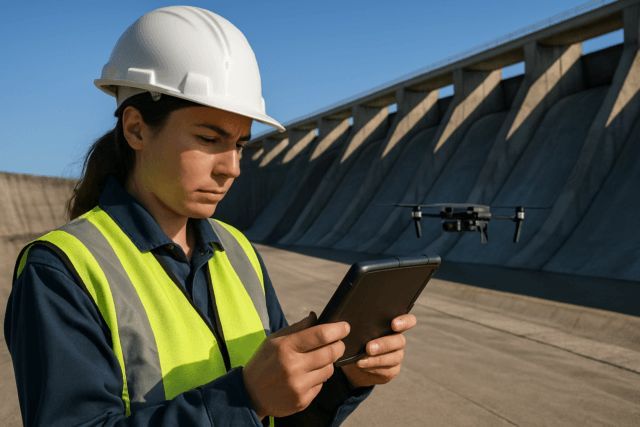
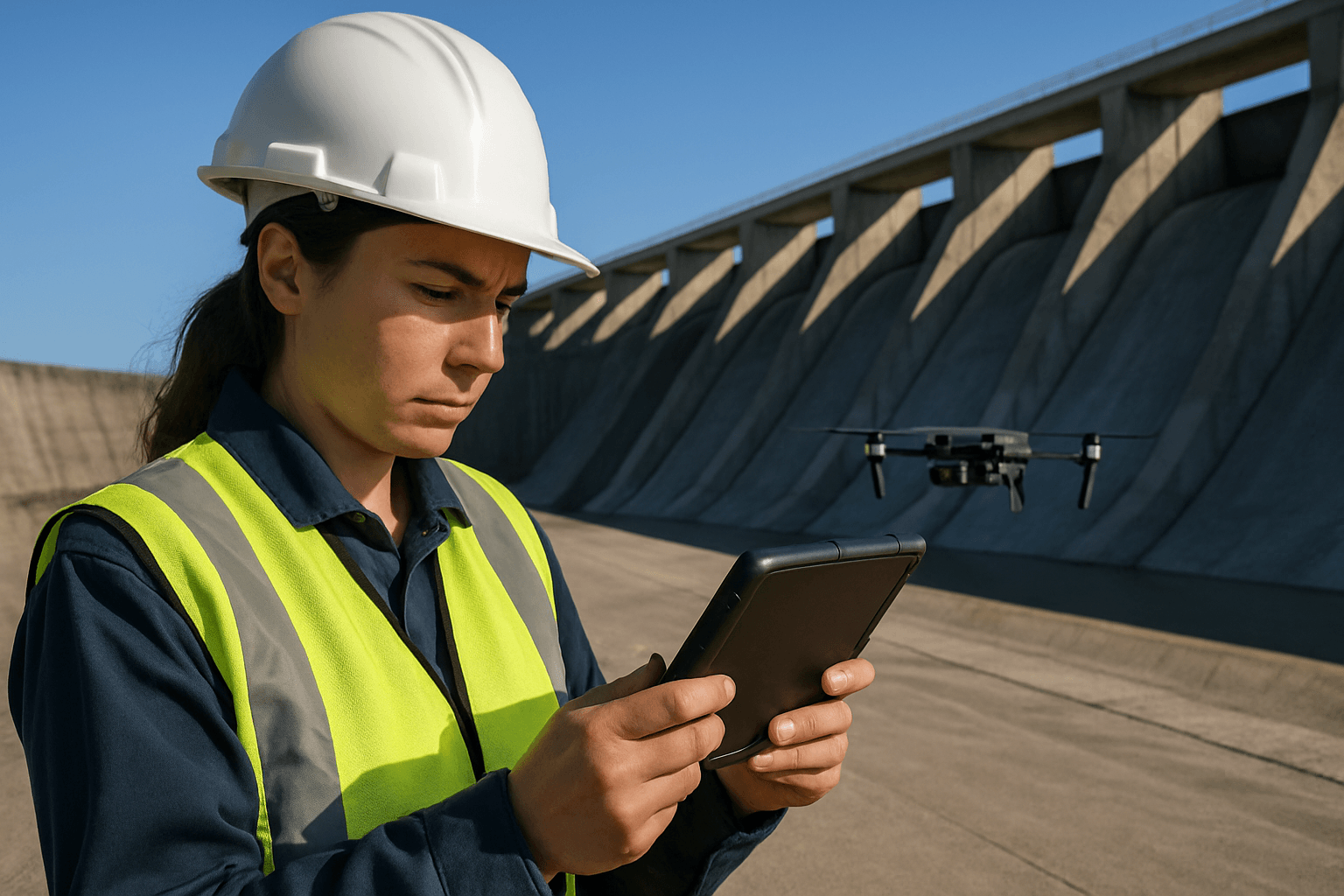
Dam spillways are critical components of a dam’s infrastructure, designed to safely release excess water and prevent overtopping. However, these structures are constantly exposed to immense forces from flowing water, making them highly susceptible to erosion over time. Ensuring the structural integrity of spillways is paramount for dam safety and the protection of downstream communities. Traditionally, inspecting these often vast and hazardous areas has been a labor-intensive, risky, and costly endeavor.
Fortunately, advancements in drone technology are revolutionizing how dam spillways are inspected for erosion and other structural issues. Unmanned Aerial Vehicles (UAVs), commonly known as drones, offer a safer, more efficient, and highly detailed alternative to conventional inspection methods, providing unparalleled access and data collection capabilities for critical infrastructure monitoring.
The Critical Role of Dam Spillway Inspection
Dams are vital for water management, power generation, and flood control, but their constant exposure to environmental stressors means their components, especially spillways, are vulnerable to degradation. Regular and thorough inspections are crucial to identify potential problems early, minimizing maintenance costs and preventing catastrophic failures.
Understanding Spillway Erosion Risks
Spillways are designed to channel high-velocity water, and over time, this can lead to various forms of erosion, including cavitation, abrasion, and freeze-thaw damage. These processes can weaken concrete, dislodge rock, and compromise the structural stability of the spillway. Early detection of erosion is key to implementing timely repairs and preventing minor damage from escalating into major structural issues that could jeopardize the entire dam.
Limitations of Traditional Inspection Methods
Traditional spillway inspections often involve manual visual checks, which are inherently subjective, time-consuming, and can expose human inspectors to significant risks. Inspectors might need to navigate steep slopes, confined spaces, or areas directly above fast-flowing water, often requiring expensive equipment like scaffolding, rope access systems, or boats. These methods are not only dangerous but also limit the frequency and detail of inspections, making it difficult to detect subtle changes or early signs of deterioration.
Drones: A Game-Changer for Dam Spillway Assessment
Drones offer a transformative approach to dam spillway inspection by mitigating the risks and overcoming the limitations of traditional methods. Equipped with advanced sensors and cameras, UAVs can collect comprehensive data from a safe distance, providing detailed insights into the condition of these critical structures.
Enhanced Safety and Accessibility
One of the most significant advantages of using drones is the drastic improvement in safety. Drones can access hard-to-reach or hazardous areas of spillways, such as steep faces, high overflow structures, or areas over water, without endangering human personnel. This reduces the risk of accidents and injuries associated with manual inspections, lowering liability concerns for dam operators.
High-Resolution Data Collection
Drones can capture high-resolution images and videos of spillways, providing detailed visual evidence of concrete surfaces, joints, and any signs of erosion, cracking, spalling, or vegetation growth. This level of detail allows inspectors to identify even minor defects that might be missed during a ground-based visual inspection.
Speed and Efficiency
Inspections that once took days or weeks with traditional methods can often be completed in a fraction of the time with drones. Drones can cover large surface areas quickly, minimizing operational downtime and allowing for more frequent monitoring. This efficiency translates to faster identification of issues and quicker responses, which is crucial for effective dam management.
Cost-Effectiveness
By reducing the need for scaffolding, cranes, extensive labor, and specialized access equipment, drone-based inspections can significantly lower the overall costs associated with dam maintenance. This cost-efficiency allows for more frequent inspections, enabling early detection of issues before they become major, expensive problems.
Technologies Enabling Drone-Based Erosion Detection
The effectiveness of drones in detecting spillway erosion is amplified by the sophisticated sensor technologies they carry and the analytical tools used to process the collected data.
Visual and Thermal Cameras
High-resolution RGB cameras are fundamental for capturing detailed visual information, allowing for the identification of surface degradation, cracks, and other visible signs of erosion.
Thermal cameras, on the other hand, detect temperature differences that can indicate underlying issues invisible to the naked eye. These can reveal seepage paths, internal moisture, blocked drainage systems, or areas of abnormal water flow within the dam structure and spillway, often early indicators of internal erosion. Night-time thermal inspections are particularly effective as they eliminate solar heating noise, making seepage signatures more detectable.
Lidar and Photogrammetry for 3D Modeling
LiDAR (Light Detection and Ranging) sensors use laser pulses to create highly detailed 3D models of the Earth’s surface, capturing topography and morphology with exceptional accuracy. When mounted on drones, LiDAR can provide precise elevation data, invaluable for mapping and monitoring slope erosion and detecting subtle changes in terrain elevation over time. By comparing successive LiDAR scans, analysts can quantify erosion rates and predict future erosion trends. LiDAR can even penetrate vegetation to map the true bare-earth structure of earthen dams and detect subsidence.
Photogrammetry, often used in conjunction with high-resolution RGB cameras, involves creating 3D models from overlapping 2D images. This technique generates ultra-high-resolution textures for assessing concrete spalling, joint separation, and broad structural deformations. Both LiDAR and photogrammetry can produce 3D models with sub-millimeter accuracy, allowing algorithms to detect concrete cracks as thin as 2mm and track their expansion.
Artificial Intelligence and Machine Learning for Analysis
The vast amount of data collected by inspection drones can be efficiently processed and analyzed using Artificial Intelligence (AI) and Machine Learning (ML) algorithms. AI systems can sift through thousands of images and datasets, automatically identifying anomalies like cracks, erosion, spalling, efflorescence, or vegetation growth that might be imperceptible to the human eye.
This automated fault detection not only speeds up the review process but also enhances accuracy by minimizing human error and providing consistent analysis. AI can prioritize repairs, learn and improve its predictive accuracy over time, and correlate data from various sources (drones, sensors, historical records) to provide a comprehensive understanding of a dam’s health.
Challenges and Considerations for Drone Inspections
Despite the numerous benefits, implementing drone-based dam spillway inspections comes with its own set of challenges.
Regulatory Hurdles and Flight Restrictions
The use of drones, especially near sensitive infrastructure like dams, involves various regulatory hurdles and requires special permits. Regulations can differ significantly by country or region, and operators must adhere to flight rules, authorization requirements, and site-specific conditions.
Data Management and Interpretation
Drones generate massive amounts of data, presenting challenges in terms of storage, processing, and security. Water management organizations need robust systems to handle this influx of information, ensuring it is properly analyzed, secured, and integrated with existing asset management and maintenance planning processes. The true power of 3D mapping lies in connecting this spatial data to a Computerized Maintenance Management System (CMMS) to automatically trigger work orders.
Weather and Environmental Factors
Drone operations can be affected by weather conditions such as strong winds, rain, or extreme temperatures. Environmental factors like dense vegetation can also pose challenges for data collection, although LiDAR technology can help penetrate foliage.
Real-World Applications and Future Outlook
Drones are already being successfully deployed for dam inspections across various regions, demonstrating their practical value in monitoring asset health and mapping spillway erosion.
Case Studies of Successful Deployments
Utility companies like Southern California Edison have been using drones for dam inspections since 2016, leveraging their speed, safety, and practicality to obtain measurable data and a bird’s eye view. The New York Power Authority (NYPA) utilizes drones for spillway erosion mapping, among other asset health monitoring tasks. Case studies also highlight how integrated platforms combining drones, robots, and AI could have prevented catastrophic spillway failures by correlating diverse inspection data.
The Future of Autonomous Dam Inspection
The future of dam spillway inspection points towards increasingly autonomous systems. Advancements in machine learning, real-time telemetry, and swarm drone technologies are expected to further enhance predictive accuracy and automation. Autonomous LiDAR drones are already transforming surveying workflows, capable of navigating complex environments and collecting high-resolution data with precision for infrastructure inspection. The integration of AI with drone-in-a-box solutions promises frequent, precise, and remotely operated inspections, fundamentally changing how critical infrastructure is monitored and maintained.
Conclusion
The answer is a resounding yes: drones can be effectively used to inspect dam spillways for erosion. By offering enhanced safety, superior data quality, increased efficiency, and reduced costs, drones are becoming an indispensable tool in dam safety management. The synergistic combination of high-resolution visual, thermal, and LiDAR sensors, coupled with powerful AI and machine learning analytics, provides an unprecedented ability to detect, monitor, and predict erosion in dam spillways. As technology continues to evolve, drones will undoubtedly play an even more central role in safeguarding these vital pieces of infrastructure, ensuring their longevity and the protection of communities worldwide.