
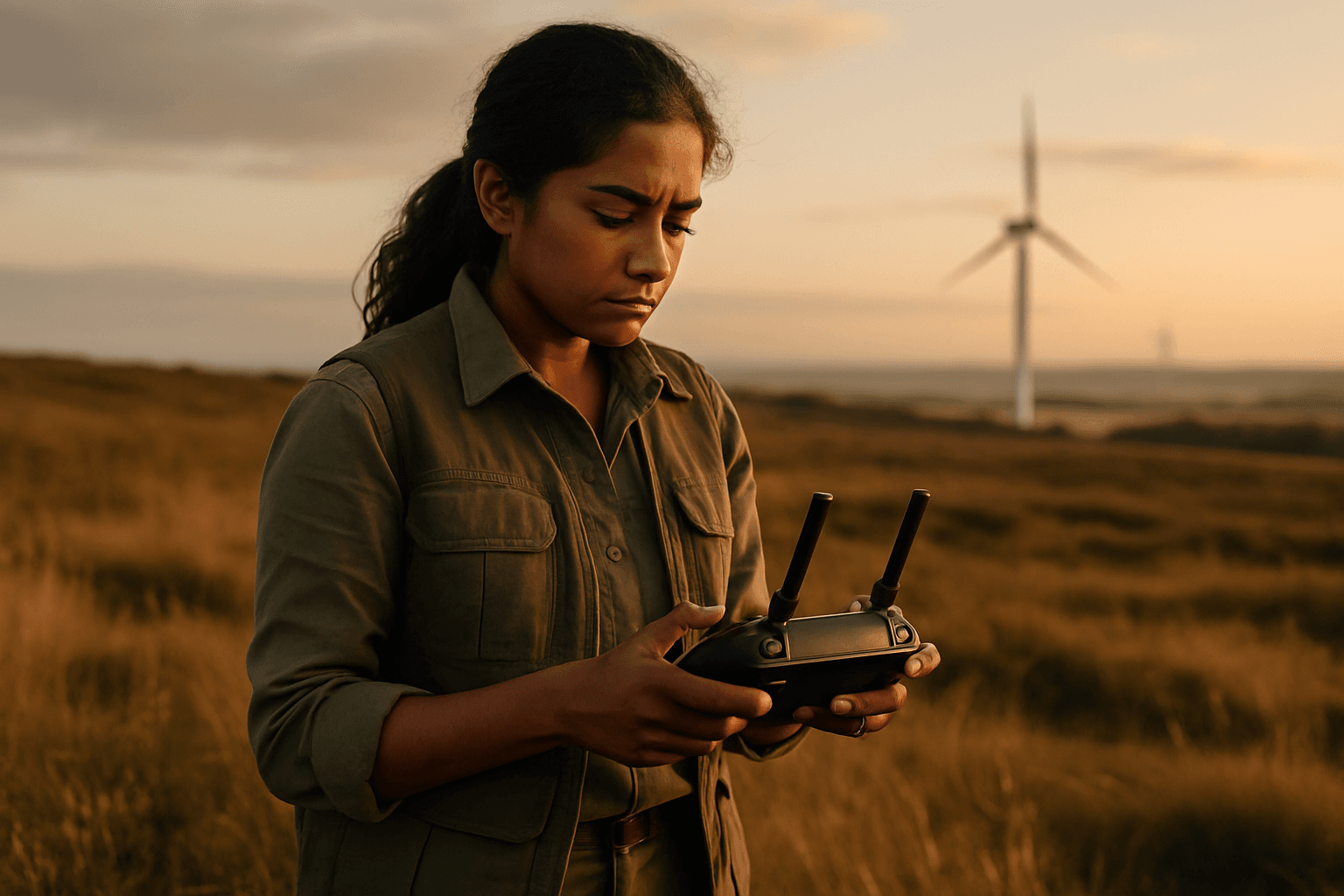
The urgent transition to renewable energy sources is critical for combating climate change, yet the expansion of infrastructure like wind and solar farms raises significant questions about their ecological footprint. As humanity strives for a sustainable future, understanding and mitigating the impact of these developments on wildlife is paramount. This is where drone technology is emerging as an indispensable tool, offering unprecedented capabilities for studying wildlife in and around renewable energy sites, bridging the gap between energy needs and conservation efforts.
The Intersection of Renewable Energy and Wildlife Conservation
The global push for renewable energy—such as wind, solar, and hydropower—necessitates large-scale infrastructure development. While these sources are vital for reducing greenhouse gas emissions, their construction and operation can have unintended consequences for local ecosystems and wildlife. For instance, wind turbines can pose collision risks for birds and bats, solar farms can fragment habitats or create “lake effects” that confuse birds, and hydropower projects can alter aquatic environments. Accurately assessing and minimizing these impacts requires robust and efficient monitoring strategies.
Traditional Monitoring Methods: Limitations and Challenges
Historically, wildlife monitoring around energy infrastructure relied on ground-based surveys, manned aircraft flights, and stationary sensors. These methods, while valuable, often come with significant limitations. Ground surveys can be labor-intensive, costly, and difficult to conduct in remote or hazardous terrains, making it challenging to cover large areas comprehensively. Manned aircraft, while offering aerial perspectives, are expensive, can be intrusive to wildlife, and carry inherent safety risks for personnel. Furthermore, traditional techniques may struggle to capture crucial behavioral nuances or detect animals in dense vegetation or low-visibility conditions.
Drones: A Game-Changer for Wildlife Monitoring
Unmanned Aerial Vehicles (UAVs), or drones, have rapidly transformed environmental research and management by offering a flexible, cost-effective, and efficient means of data collection. Their ability to cover large areas quickly and collect high-resolution spatial and temporal data makes them powerful tools for studying wildlife in the context of renewable energy development.
Non-Invasive Data Collection
One of the most significant advantages of drones is their capacity for non-invasive data collection. Drones can observe wildlife from a safe distance, minimizing disturbance that might alter natural behavior, a common issue with human presence or manned aircraft. This is crucial for obtaining accurate insights into animal populations and behaviors, especially for sensitive or easily startled species. However, it’s important to note that drones are not entirely silent or invisible, and their noise and visual presence can still cause stress or behavioral changes in some animals, particularly at lower altitudes.
High-Resolution Aerial Imagery and Video
Drones equipped with high-resolution cameras capture detailed images and videos of ecosystems, providing invaluable information on species distribution, habitat health, and ecosystem dynamics. This bird’s-eye view allows researchers to identify individual animals, track their movements, and monitor population dynamics with unparalleled accuracy, even in complex terrains where ground observation is difficult.
Thermal Imaging and Multispectral Sensors
Beyond standard visual cameras, drones can carry advanced sensor payloads. Thermal imaging cameras detect heat signatures, allowing researchers to spot animals hidden in dense vegetation or to conduct surveys at night. This is particularly useful for counting nocturnal animals like bats or detecting injured wildlife that might be otherwise undetectable. Multispectral sensors, on the other hand, can assess vegetation health, identify changes in animal habitats, or detect subtle environmental shifts that traditional cameras might miss.
Acoustic Monitoring
Drones can also be fitted with specialized microphones for acoustic monitoring. This allows for the recording of animal vocalizations, such as bird calls, which can be analyzed to identify species and monitor population presence without direct visual contact. This approach is especially beneficial for species that reside in dense canopy or marshlands, where visual monitoring is challenging.
Cost-Effectiveness and Efficiency
Compared to traditional methods, drones often offer a more cost-effective solution for environmental monitoring. They reduce the need for expensive piloted aircraft and extensive manual labor, minimizing operational costs and enabling more frequent monitoring over larger areas. This affordability makes advanced monitoring accessible to a wider range of organizations, including smaller entities and local communities.
Accessing Remote and Difficult Terrain
Many renewable energy sites are located in remote, rugged, or otherwise inaccessible areas. Drones can effortlessly navigate challenging topography, dense forests, or dangerous landscapes that would be difficult or hazardous for human researchers to access. This capability ensures comprehensive data collection in areas that were previously impossible to study efficiently.
Specific Applications of Drones in Renewable Energy Studies
Drones are being deployed across various renewable energy sectors to assess and mitigate their impacts on wildlife:
Wind Farms and Avian/Bat Collision Risk
For wind energy projects, drones are crucial for monitoring bird and bat activity. They can conduct pre-construction surveys to identify migration paths and roosting sites, assess the presence of sensitive species, and monitor collision rates with turbine blades post-construction. Thermal cameras are particularly effective for tracking bats and nocturnal birds. Drones also help inspect wind turbines for damage, which can indirectly contribute to habitat preservation by ensuring efficient operation and reducing the need for ground crew, thereby minimizing disturbance.
Solar Farms and Habitat Fragmentation
Solar power plants, especially large-scale installations, can lead to habitat fragmentation, alter local microclimates, and affect ground-dwelling species. Drones can create detailed maps of vegetation cover and land use changes, helping to assess the impact on wildlife habitats and identify critical areas for protection or restoration. They can also monitor the behavior of animals interacting with solar panels, such as birds mistaking reflective surfaces for water bodies.
Hydropower Projects and Aquatic Ecosystems
While less commonly discussed in direct relation to drone wildlife monitoring, drones can contribute to assessing the broader environmental impact of hydropower. Equipped with specialized sensors, they can monitor water quality (temperature, pollutants), vegetation health along riverbanks, and changes in aquatic ecosystems caused by dam operations. This data indirectly helps understand impacts on fish populations and other aquatic wildlife.
Transmission Lines and Corridor Effects
The construction of transmission lines to connect renewable energy sources to the grid can create linear infrastructure corridors that impact wildlife movement and habitat connectivity. Drones can map these corridors, assess vegetation encroachment, and monitor animal crossings, providing data to inform mitigation strategies and minimize habitat fragmentation.
Challenges and Future Directions
Despite their immense potential, the use of drones in wildlife research and environmental monitoring faces several challenges.
Regulatory Hurdles and Ethical Considerations
Regulations governing drone use vary widely by region and can be restrictive, particularly in sensitive environments or protected areas. Ethical concerns regarding potential wildlife disturbance also remain a significant challenge. The noise generated by drones, especially at lower altitudes, can stress animals and alter their behavior, leading to skewed data or negative impacts on already vulnerable populations. Researchers must adhere to strict protocols, including maintaining appropriate altitudes and speeds, and prioritizing species-specific sensitivities to minimize disturbance.
Data Processing and AI Integration
Drones generate vast amounts of data, including high-resolution images, videos, and sensor readings. Processing and analyzing this data effectively requires significant computational power and advanced analytical tools. The integration of artificial intelligence (AI) and machine learning (ML) is crucial for automating image analysis, improving decision-making accuracy, and extracting meaningful insights from complex datasets. AI can help in automated animal counting, species identification, and pattern recognition, making monitoring more efficient.
Swarm Robotics and Extended Endurance
Future advancements include the development of swarm robotics, where multiple drones work collaboratively to cover larger areas more efficiently. Improvements in battery technology and the integration of sustainable power sources, such as solar-powered drones, are extending flight times and enabling continuous, autonomous operations over prolonged periods, even in remote areas. This will enhance their capability for long-term environmental surveillance and disaster management.
Conclusion: A Symbiotic Relationship for a Sustainable Future
Drones are revolutionizing the study of renewable energy infrastructure’s impact on wildlife, offering an unparalleled ability to collect accurate, high-resolution data in a non-invasive, efficient, and cost-effective manner. From monitoring avian collision risks at wind farms to assessing habitat changes around solar installations, these robotic eyes in the sky provide critical insights necessary for informed decision-making and the development of effective mitigation strategies. As drone technology continues to evolve, integrating AI, improving endurance, and refining operational protocols will further solidify their role as essential tools in ensuring that our transition to a renewable energy future is truly sustainable, protecting biodiversity while powering our planet.