
In an increasingly complex world, the need for robust surveillance and security solutions has never been more critical. Traditional methods, often limited by fixed perspectives and human constraints, are being revolutionized by the advent of Unmanned Aerial Vehicles (UAVs), commonly known as drones. These agile platforms, equipped with sophisticated sensors, are generating vast amounts of data that, when seamlessly integrated with Command and Control (C2) systems, create a powerful synergy. This integration is not merely an upgrade; it represents a fundamental shift in how organizations perceive, monitor, and respond to threats, offering unparalleled situational awareness and significantly enhancing security postures.
Understanding Drone Data and Command and Control Systems
To fully grasp the transformative power of this integration, it’s essential to define its core components.
What is Drone Data?
Drone data refers to the diverse range of information collected by UAVs during their operations. Modern security drones are equipped with an array of payloads designed to gather comprehensive intelligence. This includes:
- Optical Cameras: Capturing high-resolution images and video, providing immediate visual situational awareness and detailed inspection data.
- Thermal Sensors: Detecting heat signatures, which are invaluable for night operations, identifying intruders in concealed areas, or locating individuals in search and rescue missions.
- LiDAR (Light Detection and Ranging): Utilizing laser pulses to create highly accurate 3D models of terrain and structures, crucial for mapping, inspection, and planning purposes.
- Multispectral Sensors: Capturing data across specific light bands beyond the visible spectrum, useful for environmental analysis, vegetation monitoring, and detecting subtle changes in environments.
- Other Specialized Sensors: Including GPS, movement detectors, and even automated license plate readers or facial recognition technology in some advanced applications.
This data can be collected through various flight methods, including autonomous pre-programmed routes or manual operation for rapid response to live threats.
What are Command and Control (C2) Systems?
Command and Control (C2) systems are centralized platforms that enable the monitoring, management, and coordination of various assets and operations. In a security context, a C2 system acts as the “brain” of an operation, integrating multi-source inputs from sensors, communication devices, and personnel into a unified interface. These systems facilitate rapid interpretation of information, aid in decisive action, and allow for coordinated responses.
The Synergy: Integrating Drone Data into C2 Systems
The true potential of drones in surveillance and security is unlocked when their rich data streams are seamlessly fed into a robust C2 system. This integration moves beyond simply having drones operate; it creates a dynamic, responsive, and intelligent security infrastructure.
Enhancing Situational Awareness
By providing a bird’s-eye view, drones extend visibility, allowing security teams to monitor large or complex environments in real-time. When integrated into C2 systems, live video feeds, thermal imagery, and other sensor data from UAVs are streamed directly to command centers. This unified operational picture helps eliminate blind spots and offers a comprehensive understanding of evolving situations, especially in areas difficult for ground patrols to access.
Boosting Rapid Response and Incident Management
Drones can be airborne within minutes, scanning wide areas and streaming live data to security teams. This speed and flexibility, combined with C2 integration, enable faster decision-making and more coordinated responses. When an alarm is triggered, drones can be instantly dispatched to investigate, providing real-time intelligence that allows teams to assess threats, make informed decisions, and mitigate potential damage more effectively. This is crucial for applications like border patrol, critical infrastructure monitoring, and event security.
Reducing Human Risk and Optimizing Resources
Deploying drones for surveillance in hazardous or hard-to-reach areas keeps human personnel out of harm’s way. Moreover, automated drone patrols can reduce the need for costly infrastructure and manual patrol units, optimizing security operations and allocating human resources to higher-value tasks.
Key Technologies Enabling Seamless Integration
Several advanced technologies are pivotal in facilitating the effective integration of drone data with C2 systems.
Advanced Sensors and Payloads
Beyond standard optical cameras, modern drones incorporate sophisticated sensors like high-resolution thermal imagers and LiDAR for detailed data capture in various conditions, including low light. Multi-sensor fusion, which combines data from different sensor types (e.g., visual, LiDAR, inertial measurement units), enhances accuracy and reliability, especially for tasks like simultaneous localization and mapping (SLAM).
Secure Communication Links and Data Transmission
Real-time data transmission is mission-critical for effective surveillance. Drones leverage technologies like 5G, satellite links, and dedicated radio frequencies to transmit data instantly to command centers, even from thousands of kilometers away. These connections are often encrypted and stable to ensure data security and minimal lag. Onboard processing capabilities can also reduce bandwidth requirements by transmitting only processed information instead of raw data.
Artificial Intelligence and Machine Learning (AI/ML)
AI is a game-changer for drone data integration. AI-powered algorithms can analyze vast amounts of sensor data on-the-fly, automating tasks like object detection, tracking, pattern recognition, and anomaly identification. This reduces cognitive overload for operators, helps differentiate intrusions from false alarms, and allows C2 systems to make quicker, more informed decisions, even predicting risks before they escalate. ML-based systems can also learn over time, becoming more accurate with historical data.
Cloud-Based Platforms and API Connectivity
Cloud-based security solutions offer flexibility and scalability, allowing for the swift deployment and integration of sensors, effectors, and C2 devices. They enable the distribution of situational awareness where needed and support centralized or decentralized control. Enterprise drone integration software platforms connect drone operations to core business systems like C2, ERP, and CRM through Application Programming Interfaces (APIs), webhooks, and middleware. This ensures seamless data synchronization and prevents data from being stored in isolated silos.
Applications in Surveillance and Security
The integration of drone data with C2 systems is transforming security operations across numerous sectors:
Perimeter and Critical Infrastructure Security
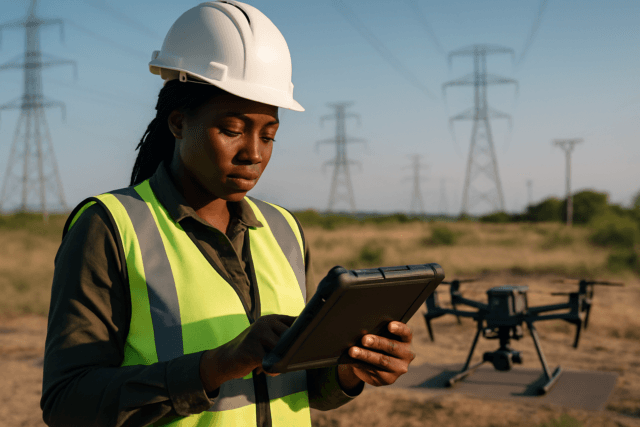
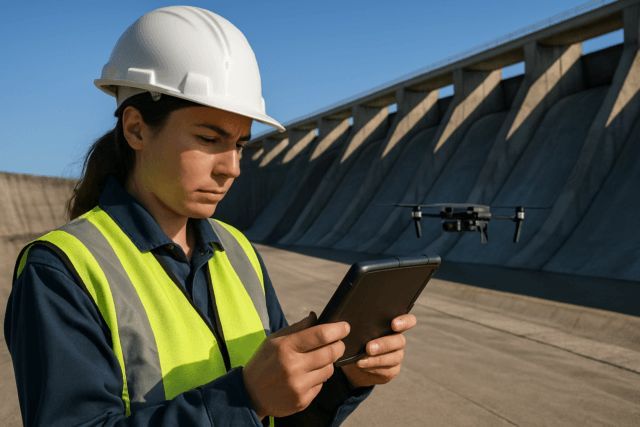
Drones can autonomously patrol large perimeters, including borders, industrial complexes, and data centers, detecting intrusions and monitoring suspicious activity in real time. They perform regular inspections of pipelines, power lines, bridges, and other critical infrastructure, identifying issues like corrosion, leaks, or structural damage more safely and efficiently than traditional methods.
Event Security and Crowd Monitoring
During large public gatherings, protests, or sporting events, drones provide an aerial overview for monitoring crowds, identifying potential security threats, and assisting law enforcement in managing public order and responding to incidents faster.
Law Enforcement and Public Safety
Police and emergency services use drones for real-time aerial surveillance, crime scene investigation, traffic management, and to aid in high-speed pursuits, reducing risks for officers and the public. They can quickly locate missing persons in disaster-stricken areas or provide real-time disaster assessment, guiding rescue efforts.
Military and Defense Operations
In military contexts, drones are crucial for intelligence, surveillance, and reconnaissance (ISR), providing real-time data on enemy positions and terrain without endangering human lives. Advanced C2 systems integrate these multi-source inputs to create a unified common operational picture, enabling faster decision-making and coordinated tactical responses. AI-augmented coordination is becoming essential for managing growing numbers of drones and even swarm technology.
Challenges and Future Outlook
Despite the immense benefits, integrating drone data with C2 systems presents challenges. These include ensuring data privacy and security, particularly with sensitive information like facial recognition or personal identifiable information, requiring robust encryption and access controls. Interoperability issues among different drone models, sensor types, and existing C2 infrastructures also need to be addressed through standardization. Bandwidth limitations for transmitting massive data volumes, especially in remote areas or during electronic warfare, remain a concern.
The future of drone integration in security is exceptionally promising. We can expect significant advancements driven by:
- Enhanced AI and Machine Learning: Empowering drones to analyze data on-the-fly, make autonomous decisions, and adapt to dynamic situations with minimal human intervention.
- Next-Generation Sensors: Improving image resolution, expanding capabilities under various weather conditions, and enabling more effective threat detection.
- 5G Connectivity: Enabling real-time streaming of high-definition video and data, ensuring immediate feedback during critical operations.
- Drone Swarm Technology: Multiple drones working together seamlessly, amplifying their capabilities for surveillance, search and rescue, and defense operations.
- Edge Computing: Allowing drones to process data locally, accelerating response times, enhancing real-time threat detection, and reducing reliance on cloud-based transfers.
- Closer Integration with IoT and Smart City Infrastructure: Linking drones directly to urban security systems, sensors, and emergency response networks for a truly interconnected defense.
Conclusion
The integration of drone data with command and control systems is fundamentally reshaping the landscape of surveillance and security. By providing real-time, comprehensive aerial intelligence, UAVs, when effectively networked into C2 platforms, offer unparalleled situational awareness, accelerate response times, reduce risks to personnel, and optimize resource allocation. As technological advancements continue, overcoming existing challenges will pave the way for even more sophisticated, autonomous, and integrated drone solutions, establishing them as indispensable assets in safeguarding our communities and critical assets against evolving threats.