
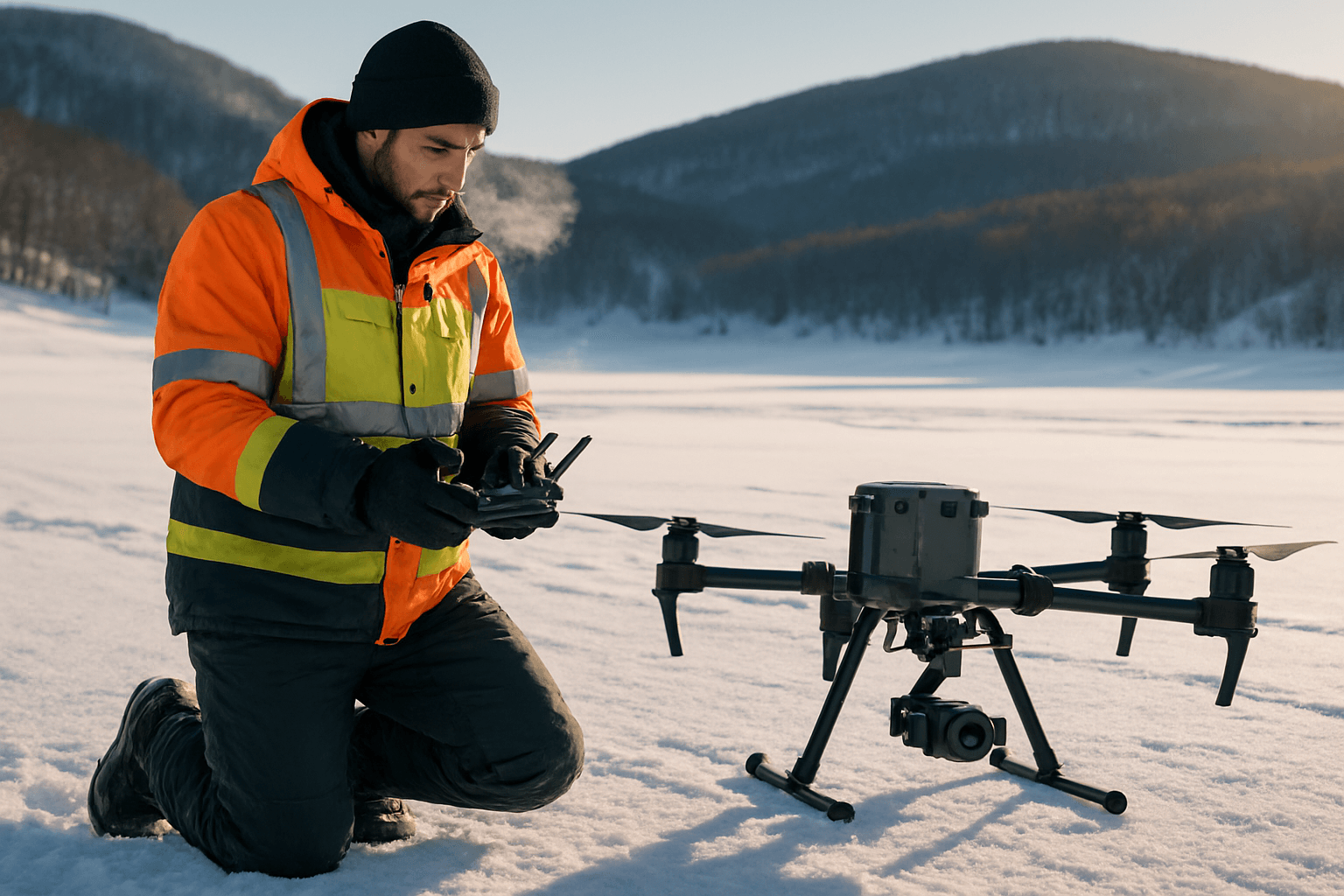
Drone surveying has revolutionized various industries, offering unprecedented efficiency and access to challenging terrains for applications like topographical mapping, construction monitoring, and infrastructure inspection. However, operating Unmanned Aerial Systems (UAS) in cold weather presents a unique set of challenges that can compromise equipment performance, data accuracy, and operational safety. While waiting for ideal conditions isn’t always feasible, implementing best practices can ensure successful and reliable cold-weather drone surveying missions.
Understanding the Cold Weather Challenges for Drone Surveying
Cold temperatures significantly impact both the drone and its operator, necessitating careful consideration and preparation.
Battery Performance Degradation
The most significant impact of cold weather on drones is the degradation of battery performance. Lithium Polymer (LiPo) batteries, commonly used in drones, experience a slowdown in chemical reactions at low temperatures, leading to reduced efficiency and shorter flight times. This can result in a 20-50% reduction in capacity, with extreme cold potentially causing mid-flight power failures or unexpected shutdowns.
Material Brittleness and Component Stress
Many drone components, particularly those made of plastic, can become brittle in freezing temperatures, increasing the risk of damage or breakage during impact or even normal operation. This also applies to the remote controller’s plastic parts and extendable antennas. Motors may also have to work harder, increasing power consumption.
Sensor and Camera Functionality
Cold weather can affect the accuracy and reliability of collected data. Condensation can form on camera lenses and sensors, blurring images and interfering with GPS signals, which can distort geotags and compromise mapping accuracy. Some gimbal sensors are also sensitive to cold.
Ice Accumulation and Aerodynamics
Icing is a critical hazard for drones in cold, humid conditions. Ice can accumulate on propellers, airframes, and sensors, increasing the drone’s weight and altering its aerodynamic properties. This can lead to reduced lift, decreased efficiency, propeller imbalance, erratic flight behavior, motor failure, and loss of control. Flying through clouds, fog, or precipitation in sub-freezing temperatures significantly increases the risk of icing.
Operator Comfort and Safety
Cold weather also poses risks to the pilot. Frozen fingers can impair control, and poor visibility due to snow, fog, or low light conditions can make maintaining visual line of sight (VLOS) challenging. Slippery surfaces also increase the risk of accidents on site.
Pre-Flight Preparations for Cold Weather Surveying
Thorough preparation is paramount for mitigating cold weather risks.
Battery Management Strategies
- Check Manufacturer Specs: Always refer to your drone’s operational temperature range. Most consumer drones perform best above -10°C (14°F), with significant performance drops below 0°C (32°F).
- Fully Charge and Keep Warm: Start with 100% charged batteries. Store batteries in a warm place, such as an insulated case, a warm vehicle, or even close to your body in an inside jacket pocket, until just before use.
- Battery Warmers: Consider investing in battery warmers, especially for frequent cold-weather operations. Some advanced drones, like DJI’s Matrice series, have self-heating batteries.
- Pre-Flight Warm-up: Once the battery is in the drone, allow the aircraft to hover at a low altitude (6-10 feet) for 30-60 seconds to allow the battery and internal components to warm up to an optimal operating temperature.
- Bring Extra Batteries: Cold weather depletes batteries faster, so having several fully charged spare batteries is essential for extended missions.
Drone Inspection and Maintenance
- Thorough Pre-Flight Check: Inspect propellers for any cracks or damage, as cold can exacerbate these issues. Ensure all moving parts are free of ice or stiffness.
- Cleanliness: Clean all sensors and camera lenses thoroughly before flight to prevent moisture from freezing or obstructing views.
- Firmware Updates: Verify that all firmware is up to date, as cold weather can sometimes reveal software bugs.
- Launch Pad: Use a landing pad to provide a dry, clean surface for takeoff and landing, preventing moisture from snow or ground ice from damaging motors or sensitive electronics.
Flight Planning Adjustments
- Check Weather Forecasts Religiously: Monitor temperature, humidity, wind speed, and precipitation (snow, sleet, freezing rain) forecasts closely. Avoid flying in active precipitation due to the risk of icing and damage to electronics.
- Mind the Wind: Strong winds require motors to work harder, draining batteries faster and compromising stability. If flying in windy conditions, fly perpendicular to the wind or upwind first.
- Optimal Lighting: Shorter winter days mean less daylight. Plan flights for midday when shadows are shortest and lighting is most consistent to avoid issues with photogrammetry software. Overcast days can be ideal for consistent lighting, provided there is no precipitation.
- Adjust Flight Parameters: Consider increasing image overlap (80-85%) to provide more data points for photogrammetry, especially over fresh snow which can be difficult for software to process. Flying at a slightly lower altitude can also help capture more detail.
- Conservative Flight Times: Plan for significantly reduced flight times and set conservative Return-To-Home (RTH) thresholds (e.g., 30% battery instead of 20%) to ensure safe recovery. Limit individual flight durations to reduce exposure to cold and minimize ice accumulation.
- GCPs: Set more Ground Control Points (GCPs) to account for potential errors or movements in cold conditions.
In-Flight Operations and Best Practices
During the mission, vigilance is key.
Continuous Monitoring of Drone Telemetry
Constantly monitor battery voltage and remaining capacity. Be alert for sudden drops in battery levels or warning signs from the drone’s control system. Land immediately if you notice rapid depletion. Some apps can display battery temperature, offering another crucial data point.
Maintaining Visual Line of Sight (VLOS)
Despite the challenges of low visibility, adhere strictly to VLOS regulations. Keep the drone within your sight at all times. Specialized gloves that allow touchscreen operation can help maintain dexterity and control while keeping hands warm.
Gentle Maneuvers and Controlled Descent
Avoid aggressive maneuvers that put extra strain on motors and batteries. Gentle control inputs help preserve battery life and reduce stress on brittle components.
Watch for Environmental Changes
Weather conditions can change rapidly in winter. Be prepared to land the drone immediately if wind speeds increase, visibility drops, or any signs of icing are observed. Descending to lower altitudes can sometimes provide a slight temperature increase, helping to melt accumulated ice.
Post-Flight Procedures and Data Handling
Proper post-flight care ensures the longevity of your equipment and the integrity of your data.
Gradual Warm-up and Inspection
Upon returning indoors from the cold, allow the drone to warm up gradually inside its case to prevent condensation from forming on sensitive electronics and lenses. Avoid using heat guns or hair dryers for rapid warming, as this can damage components. After it has acclimatized, wipe down the drone with a dry microfiber cloth, paying close attention to gimbal mechanisms and motor areas where moisture may have accumulated. Inspect propellers again for any stress cracks.
Data Integrity Checks
Review collected data for quality issues such as blurriness, shadows, or inconsistencies caused by low light or adverse conditions. Increase overlap or re-fly problematic areas if necessary.
Battery Storage and Recharging
Store batteries at room temperature (ideally 18-26°C or 68-79°F) and at a recommended storage charge (typically 40-65% for LiPo) if not being used for an extended period. Never charge cold batteries; allow them to warm up to room temperature first to prevent damage.
By adhering to these best practices, drone operators can significantly reduce the risks associated with cold-weather surveying, ensuring safer operations, accurate data collection, and the extended lifespan of their valuable equipment.