Aerial cinematography has revolutionized filmmaking, offering breathtaking perspectives and dynamic shots previously only achievable with expensive cranes or helicopters. At the heart of this revolution are advanced drones equipped with integrated gimbals, which provide unparalleled stability and control for professional-grade video. These sophisticated flying cameras combine cutting-edge imaging technology with precise stabilization systems, allowing cinematographers to capture smooth, cinematic footage even in challenging conditions. This guide delves into the top drones that excel in aerial cinematography, highlighting their key features and what makes them stand out in a competitive market.
The Crucial Role of Integrated Gimbals in Aerial Cinematography
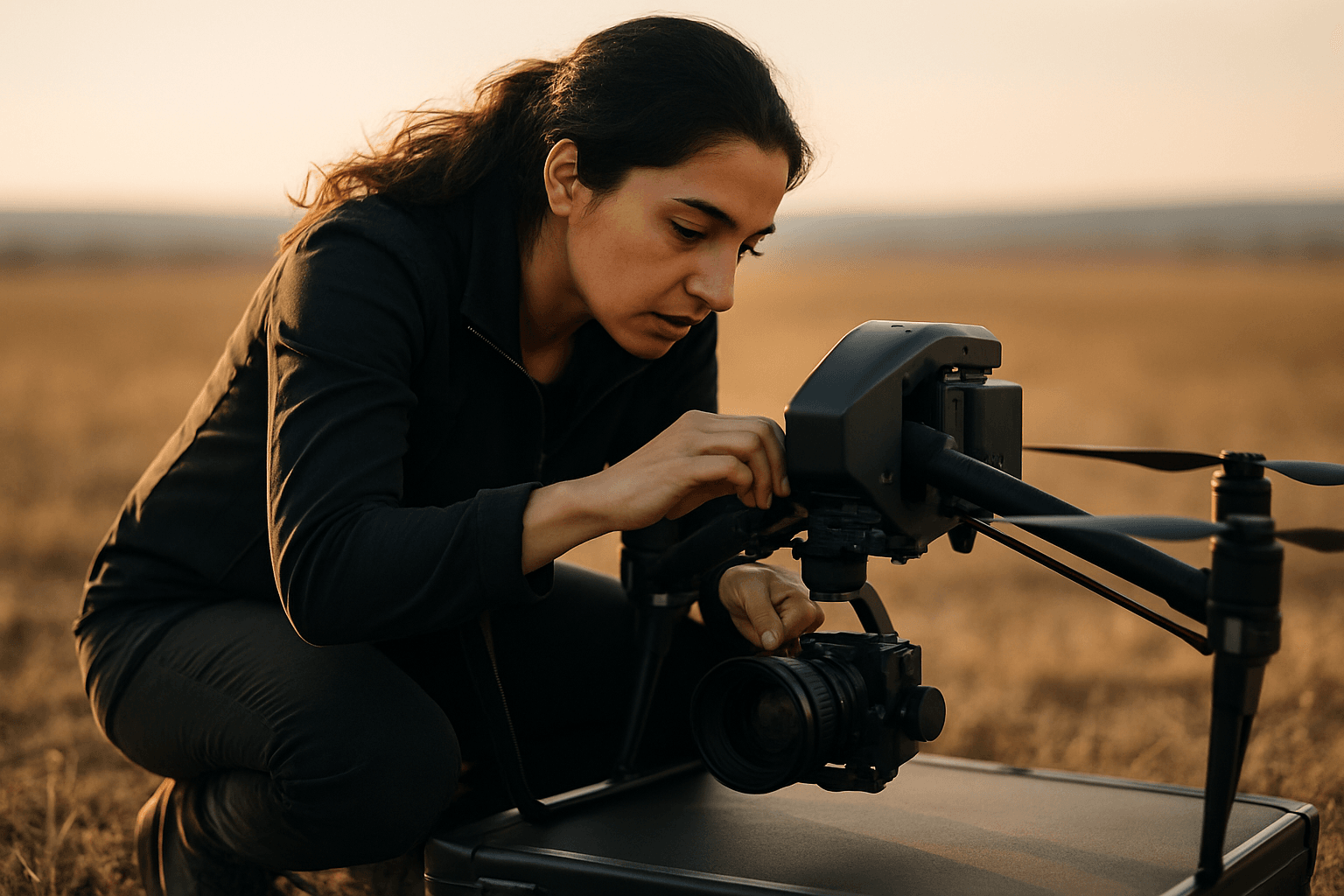
An integrated gimbal is a mechanical stabilization system that holds the camera steady, compensating for the drone’s movements (pitch, roll, and yaw). For aerial cinematography, a 3-axis gimbal is standard, using motors and sensors to keep the camera level and pointed in the desired direction, irrespective of wind or flight maneuvers. This integration is paramount because it ensures that video footage remains buttery smooth and free of jitters, allowing for sweeping, professional-looking shots that are essential in film and television production. Without a highly effective gimbal, even the best camera would produce unusable, shaky footage from a drone.
Top Drones Redefining Aerial Cinematography
Several drones currently dominate the aerial cinematography landscape, each offering a unique blend of camera quality, flight performance, and intelligent features.
DJI Inspire 3: The Professional Filmmaker’s Powerhouse
The DJI Inspire 3 stands at the pinnacle of professional cinema drones, engineered for high-end film sets and productions. It features a full-frame 8K imaging system with DJI’s custom-built Zenmuse X9-8K Air gimbal camera, capable of internal recording up to 8K/25fps CinemaDNG video and 8K/75fps Apple ProRes RAW. This camera boasts a 35mm full-frame CMOS sensor, delivering superior sharpness and dynamic range.
Key features that make the Inspire 3 a top choice include:
- 8K Full-Frame Imaging: The Zenmuse X9-8K Air offers cinematic quality with its full-frame sensor and support for industry-standard RAW codecs.
- Transformable Design: Its unique airframe and retractable landing gear allow for unobstructed 360-degree camera views and creative low-angle shots with “Tilt Boost” functionality.
- Dual-Operator Control: Powered by the O3 Pro video transmission system, it enables independent control for pilot and gimbal operator, crucial for complex shots.
- Centimeter-Level RTK Positioning: Provides exceptional flight stability and accuracy, even for demanding aerial sequences.
- Enhanced Safety: Features omnidirectional obstacle sensing for safer flights.
- Flight Time: Offers a maximum flight time of up to 28 minutes with its dual TB51 batteries.
DJI Mavic 3 Cine / Mavic 3 Pro Cine: Portable Excellence
The DJI Mavic 3 series, particularly the Cine and Pro Cine versions, offers professional-grade imaging in a remarkably portable, foldable design. The Mavic 3 Cine is equipped with a powerful Hasselblad 4/3 CMOS sensor camera, capturing 5.1K video at 50fps and 4K at 120fps. It supports Apple ProRes 422 HQ encoding and includes a built-in 1TB SSD for high-speed data storage.
The newer DJI Mavic 3 Pro Cine further expands creative possibilities with a tri-camera system, adding a 70mm f/2.8 medium telephoto lens and an upgraded 166mm telephoto lens to the main 24mm Hasselblad wide-angle lens.
Highlights include:
- Hasselblad Camera System: Delivers stunning image quality with natural colors and 10-bit D-Log for extensive post-production flexibility.
- Apple ProRes Support: Essential for professional workflows, ensuring high-quality video encoding.
- Extended Flight Time: Boasts up to 46 minutes of flight time, allowing for longer shooting sessions.
- Omnidirectional Obstacle Sensing: Enhances safety and allows pilots to focus on capturing the shot.
- Portability: Its foldable design makes it an ideal choice for filmmakers on the go.
Autel Evo Lite+: A Strong Contender
The Autel Evo Lite+ is a powerful and portable drone that positions itself as a strong alternative. It features a 1-inch 20MP CMOS sensor capable of recording 6K/30fps video and 4K/60fps video. A standout feature is its adjustable aperture from f/2.8 to f/11, providing videographers with greater control over exposure and depth of field.
Key attributes of the Autel Evo Lite+ for cinematography:
- 1-Inch CMOS Sensor: Captures vivid images, especially in low-light conditions, with less noise.
- Adjustable Aperture: Offers manual control for exposure settings, critical for varied lighting scenarios.
- Impressive Flight Time: Provides an industry-leading 40 minutes of flight time.
- Obstacle Avoidance: Features a three-way obstacle detection system (forward, backward, downward) to enhance flight safety.
- Intelligent Moonlight Algorithm: Designed to capture crisp, vibrant details at night with low noise.
Parrot Anafi Ai: Connectivity and AI-Powered Filming
The Parrot Anafi Ai distinguishes itself with its focus on 4G connectivity and advanced AI capabilities. It sports a 48MP 1/2″ Quad Bayer sensor camera, capable of shooting smooth 4K/60p video with HDR10 and P-Log profiles. The drone uses a 6-axis stabilized gimbal (3-axis mechanical, 3-axis electronic) for stable footage.
Notable aspects for cinematographers:
- 4G Connectivity: Allows for extended range and reliable connection, even beyond visual line of sight (where permitted).
- AI-Enhanced Flight Modes: Utilizes AI algorithms for advanced flight modes like SmartDronies and visual tracking, enabling autonomous cinematic shots.
- Upward/Downward Gimbal Tilt: A unique feature allowing the gimbal to tilt +90º upward and -90º downward for diverse shot compositions.
- Real-time HDR: Captures scenes with minimal highlight blowout or loss of detail in shadows.
- Compact and Lightweight: Features a foldable design, weighing 898g.
Skydio 2/2+: Autonomous Cinematography Simplified
The Skydio 2 and its successor, the Skydio 2+, are renowned for their exceptional autonomous flight and obstacle avoidance capabilities, making complex cinematic shots accessible even to less experienced pilots. While its camera specs might not match the highest-end cinema drones, its AI-driven flight features are a game-changer.
Key cinematic advantages:
- Unrivaled Obstacle Avoidance: Its six 360-degree navigation cameras and advanced AI allow it to navigate complex environments with remarkable safety.
- KeyFrame Feature: Enables users to set specific camera positions and orientations (keyframes), and the drone autonomously creates a smooth, continuous cinematic path between them.
- Subject Tracking: Excellent for tracking moving subjects, maintaining a fixed angle, or orbiting automatically, which is invaluable for action cinematography.
- 4K HDR Video: Capable of capturing high-quality 4K HDR footage.
- Improved Flight Time & Range (2+): The Skydio 2+ offers approximately 27 minutes of flight time and an extended range for more flexibility.
Factors to Consider When Choosing a Cinematography Drone
When selecting the best drone for aerial cinematography, consider these critical factors:
- Camera Quality and Sensor Size: Larger sensors (like Four Thirds or full-frame) generally offer better low-light performance, dynamic range, and shallower depth of field, leading to more cinematic images. Resolutions from 4K up to 8K, and support for professional codecs like ProRes or CinemaDNG, are crucial.
- Gimbal Stability: A robust 3-axis mechanical gimbal is non-negotiable for smooth footage. Look for drones with advanced stabilization algorithms.
- Flight Time: Longer flight times (30+ minutes) are essential for completing complex shots without frequent battery swaps.
- Transmission System: A reliable, long-range, and low-latency video transmission system ensures the pilot has a clear real-time view and precise control.
- Intelligent Flight Modes: Features like Waypoint Pro, ActiveTrack, QuickShots, and KeyFrame can significantly simplify complex camera movements and enhance creative possibilities.
- Obstacle Avoidance: Omnidirectional or multi-directional obstacle sensing is vital for safety, especially when flying in intricate environments or close to subjects.
- Portability: For many filmmakers, a compact, foldable design is a significant advantage for transport and rapid deployment.
- Budget: Drones range from enthusiast-level to professional cinema platforms, with prices varying accordingly. Align your choice with your project needs and financial scope.
- Ecosystem and Accessories: Consider the availability of compatible accessories like ND filters, extra batteries, charging hubs, and professional controllers.
The Future of Aerial Cinematography
The landscape of aerial cinematography is continuously evolving, with manufacturers pushing boundaries in camera technology, AI-powered autonomy, and flight performance. Drones with integrated gimbals have firmly established themselves as indispensable tools for filmmakers, offering a blend of creative freedom, technical precision, and efficiency that transforms how stories are told from above. As technology advances, we can anticipate even more sophisticated and accessible options, further democratizing the art of cinematic aerial storytelling.