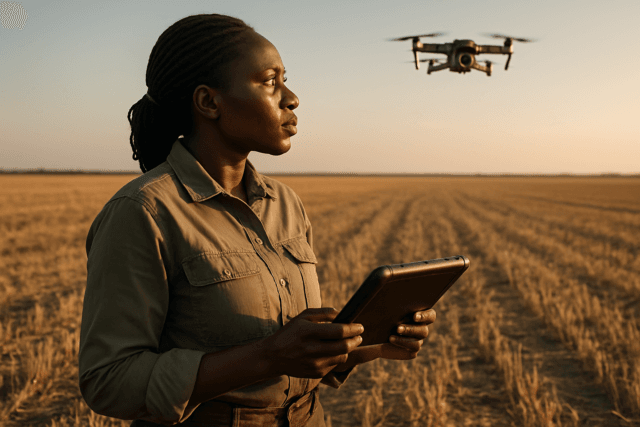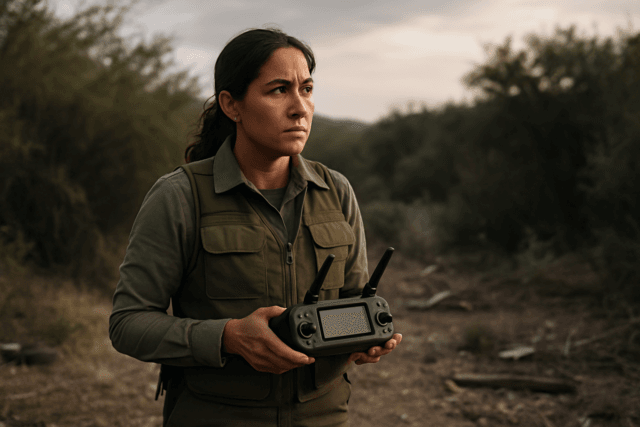

Drone surveying has revolutionized various industries, offering unprecedented speed, efficiency, and detail in data collection. However, the reliance on Global Positioning System (GPS) signals can be a significant limitation in certain environments, such as urban canyons, dense forests, underground mines, or inside large structures. In these GPS-denied or degraded areas, surveyors must employ specialized techniques and best practices to ensure accurate and reliable data acquisition. This article delves into the strategies and technologies crucial for successful drone surveying when GPS signals are weak or unavailable.
Understanding the Challenges of Limited GPS Signal for Drone Surveying
GPS, or more broadly, GNSS (Global Navigation Satellite System), provides drones with their precise location and enables stable flight and accurate data geotagging. Without a strong, consistent signal, drones can experience “drift,” leading to unstable hovering, inaccurate positioning, and unreliable data. Environmental factors like tall buildings, dense foliage, mountains, and even atmospheric conditions can degrade GPS signals through multipath interference, absorption, or obstruction. Indoor environments inherently lack GPS connectivity, necessitating entirely different navigation solutions.
Alternative Navigation and Positioning Techniques
When GPS signals are compromised, drones must rely on other sensor systems and methodologies for localization and mapping. These alternative navigation systems are becoming increasingly sophisticated, often leveraging sensor fusion to combine data from multiple sources.
1. Simultaneous Localization and Mapping (SLAM)
SLAM technology allows a drone to build a map of its unknown environment while simultaneously tracking its own position within that map. It is a critical component for autonomous navigation without external positioning systems like GPS.
- Visual SLAM (V-SLAM): This technique uses onboard cameras to analyze visual features like edges, patterns, and objects to estimate the drone’s position and build a 3D map. V-SLAM is particularly effective for indoor navigation and in environments where GPS is weak or unavailable. It often combines data from RGB cameras, depth cameras, and inertial measurement units (IMUs) for real-time mapping and localization.
- LiDAR SLAM: Light Detection and Ranging (LiDAR) sensors emit laser pulses to measure distances and create detailed 3D terrain models in real-time. LiDAR SLAM is highly accurate and reliable, capable of penetrating dense vegetation to capture true ground elevation. This makes it invaluable for generating high-resolution 3D point cloud maps even in challenging environments or low-light conditions. Some systems integrate LiDAR, visual SLAM, and GNSS RTK for comprehensive outdoor and indoor 3D scanning.
2. Inertial Navigation Systems (INS)
INS uses accelerometers and gyroscopes to calculate a drone’s position, orientation, and velocity by measuring changes in movement and rotation. While INS can provide continuous positioning, it is susceptible to “drift” over time without external corrections. Alternative navigation systems often augment INS with other sensors to correct these errors.
3. Ultra-Wideband (UWB) Positioning
UWB systems are considered a gold standard for high-accuracy, low-latency indoor drone localization. They achieve high-resolution ranging using extremely short radio pulses, relying on techniques like Two-Way Ranging (TWR) between the drone (tag) and ground-based anchors. UWB positioning typically offers accuracy within 20 cm, with some systems achieving under 10 cm horizontally and under 20 cm in 3D space with a high probability. This technology is excellent for navigating warehouses, industrial plants, and other enclosed spaces.
4. Real-Time Kinematic (RTK) and Post-Processed Kinematic (PPK)
While fundamentally relying on satellite signals, RTK and PPK technologies significantly enhance GPS accuracy, making them more robust in areas with degraded (but not entirely absent) GPS signals.
- RTK (Real-Time Kinematic): This system provides real-time GPS corrections to the drone as it flies, using a base station or network. RTK can achieve centimeter-level accuracy (1-3 cm horizontally) during flight. However, it requires a continuous, stable data link between the drone and the base station, which can be challenging in areas with connectivity issues.
- PPK (Post-Processed Kinematic): In contrast, PPK records raw GNSS data from both the drone and a base station during the flight. Corrections are then applied after the flight using specialized software. PPK is more robust in environments with unstable or impossible real-time connectivity, as it does not rely on a live link during data capture. PPK can often achieve slightly better accuracy (1-2 cm horizontal, 2-3 cm vertical) than RTK because it’s not subject to real-time communication delays. The drone can typically fly up to 10 miles (15 km) from the base station for PPK processing, though closer proximity improves accuracy by minimizing atmospheric error differences.
Essential Best Practices for Drone Surveying in GPS-Limited Areas
Beyond specialized hardware, meticulous planning and operational rigor are critical.
1. Pre-Flight Planning and Site Assessment
Thorough preparation is paramount when GPS signals are limited.
- Detailed Environmental Assessment: Before flight, thoroughly survey the surroundings. Identify potential signal obstructions like tall structures, dense forests, or challenging terrain. For indoor operations, measure ceiling heights, note reflective surfaces, glass walls, and HVAC vents.
- Mission Planning & Contingency: Plan flight paths meticulously, especially if switching between GPS-enabled and GPS-denied areas. For indoor flights, establish conservative altitude ceilings and plan paths that avoid flying over people or valuable assets. Develop contingency plans for signal loss, including emergency landing zones and abort procedures.
- Sensor Verification: Verify that all obstacle avoidance sensors (infrared, visual, ultrasonic) and camera gimbals are functioning correctly. Ensure recording media is formatted and has sufficient storage.
- Flight Simulation/Testing: If possible, conduct test patterns in open areas before attempting flights in tight or GPS-limited spaces.
2. Leveraging Ground Control Points (GCPs)
Ground Control Points are indispensable for achieving high absolute accuracy in drone mapping, especially when GPS is unreliable.
- Strategic Placement: GCPs are precisely surveyed markers on the ground with known geographic coordinates. They act as anchors to tie aerial imagery to the real world. Place GCPs strategically and evenly across the project area, including corners and the center of the flight zone. A minimum of five GCPs is generally recommended for high accuracy, though more may be used depending on site size and terrain.
- Visibility: GCPs should be high-contrast and clearly visible in multiple drone images.
- Measuring GCPs: Use high-precision GPS equipment (RTK/PPK capable GNSS receivers) to measure GCP coordinates, often achieving centimeter-level accuracy. Even with RTK/PPK drones, a few GCPs are still recommended to ensure project accuracy.
3. Operational Best Practices During Flight
Even with advanced technology, careful piloting and monitoring are essential.
- Maintain Visual Line of Sight (VLOS): While some advanced drones can operate Beyond Visual Line of Sight (BVLOS), maintaining VLOS is a fundamental safety regulation in many regions, including the U.S. under FAA Part 107. This is crucial for avoiding collisions, especially in complex environments.
- Monitor Drone Behavior: Pay close attention to the drone’s stability and positioning data. Unstable hovering or erratic movements indicate navigation challenges.
- Conservative Flight Parameters: In GPS-limited areas, fly at slower speeds and lower altitudes with wider margins to obstacles. Avoid flying too close to walls, ceilings, or floors, as airflow can be impeded, affecting lift.
- Use Propeller Guards: Especially for indoor or confined space operations, prop guards can prevent damage to the drone and surroundings in case of accidental contact.
- Redundant Systems: Utilize drones with robust sensor fusion capabilities (e.g., combining visual, inertial, and LiDAR data) to provide redundancy in navigation.
4. Post-Processing and Data Validation
The work doesn’t end when the drone lands.
- PPK Workflow: For data collected in degraded GPS environments, a PPK workflow is highly advantageous. This involves using specialized software to process raw GNSS data from both the drone and a base station after the flight, correcting for positioning errors.
- Data Alignment with GCPs: Photogrammetry software uses the precisely measured GCPs to align and scale the captured drone imagery, correcting for tilt, scale, and terrain distortion, thereby enhancing the georeferencing process. This can reduce horizontal and vertical errors from meters to centimeters.
- Accuracy Checks: Perform post-flight accuracy checks to validate the results before finalizing the data. Compare mapped features with known ground truth to ensure the data is reliable for analysis and decision-making.
Safety and Regulatory Considerations
Operating drones in GPS-limited environments introduces unique safety and regulatory challenges.
- Local Regulations: Always consult local and national aviation authorities (e.g., FAA in the U.S.) regarding drone operations. Specific state and local laws may restrict flights near critical infrastructure, government facilities, or certain properties.
- Part 107 Compliance (U.S.): Commercial drone operators in the U.S. must adhere to FAA Part 107 regulations, which include requirements for drone registration, remote identification, and airspace authorization. A Part 107 license is also required for commercial LiDAR surveying.
- Insurance: Standard drone liability insurance may have exclusions for indoor operations or flights over people. Verify your policy explicitly covers the planned operations and consider additional coverage if necessary.
- Risk Mitigation: Implement robust safety protocols, including comprehensive pre-flight checklists, site briefings for all personnel, and clear communication channels.
The Evolving Landscape of GPS-Denied Drone Technology
The future of drone surveying in GPS-limited environments is rapidly advancing. AI and machine learning are enhancing sensor fusion, enabling drones to learn from past flights, predict errors, and adapt to dynamic environments. Collaborative swarming, where multiple drones share positioning data, and hybrid positioning, navigation, and timing (PNT) frameworks are also emerging. As technology progresses, drones will become even more capable of autonomous navigation and data capture in the most challenging and previously inaccessible areas, further expanding the applications of drone surveying.