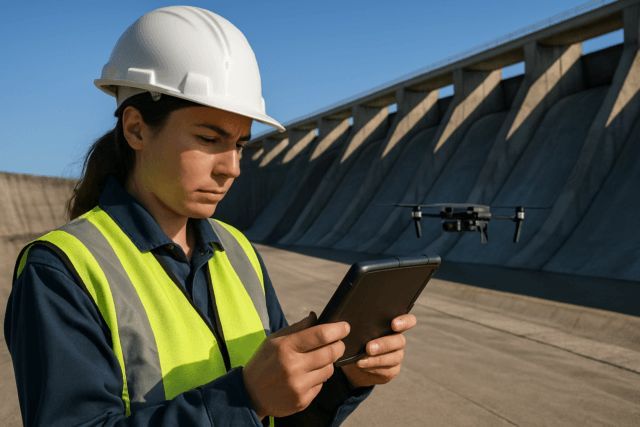

The skies have opened new vistas for infrastructure management, with drones, or Unmanned Aerial Vehicles (UAVs), revolutionizing the inspection of vital assets like bridges, power lines, and buildings. These agile flying machines offer unparalleled efficiency, enhanced safety, and cost-effectiveness, capturing detailed visual, thermal, and LiDAR data from challenging environments. However, this surge in data collection capability brings a critical challenge: how to robustly safeguard the privacy of individuals and sensitive information that may be inadvertently captured during these operations. Balancing the undeniable advantages of drone inspections with the fundamental right to privacy requires a comprehensive and proactive approach, integrating robust technical safeguards, navigating complex legal frameworks, and adhering to strict ethical guidelines.
The Rise of Drones in Infrastructure Inspection
Drones have transformed traditional, often hazardous, inspection methods. Historically, these tasks involved manual labor, scaffolding, or manned aircraft, incurring significant costs and safety risks. Drones mitigate these risks by removing human inspectors from dangerous environments, providing real-time data crucial for identifying issues before they escalate.
Key benefits of integrating drones into infrastructure inspection include:
- Enhanced Safety: Eliminating the need for human personnel in hazardous or difficult-to-reach locations significantly reduces accident risks.
- Cost-Effectiveness: Drones can complete inspections in a fraction of the time and at a lower cost compared to conventional methods, reducing operational expenses.
- Efficiency and Speed: They can rapidly cover vast or intricate structures, collecting high-quality data that accelerates inspection processes and decision-making.
- Superior Data Quality: Equipped with high-resolution cameras, thermal sensors, and LiDAR systems, drones provide precise and rich data layers for more accurate assessments.
Navigating the Complexities of Drone Data Privacy
Despite their advantages, drones pose significant privacy concerns, primarily due to their ability to capture images and other data of people, private property, and activities in surrounding areas. While the primary objective of an infrastructure inspection is to assess the condition of an asset, the wide field of view or flight path can inadvertently collect personally identifiable information (PII) such as faces, license plates, or details of private residences. This “collateral data” often falls under strict data protection regulations, necessitating careful management to prevent privacy infringements and maintain public trust.
Pillars of Privacy: Regulatory and Legal Frameworks
The legal landscape surrounding drone use and data privacy is complex and continually evolving, with regulations varying significantly across jurisdictions. Operators must navigate these frameworks diligently to ensure compliance.
International and Regional Regulations
- General Data Protection Regulation (GDPR): In the European Union, the GDPR sets stringent guidelines for the processing and storage of personal data, directly applying to drone operations when identifiable personal data is collected. Key GDPR principles include lawfulness, fairness, transparency, purpose limitation, data minimization, accuracy, storage limitation, and robust data security. Operators are often required to obtain informed consent when personal data is captured, especially in public spaces.
- EU’s U-Space Initiative: This initiative aims to harmonize drone regulations across member nations, creating a unified framework for safe and efficient integration into European airspace.
United States Regulations
- Federal Aviation Administration (FAA): The FAA primarily focuses on airspace safety and operational restrictions for commercial drone activities. The FAA’s Remote ID Rule, while primarily for security, also addresses privacy by limiting the accessibility of certain identification data.
- State and Local Laws: In the U.S., drone regulations vary significantly by state, with many enacting laws specifically addressing drone surveillance over private property and critical infrastructure. Cases like the Texas Privacy Act illustrate how state interests in privacy can outweigh other considerations, and legal gray areas continue to be litigated in various state courts.
### Global Standards and Frameworks
- NIST Privacy Framework: Provides guidelines for privacy-enhancing technologies in emerging fields like drone operations.
- ISO/IEC 27701: Offers a framework for Privacy Information Management, applicable to drone identification systems.
Technical Safeguards for Protecting Drone-Collected Data
Implementing robust technical safeguards is paramount to protecting data collected during drone inspections.
Data Minimization and Purpose Limitation
A fundamental principle is to collect only the data that is absolutely necessary for the inspection’s specific, legitimate purpose. This means:
- Targeted Data Capture: Defining clear objectives and data requirements before flight, guiding the choice of sensors, flight patterns, and resolution.
- Software Restrictions: Utilizing software features that limit data collection, such as turning off recording once a drone leaves its predetermined path or adjusting image resolution to the minimum required for the inspection task.
- Geofencing: Employing geofencing to restrict drone operations to specific areas, preventing intrusion into private spaces.
Advanced Anonymization and Pseudonymization Techniques
When personal data is inadvertently captured, effective anonymization is crucial. Modern drone video anonymization often relies on sophisticated Artificial Intelligence (AI) and Machine Learning (ML) algorithms.
- Automated Detection and Masking: AI-powered systems can detect and mask identifiable elements like faces and license plates through techniques such as Gaussian blur, pixelation, or solid color masking.
- Adaptive Blurring: Advanced systems can adjust blur levels based on object size and distance, even in challenging drone footage conditions with varying scales, fast movement, and weather impacts.
- Deep Privacy Techniques: Some research explores using Generative Adversarial Networks (GANs) to replace real faces with artificially generated ones, offering a higher level of privacy protection.
Robust Encryption for Data in Transit and at Rest
Encryption is a critical defense against unauthorized access, safeguarding data privacy throughout its lifecycle.
- Data in Transit: Secure communication protocols like HTTPS and SSL/TLS should be used for real-time data exchange between drones and ground control stations. This prevents interception and misuse of sensitive information during transmission.
- Data at Rest: Data stored on the drone itself, on ground control systems, or in cloud storage must be encrypted using strong standards like AES-128 or AES-256. Encryption keys should be managed securely and kept separate from the encrypted data.
- Regular Updates: Firmware and software updates are essential to improve encryption methods and patch security vulnerabilities.
Secure Data Storage and Access Control
Beyond encryption, how data is stored and who can access it are vital for privacy.
- Storage Solutions: Organizations must carefully choose between on-premise solutions, which offer complete data control (crucial for sensitive data), and cloud solutions, which provide flexibility and scalability.
- Access Control: Strict access controls should be implemented for the drone, stored data, and operational ground control systems, ensuring only authorized personnel can view or process sensitive information.
- Data Retention Policies: Implement and adhere to clear policies for data retention, automatically erasing data after it has served its purpose and been downloaded, thereby limiting storage time.
- Cybersecurity Measures: Robust cybersecurity practices are crucial to protect drone systems from unauthorized access, data breaches, and potential attacks. Regular software audits can identify vulnerabilities.
Operational Best Practices and Ethical Considerations
Technology alone is insufficient; ethical considerations and operational best practices are crucial for a truly private and secure drone inspection program.
Privacy by Design: Proactive Integration
Privacy by Design dictates that privacy and data protection considerations should be integrated into the design and development of new technologies, processes, and flight plans from the very beginning. This means:
- Early Assessment: Identifying potential privacy risks during the mission planning phase, including site assessments to identify hazards, obstacles, and nearby private properties.
- Default Privacy Settings: Configuring drones and their systems with privacy-protective default settings.
- Adjustable Capabilities: Designing drone hardware and software to allow operators to easily minimize data capture, such as adjusting camera resolution or enabling/disabling data collection features mid-flight.
Transparency and Public Engagement
Building and maintaining public trust is essential for the widespread acceptance of drone technology.
- Public Education: Informing the public about the necessity of drone inspections, the types of data collected, and the privacy safeguards in place.
- Clear Privacy Policies: Drone operators should have clear, understandable privacy policies regarding data collection, use, and retention, making these accessible to the public.
- Stakeholder Engagement: Involving privacy advocates, industry experts, and the public in the development of drone operation policies.
- Consent: Obtaining informed consent from property owners or individuals when drone operations may impact their privacy, especially when flying over private residences.
Comprehensive Data Governance
A robust data governance framework is the bedrock of effective data management, encompassing the entire data lifecycle from acquisition to archiving.
- Clear Policies and Standards: Establishing policies, procedures, and standards that define data ownership, management, quality measurement, and compliance requirements.
- Accountability: Assigning clear ownership and stewardship for different types of drone data (e.g., flight logs, sensor data) to ensure accountability.
- Audit Trails: Maintaining detailed audit trails of data access, modification, and deletion to ensure accountability and demonstrate compliance.
Conclusion
The transformative power of drones in infrastructure inspection is undeniable, offering significant advancements in safety, efficiency, and data quality. However, harnessing these benefits responsibly hinges on a steadfast commitment to data privacy. By meticulously adhering to evolving regulatory frameworks, implementing state-of-the-art technical safeguards like data minimization, anonymization, and encryption, and upholding ethical operational practices centered on transparency and public trust, organizations can ensure that drone-collected data remains secure and private. This multi-faceted approach will not only protect individual rights but also foster the continued growth and acceptance of drone technology as an indispensable tool for maintaining the world’s critical infrastructure.