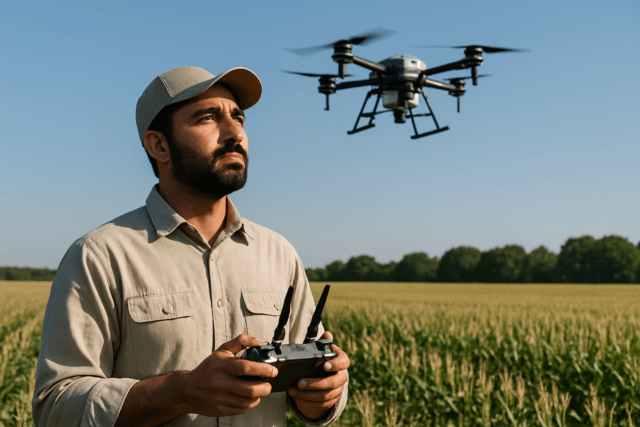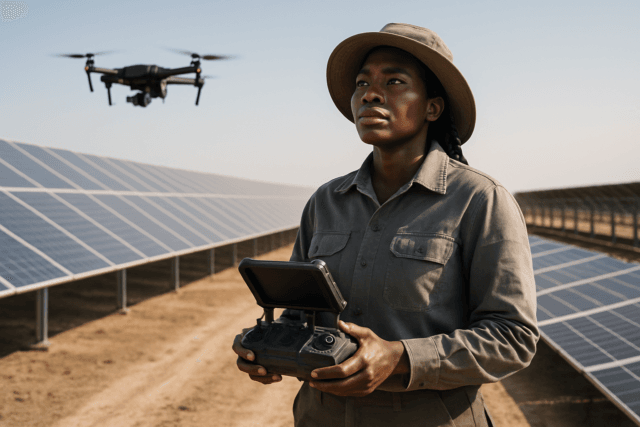
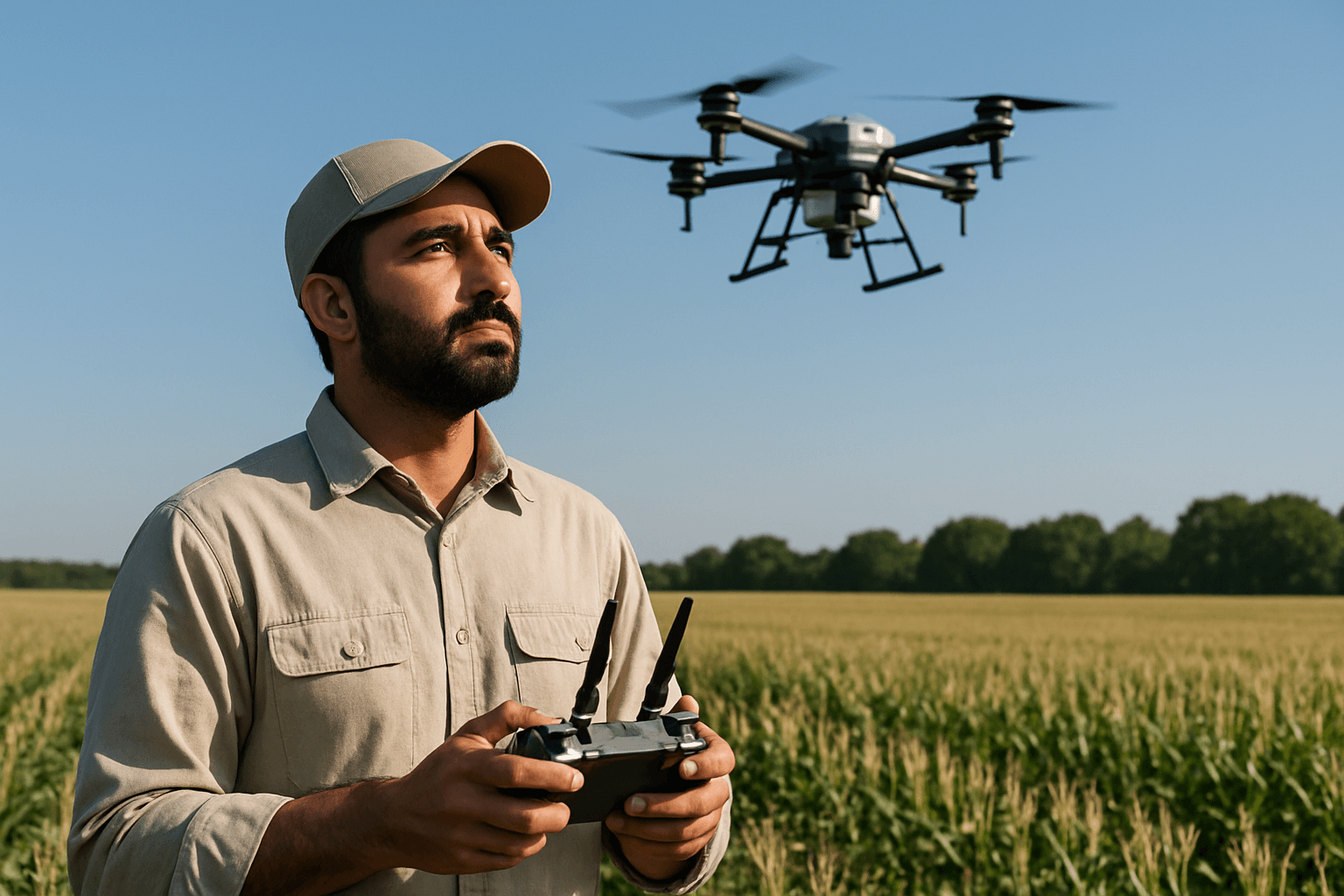
Modern agriculture faces the monumental task of feeding a growing global population while grappling with resource scarcity, environmental concerns, and the need for increased efficiency. Precision agriculture, powered by unmanned aerial vehicles (UAVs or drones), has emerged as a transformative solution. However, the true intelligence behind these flying farmhands lies in Artificial Intelligence (AI), particularly its pivotal role in automated drone flight path planning. Beyond simply flying over fields, AI enables drones to navigate complex agricultural landscapes with unprecedented autonomy, precision, and efficiency, turning raw data into actionable insights and optimizing every aspect of farm management.
The Imperative for Intelligent Flight Paths in Agriculture
Traditional farming methods often rely on uniform application of resources across vast fields, leading to inefficiencies, waste, and environmental strain. As farms grow larger and more complex, manual scouting and haphazard application become unsustainable. Automated drone operations address these challenges by offering aerial perspectives and targeted interventions. However, for drones to be truly effective in agriculture, they need more than just GPS waypoints. They require intelligent flight path planning that can adapt to the unique, often irregular, topography of farmlands, navigate around obstacles like trees, power lines, and buildings, and ensure comprehensive data collection or precise application without human micro-management. This is where AI becomes indispensable.
AI-Driven Data Collection and Spatial Intelligence
The foundation of smart drone flight planning is the rich data collected from the farm. Agricultural drones are equipped with an array of advanced sensors, including RGB (standard visual), multispectral, hyperspectral, and thermal cameras, as well as LiDAR (Light Detection and Ranging). These sensors capture vast amounts of data on various aspects of crop health, soil conditions, and environmental factors.
AI and machine learning (ML) algorithms are critical for processing this deluge of raw sensor data, transforming it into meaningful information. For instance, AI can analyze multispectral images to assess plant chlorophyll levels, identify early signs of stress, nutrient deficiencies, or pest infestations with over 90% accuracy for certain diseases. Thermal sensors can monitor crop water stress, aiding in irrigation scheduling decisions. LiDAR data can create detailed 3D maps of the terrain, revealing elevation changes and existing structures. This AI-processed spatial intelligence directly informs the drone’s mission: understanding what needs to be done (e.g., spot-spraying for pests, checking for irrigation issues) and precisely where these tasks need to be performed.
Algorithms for Optimal and Adaptive Path Generation
Once the “what” and “where” are established, AI algorithms take center stage in determining the “how.” Automated flight path planning leverages sophisticated AI to generate routes that are not only efficient but also safe and effective for agricultural tasks.
Comprehensive Coverage Path Planning
One of the primary goals in agricultural drone missions, especially for surveying or spraying, is to ensure complete coverage of the target area while minimizing redundant flight. AI algorithms tackle this by designing optimized trajectories that account for field boundaries, irregular shapes, and varying crop densities. This prevents over-application in healthy areas and ensures no diseased patches are missed, contributing to significant reductions in pesticide use—up to 30% in some cases.
Dynamic Obstacle Avoidance and Safety Protocols
Farms are not sterile environments; they contain static obstacles such as farm buildings, power lines, and trees, as well as dynamic elements like moving farm machinery, wildlife, or even changing weather conditions. AI plays a crucial role in enabling drones to detect and avoid these obstacles in real time. Algorithms like A* (A-star), which finds the shortest paths in static environments, and more advanced techniques like Reinforcement Learning and Genetic Algorithms, allow drones to dynamically adapt their routes on the fly. For example, adaptive AI can help UAVs autonomously adjust flight paths based on real-time wind speed data or changing crop health conditions, reducing the need for constant human intervention and enhancing safety.
Efficiency Optimization and Resource Management
Battery life remains a significant limitation for agricultural drones, often restricting flight times to 20-40 minutes. AI algorithms are crucial for optimizing flight paths to conserve energy and maximize coverage within these constraints. They consider factors like:
- Shortest Path Calculation: Minimizing the distance a drone travels to complete its mission.
- Payload and Wind Compensation: Adjusting routes to account for the weight of sensors or spray tanks, and leveraging or mitigating the impact of wind to extend flight duration.
- Minimizing Turns: Reducing sharp turns and sudden movements that consume more power and can reduce smoothness and safety.
- Adaptive Learning: Continuously learning from previous missions and real-time data to refine energy-efficient routes.
Terrain-Aware Navigation
Farms often feature varied topography, from flat plains to rolling hills. AI-powered path planning can integrate geological information system (GIS) data with sensor inputs to generate terrain-aware flight paths. This ensures a consistent altitude relative to the ground, which is vital for accurate data capture (e.g., maintaining consistent image resolution) and uniform application of substances like fertilizers or pesticides.
The Tangible Benefits of AI-Driven Automated Drone Flight Planning
The integration of AI into drone flight path planning offers a multitude of benefits for precision agriculture:
- Increased Efficiency and Productivity: Automated planning allows drones to cover large areas much faster and with greater consistency than manual operations. This saves significant time and labor, freeing up farmers for other critical tasks.
- Enhanced Precision and Accuracy: By targeting specific areas with exact amounts of water, fertilizer, or pesticides, AI-driven drones minimize waste and prevent over-application, which can harm soil and water quality. Studies suggest AI drones can cut herbicide use by over 90% in some applications.
- Significant Cost Savings: Reduced consumption of expensive inputs like chemicals and water, coupled with lower labor requirements, translates into substantial operational cost savings for farmers.
- Improved Crop Yield and Health: Early and accurate detection of issues, combined with timely and precise interventions, leads to healthier crops and potentially higher yields.
- Environmental Sustainability: By optimizing resource use and minimizing chemical runoff, AI-powered drones contribute significantly to more sustainable farming practices and reduce the environmental footprint of agriculture.
Challenges and the Future Horizon
Despite the immense potential, the widespread adoption of AI in drone flight path planning for agriculture faces several challenges. High initial costs for advanced drone technology and AI platforms can be a barrier for smaller farms. Regulatory frameworks need to keep pace with technological advancements, ensuring safe and legal operations, particularly concerning airspace and data privacy. Technical expertise is often required to operate these systems and interpret the data they generate. Furthermore, limitations in drone battery life and susceptibility to adverse weather conditions can impact operational efficiency.
However, the future of AI in agricultural drone flight path planning is bright. Ongoing advancements are focusing on:
- Hyper-localization: Training AI models on regional crops, soil types, and pest data for even more precise recommendations.
- Enhanced Ease of Use: Future drones may accept voice commands in regional languages, making the technology more accessible.
- Swarm Intelligence: Coordinated fleets of multiple drones operating autonomously to cover larger areas more rapidly and efficiently.
- Hardware Improvements: Development of more energy-efficient drones, solar-powered drones, or hybrid UAVs with extended flight times and greater payload capacities.
- Integration with IoT and Big Data: Seamless integration with other smart farming technologies and vast datasets to create a more automated and efficient agricultural ecosystem.
By enabling drones to navigate, analyze, and act with unprecedented intelligence, AI is not just optimizing flight paths; it’s cultivating a new era of precision, productivity, and sustainability in farming.