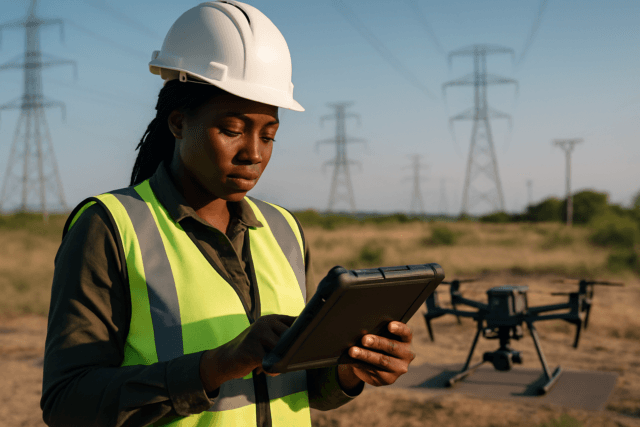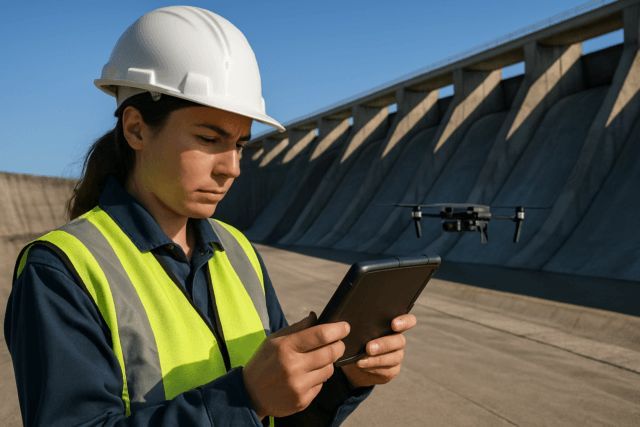
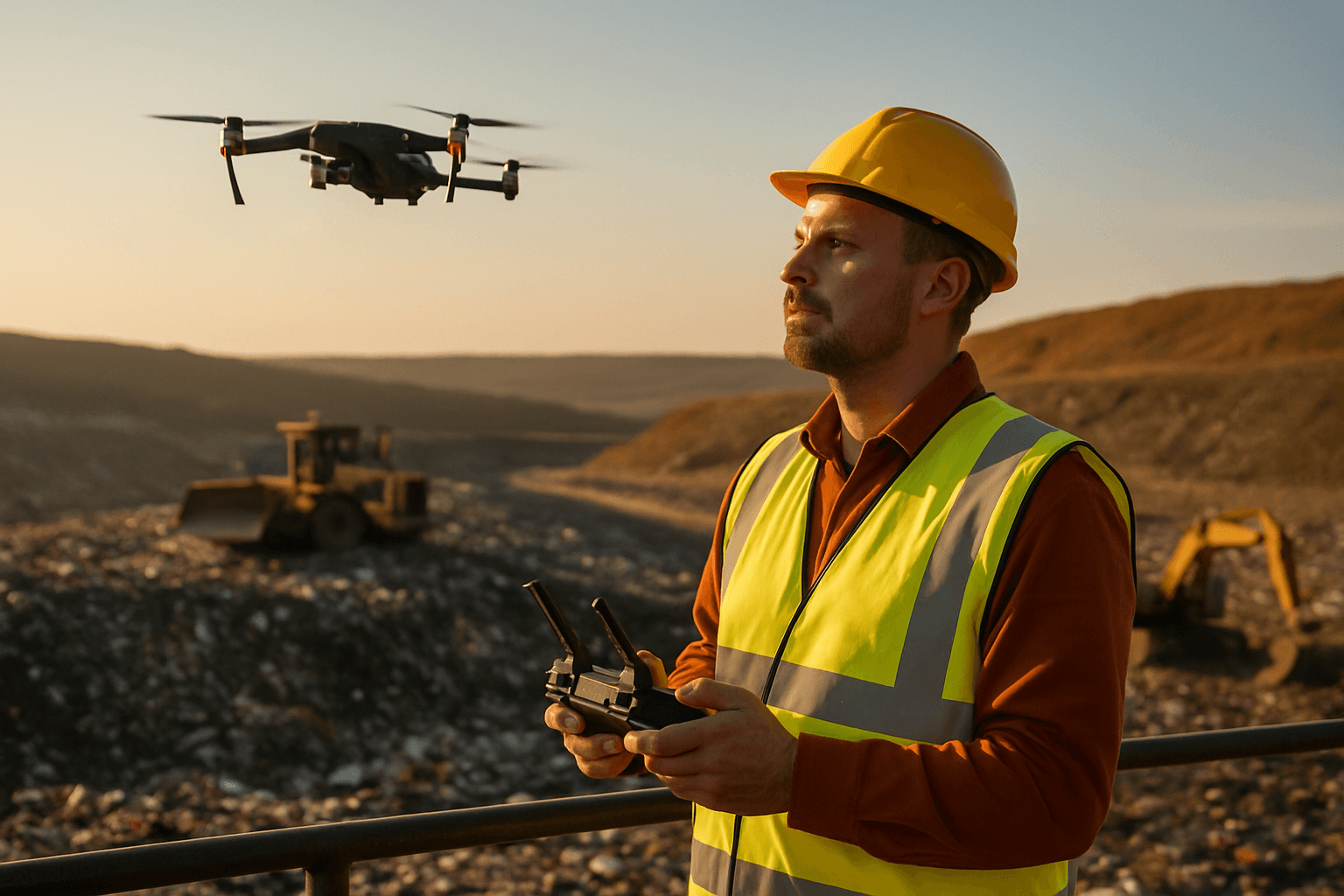
The sheer scale and complexity of managing modern landfills present significant challenges, from ensuring environmental compliance to optimizing operational efficiency and worker safety. Traditional methods, often labor-intensive and time-consuming, struggle to keep pace with the dynamic nature of waste disposal sites. However, a technological revolution is underway, with Unmanned Aerial Systems (UAS), commonly known as drones, emerging as indispensable tools that are transforming landfill monitoring and waste management practices. These versatile devices offer a faster, safer, more economical, and significantly more accurate approach, providing comprehensive data that was once unattainable.
The Challenges of Traditional Landfill Monitoring
Historically, landfill monitoring has relied on manual ground surveys and visual inspections, which are fraught with limitations. These methods are often:
- Time-Consuming and Inefficient: Surveying vast landfill sites on foot can take days, limiting the frequency of data collection and delaying critical decision-making.
- Hazardous for Workers: Landfills present numerous dangers, including unstable terrain, heavy machinery, hazardous gases, and potential exposure to waste materials. Manual inspections put workers at considerable risk.
- Prone to Inaccuracy: Traditional methods can lack the precision needed for accurate volumetric calculations, detailed topographic mapping, or the early detection of environmental anomalies like gas leaks or leachate seeps.
- Costly: Relying on extensive human labor and specialized ground equipment for infrequent surveys proves to be expensive over time.
These challenges underscore the need for more advanced, efficient, and safer monitoring solutions in the waste management industry.
How Drones Revolutionize Landfill Operations
Drones address many of the inherent difficulties of traditional landfill management by providing an “eye in the sky” that collects high-resolution, georeferenced data with unparalleled speed and safety. Their applications span across several critical areas:
Accurate Topographical Mapping and Volume Calculation
One of the most significant advantages of using drones in landfills is their ability to perform rapid and highly accurate topographical surveys. Equipped with high-resolution cameras and LiDAR sensors, drones capture detailed aerial data to create precise 3D models and point clouds of the entire site. This enables operators to:
- Calculate Landfill Capacity and Airspace Utilization: Drones provide real-time data to accurately determine remaining landfill capacity, track waste accumulation rates, and calculate the optimal compaction rate for cells. This helps ensure compliance with elevation regulations and maximizes the longevity of the site.
- Monitor Settlement and Deformation: Regular drone surveys allow for the detection of subtle changes in landfill surface elevation, indicating settlement or potential structural issues.
- Track Progress of Construction Projects: For new cell construction or expansions, drones offer a real-time overview of the project, allowing engineers, site owners, and regulators to track progress effectively.
Environmental Monitoring and Anomaly Detection
Landfills are significant sources of greenhouse gases, particularly methane, and pose environmental risks through leachate generation. Drones significantly enhance environmental monitoring capabilities:
- Methane Emission Detection: Drones equipped with specialized gas detection sensors or thermal cameras can identify methane hotspots and quantify emissions from a safe distance. This is crucial for regulatory compliance (e.g., EPA Method 21) and for capturing methane that could otherwise be converted to energy. Thermal cameras can detect surface hot spots indicating insufficient gas collection, even when methane is odorless and colorless.
- Leachate Monitoring: Drones can identify leachate seeps and monitor the spread of contamination in and around waste disposal sites by detecting changes in water quality and identifying leaks.
- Illegal Dumping Surveillance: Drones are highly effective in surveilling remote or hard-to-access areas to detect illegal dumping, providing valuable evidence for enforcement efforts and helping to prevent environmental harm.
- Fire Prevention: Thermal cameras mounted on drones can detect temperature anomalies or hotspots within waste piles, indicating potential fire hazards and allowing for proactive measures.
Infrastructure Inspection and Safety
Drones dramatically improve safety and efficiency for inspecting landfill infrastructure:
- Remote Inspections: Instead of sending workers into hazardous areas, drones can inspect critical infrastructure like leachate tanks, gas collection systems, and power lines from a safe distance, reducing the risk of accidents and exposure to harmful conditions.
- Site Safety Monitoring: Drones can quickly identify potential safety hazards, such as unstable waste piles or blocked access routes, improving overall site safety for personnel and machinery.
Regulatory Compliance and Reporting
The detailed, verifiable data collected by drones streamlines regulatory compliance and reporting:
- Automated Data Collection: Drones automate the collection of data required for environmental reports and permits, ensuring accuracy and consistency.
- Enhanced Audit Trails: Drone-captured data, including high-resolution imagery and precise measurements, provides robust evidence for audits and compliance checks, reducing manual effort and uncertainty.
- Real-time Insights: Cloud-based processing platforms allow for rapid analysis and sharing of drone data, enabling operators to make informed decisions quickly and address compliance issues proactively.
Key Drone Technologies and Payloads for Waste Management
The effectiveness of drones in waste management is largely due to the sophisticated sensor technology they can carry:
- RGB (Red, Green, Blue) Cameras: These standard high-resolution cameras capture visible light images, essential for photogrammetry, visual inspections, and creating detailed orthomosaics and 3D models of landfill surfaces.
- Thermal Cameras: Critical for environmental monitoring, thermal cameras detect infrared radiation, allowing operators to identify temperature differences that reveal methane hotspots, subsurface fires, or leachate seeps, even when they are not visible to the naked eye.
- Multispectral Sensors: These sensors capture data across multiple narrow spectral bands, including those beyond the visible spectrum (e.g., near-infrared). This is particularly useful for assessing vegetation health on reclaimed areas, which can indicate underlying environmental issues like gas infiltration or leachate failure.
- LiDAR (Light Detection and Ranging): LiDAR sensors emit laser pulses to measure distances and create highly accurate 3D point clouds, even through vegetation. This technology is invaluable for precise topographic mapping, volumetric calculations, and understanding the true ground surface on vegetated sites.
- Gas Sniffers/Methane Detectors: Specialized sensors designed to detect and quantify specific gas concentrations, such as methane, can be integrated with drones. These “sniffer drones” can take air samples directly from the landfill surface, providing precise leak source locations and concentration measurements.
Implementing Drone Programs: Best Practices and Considerations
Adopting drone technology for waste management requires careful planning and execution:
- Hardware Selection: Choosing the right drone involves considering the size of the survey area, payload capacity for sensors, flight time, and whether RTK-enabled GPS is necessary for precision.
- Data Processing and Software Integration: Raw drone data needs to be processed into actionable insights. Cloud-based photogrammetry and mapping software can transform images and sensor data into 3D models, volumetric reports, and environmental maps that are easily navigable and measurable. Integrating this data with existing waste management applications and geographic information systems (GIS) enhances its utility.
- Pilot Training and Regulations: Commercial drone operation requires proper training and licensing (e.g., FAA Part 107 in the United States). Operators must be proficient in drone piloting, data acquisition techniques, and adhere to local aviation regulations.
- Cost-Benefit Analysis: While drones represent an initial investment, they offer significant cost savings over time by reducing the need for manual labor, expensive traditional surveying equipment, and third-party services. They also improve operational efficiency and mitigate risks, leading to a strong return on investment.
- Data Management and Security: Establishing secure protocols for data collection, storage, and sharing is crucial, especially when dealing with sensitive site information.
The Future of Drones in Waste Management
The integration of drones into waste management is still evolving, with promising future developments on the horizon. Expect to see:
- Increased Autonomy and Swarm Technology: Drones are becoming more autonomous, capable of executing complex missions with minimal human intervention. Future advancements might include drone swarms working collaboratively to cover larger areas more quickly.
- AI-Driven Analytics: Combining drone imagery with machine learning and AI will lead to more sophisticated automated detection of anomalies, waste classification, and predictive analytics for landfill management.
- Enhanced Sensor Capabilities: As sensor technology continues to miniaturize and improve, drones will be able to carry an even wider array of specialized payloads for more detailed environmental monitoring and material analysis.
- Broader Applications: Beyond landfills, drones are already being used for tasks like optimizing waste collection routes, cleaning power lines (with specialized equipment), and monitoring wastewater treatment facilities, hinting at an expansive role across the entire waste management lifecycle.
Conclusion
Drones are no longer just a novelty; they are a transformative technology for landfill monitoring and waste management. By offering unparalleled improvements in safety, efficiency, accuracy, and cost-effectiveness, UAS are redefining how waste sites are surveyed, managed, and regulated. From precise volumetric calculations and environmental hazard detection to illegal dumping enforcement and infrastructure inspection, drones provide the actionable intelligence necessary for a more sustainable, compliant, and efficient waste management future. As the technology continues to advance, drones will undoubtedly become an even more integral and indispensable component of global waste management strategies, helping to build cleaner, greener cities and mitigate environmental impact.