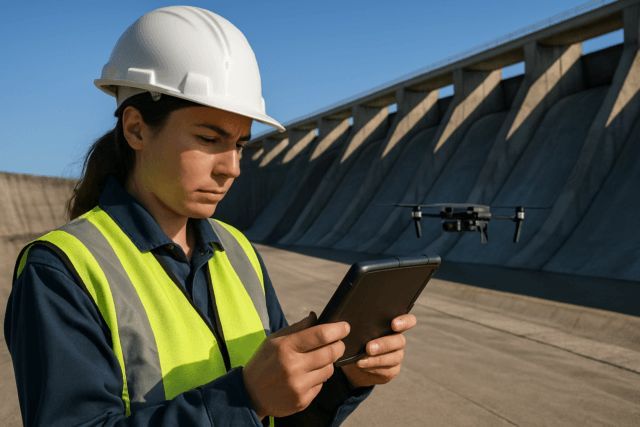
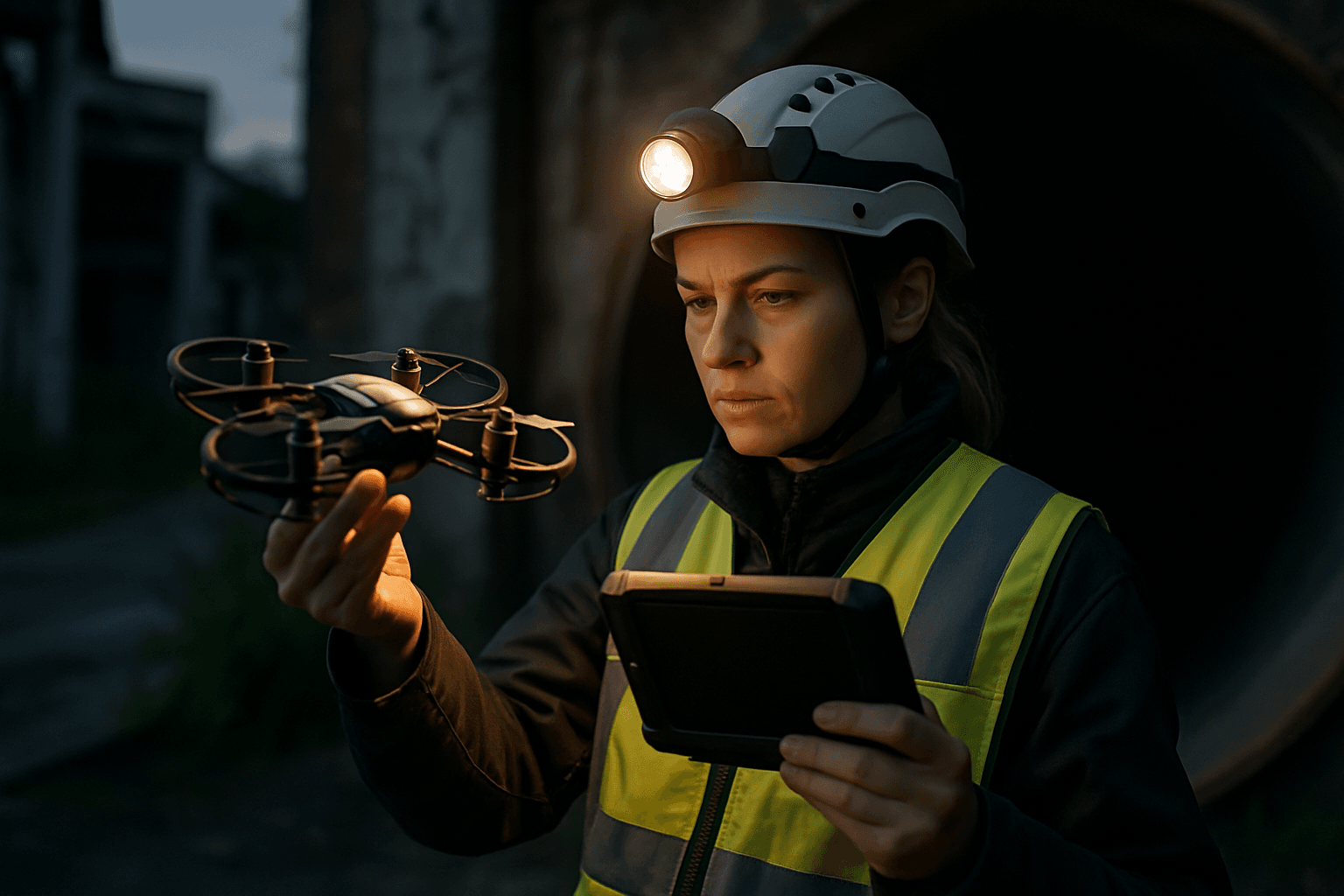
Confined spaces, such as collapsed buildings, subterranean tunnels, industrial vessels, or complex piping systems, represent some of the most perilous environments for search and rescue (SAR) teams. These treacherous zones pose immense risks to human life, often necessitating extensive safety protocols and specialized equipment. However, a new era of search operations is dawning, with Unmanned Aerial Systems (UAS), commonly known as drones, emerging as game-changing tools that enhance safety, speed, and accuracy when searching in these difficult-to-access and hazardous areas.
The Grave Challenges of Confined Space Search and Rescue
Traditional confined space search operations are fraught with dangers that make them exceptionally challenging and time-consuming. Rescuers face a multitude of immediate and long-term risks:
- Limited Access and Egress: Confined spaces often have narrow entry and exit points, restricting movement for rescuers and equipment, which can significantly slow down operations, especially when every second counts.
- Hazardous Atmospheres: These environments frequently suffer from poor ventilation, leading to oxygen deficiency, the buildup of toxic gases, or the presence of flammable and explosive atmospheres. Without proper breathing apparatus and gas detection, rescuers can quickly become victims themselves.
- Poor Visibility: Confined spaces are often dark or poorly lit, severely limiting visibility and increasing the risk of injuries from unseen obstacles or structural hazards.
- Structural Instability: Collapsed structures, shifting debris, or unstable ceilings are common in emergency situations, posing risks of further collapse, trapping, or injuring rescuers.
- Communication Difficulties: Physical barriers within confined spaces can impede verbal communication and disrupt radio signals, making coordination challenging.
- Physical and Psychological Strain: Rescuers endure immense physical demands and psychological stress, navigating tight, uncomfortable positions under extreme pressure and often claustrophobic conditions.
These inherent dangers highlight the critical need for solutions that minimize human exposure while maximizing the efficiency and effectiveness of search efforts.
How Drones Revolutionize Confined Space Search Operations
Drones are transforming confined space search by offering a safer, faster, and more detailed alternative to human entry, fundamentally changing how these high-risk operations are approached.
Enhanced Safety for Rescuers
The most significant advantage of employing drones is the drastic reduction, and often elimination, of the need for human entry into hazardous environments. By deploying a UAV, SAR teams can remotely assess conditions, identify risks, and locate potential victims without exposing personnel to toxic gases, unstable structures, or oxygen-deficient atmospheres. This directly prevents countless accidents and meets stringent health and safety regulations.
Unprecedented Accessibility
Drones can navigate through narrow openings, long ducts, and tight corners, reaching areas that are virtually impossible or extremely dangerous for humans. Their agile and compact designs allow them to gather data from every angle, opening the door to search areas previously deemed too difficult or expensive to access.
Increased Speed and Efficiency
The rapid deployment of drones significantly cuts down search times. A drone can be launched and begin its mission in minutes, providing immediate visual intelligence and covering larger areas more quickly than ground teams. This improved response time can be critical in life-threatening situations where every minute counts. Furthermore, drone-based inspections reduce the need for extensive preparatory work, scaffolding, or shutdowns, minimizing operational downtime.
High-Quality Data Collection and Analysis
Modern search drones are equipped with an array of advanced sensors and cameras, capturing high-resolution data that far surpasses what can be achieved by manual observation.
- High-Resolution Cameras: Ultra-HD cameras provide crystal-clear visuals, allowing engineers to review footage frame-by-frame and identify minute details like cracks, corrosion, or structural anomalies.
- Thermal Imaging (IR Cameras): Essential for detecting heat signatures, thermal cameras can locate individuals in dark, smoke-filled, or densely vegetated environments, significantly aiding in SAR efforts.
- LiDAR (Light Detection and Ranging) & 3D Mapping: LiDAR sensors create accurate 3D point cloud models of confined spaces, enabling precise measurement and identification of structural defects with millimeter accuracy, even in low-light or dust-filled conditions. This technology can be used for simultaneous localization and mapping (SLAM) in GPS-denied environments.
- Gas Detection Sensors: Some drones are equipped with multi-gas sensors that continuously monitor air quality, detecting hazardous gases and oxygen levels without putting human lives at risk.
This detailed and actionable intelligence allows for informed decision-making and efficient planning of subsequent rescue efforts.
Specialized Drone Technologies for Confined Spaces
The unique demands of confined spaces have led to the development of specialized drones featuring innovative technologies:
Collision-Tolerant Designs
Drones designed for confined spaces often incorporate protective cages or robust, durable frames that allow them to absorb impacts and bounce off obstacles without compromising flight or data quality. Companies like Flyability have pioneered drones with robust cages (e.g., Elios series) specifically for navigating tight, cluttered, and harsh environments.
Advanced Navigation & Localization
Operating in GPS-denied environments is a primary challenge in confined spaces. Specialized drones overcome this by relying on internal navigation systems:
- LiDAR and SLAM: These technologies create 3D maps of the environment in real-time while simultaneously locating the drone within that map, enabling precise positioning without external signals.
- Inertial Measurement Units (IMUs) and Optical Flow Sensors: These sensors provide data on the drone’s orientation, velocity, and position by tracking movement and visual patterns, crucial for stable flight in complex indoor spaces.
Integrated Sensor Payloads
Beyond high-resolution cameras, confined space drones integrate a suite of sensors:
- Thermal Imaging: As mentioned, critical for detecting heat signatures of survivors or hazardous hot spots.
- Gas/Chemical Sensors: Essential for detecting toxic or flammable atmospheres before human entry.
- Powerful Integrated Lighting: Confined spaces are often dark; drones with integrated, high-lumen lighting ensure clear image capture and improved visibility.
Real-time Data Transmission
Maintaining a stable signal for communication between the drone and the operator is crucial, especially where walls and metal structures can disrupt signals. Advanced wireless communication systems and, in some cases, tethered drones (like the Scout 137) ensure continuous power and robust data networks, allowing operators to receive accurate information immediately.
Real-World Impact and Applications in Search & Rescue
While drones are widely used for industrial inspections of tanks, pipelines, sewers, and infrastructure, their application in search and rescue in confined spaces is increasingly proving invaluable.
- Locating Trapped Individuals: In scenarios like collapsed buildings following an earthquake or individuals lost in caves, drones equipped with thermal cameras and high-resolution optics can quickly survey dangerous areas for signs of life, identifying the location of casualties more quickly than human teams. The Nepal earthquake and Thailand cave rescue operations are examples where drones assisted in search efforts.
- Assessing Disaster Zones: Drones can map disaster areas, providing critical intelligence on structural integrity and identifying inaccessible zones for ground teams, thereby enhancing situational awareness for commanders.
- Reducing Search Times: By covering large, complex areas efficiently and delivering real-time visual information, drones can significantly reduce the time required to locate a missing person, drastically improving the chances of a positive outcome.
Limitations and Future Outlook
Despite their transformative capabilities, drones in confined spaces still face limitations. Battery life remains a primary technical hurdle, as constant maneuvering and sensor use in demanding environments consume power rapidly, necessitating frequent battery swaps or recharging. Signal interference from dense materials like concrete can also limit effective flight distance and communication. Additionally, most drones are not intrinsically safe or ATEX rated, meaning they cannot operate in explosive atmospheres. Current drone technology may also struggle to identify minute or complex defects that an experienced human inspector could discern through close physical examination.
However, the future of drones in confined space search is incredibly promising. Emerging trends include:
- AI-Driven Inspection and Autonomous Navigation: Expect AI to enable real-time defect detection, autonomous mapping, and increasingly complex autonomous flight through intricate environments.
- Advanced Sensor Integration: The next wave of innovation will bring more sophisticated sensors capable of detecting a wider range of gases, temperature fluctuations, and structural weaknesses.
- Improved Battery Technology: Longer flight times and more efficient power management will enhance operational endurance.
- Lighter and More Durable Designs: Drones made from advanced materials like carbon fiber will be tough enough to withstand harsh conditions while maintaining agility in tight spaces.
The continuous evolution of drone technology promises to make these tools even more indispensable across industries and especially in critical search and rescue missions.
Conclusion
The utilization of drones for search operations in confined spaces marks a pivotal advancement in aviation technology and unmanned aerial systems. By overcoming the inherent dangers and limitations of human-led entries, these specialized UAVs offer unparalleled safety, accessibility, speed, and data quality. Equipped with collision-tolerant designs, advanced navigation systems, and sophisticated sensor payloads including LiDAR and thermal cameras, drones are transforming the landscape of confined space search and rescue. As the technology continues to evolve, with advancements in AI and battery life, drones will undoubtedly play an increasingly central role in safeguarding human lives and improving response efficacy in the most challenging rescue scenarios.