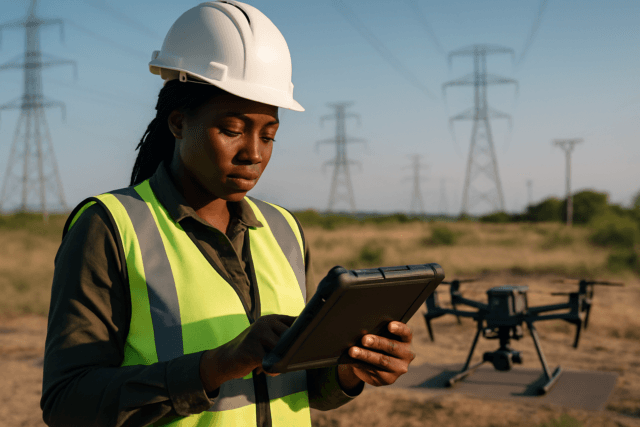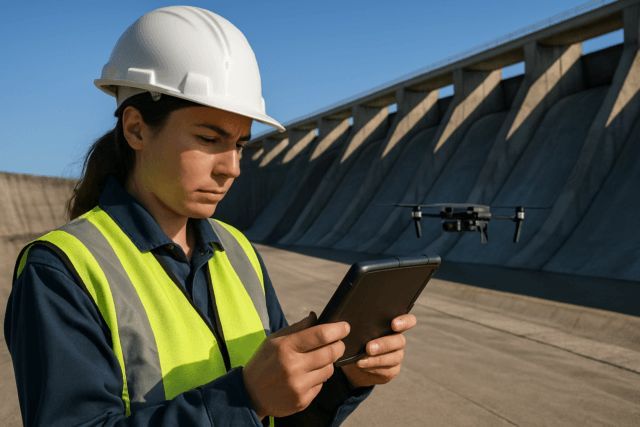
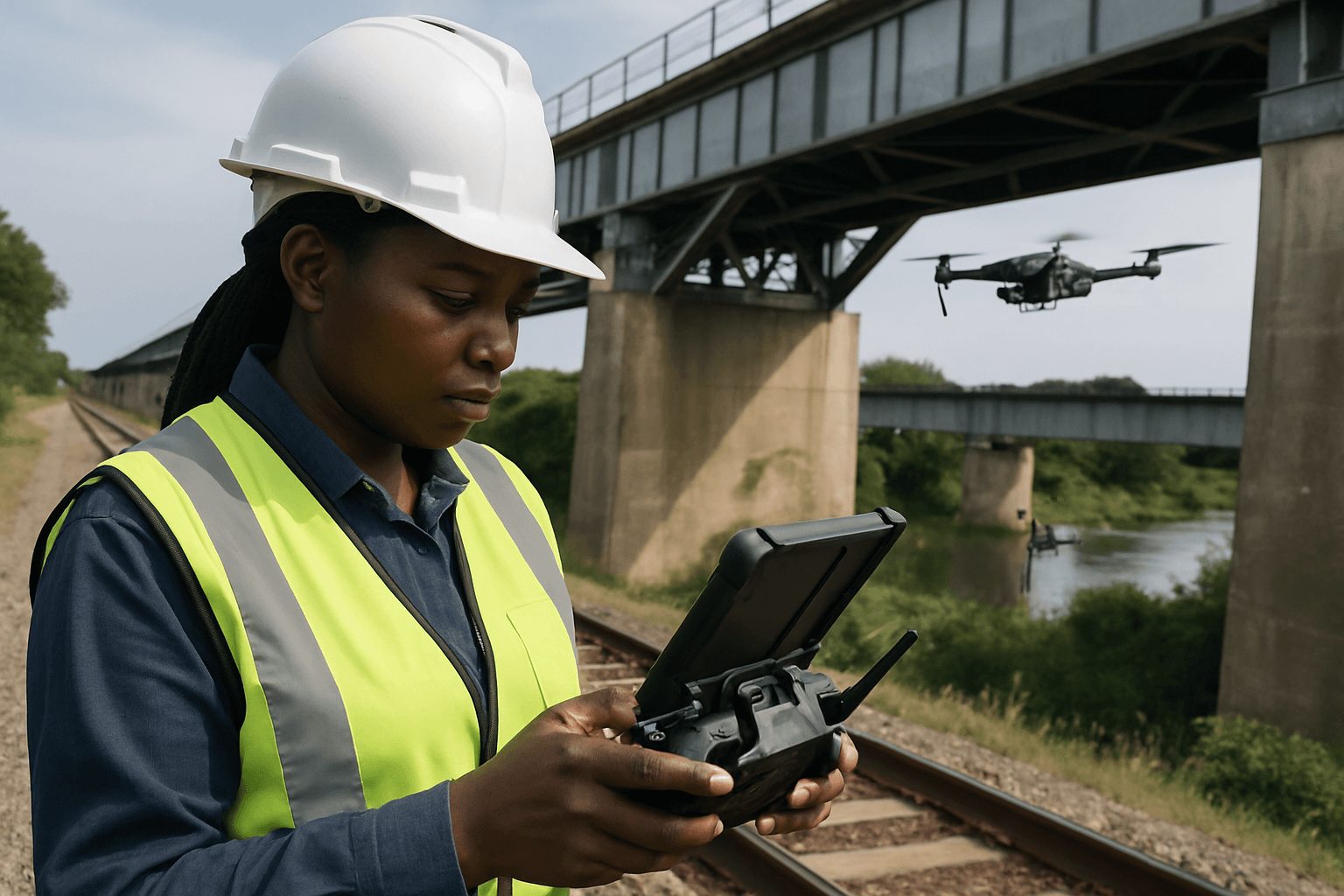
The structural integrity of railway bridges is paramount to public safety and the efficient flow of commerce. However, traditional inspection methods for these critical assets are often time-consuming, costly, hazardous for personnel, and can lead to operational disruptions. A new era of infrastructure maintenance is emerging, with unmanned aerial systems (UAS), commonly known as drones, powered by advanced Artificial Intelligence (AI), rapidly transforming how railway bridges are monitored and inspected for structural fatigue. This innovative approach promises enhanced safety, efficiency, and data accuracy, fundamentally redefining bridge care.
The Challenges of Traditional Railway Bridge Inspection
Railway bridges face unique stresses due to the dynamic loads and high-frequency vibrations from train operations, which have a significant long-term impact on structural stability. Many of these structures are aging, constantly exposed to environmental elements, and silently deteriorating. Traditional inspections typically involve manual processes, often requiring scaffolding, cranes, or rope access systems to reach difficult or dangerous areas, such as high-pier or river-spanning bridges. These methods are labor-intensive, pose significant risks to inspectors from falls or traffic accidents, and can disrupt railway operations due to limited maintenance windows. Manual inspections are also subject to human judgment, leading to potential variability and oversight in data collection.
The Unrivaled Advantages of Drone-Based Inspection
Drones offer a compelling solution to many of these traditional challenges, providing a faster, safer, and more cost-effective approach to railway bridge inspection.
Enhanced Safety for Inspection Personnel
One of the most immediate benefits of using drones is the drastic reduction of risk to human inspectors. Drones eliminate the need for personnel to physically access hazardous areas, such as working at heights, near live tracks, or around high-voltage systems. Operators can conduct inspections from a safe distance, safeguarding valuable personnel.
Dramatically Increased Efficiency and Speed
Drones significantly improve inspection efficiency. They can be deployed quickly during brief train operation gaps, capturing high-resolution data in hours rather than days or weeks, thereby minimizing disruption to railway operations and shortening track closure times. For example, a task that might take a human crew an hour and a half to inspect 5 km of track can be autonomously completed by a drone in 40 minutes.
Higher Precision and Expanded Inspection Scope
Equipped with advanced sensors, drones can achieve millimeter-level measurement accuracy, precisely detecting defects like cracks, corrosion, and concrete spalling. They can capture detailed images and data from multiple angles, including the underside of bridges, without compromising image quality or requiring complex maneuvers. This expanded scope allows for comprehensive assessments of areas traditionally hard to reach.
Cost-Effectiveness
By reducing the need for extensive labor, specialized equipment like scaffolding or snooper trucks, and minimizing operational downtime, drone inspections prove to be more cost-effective than traditional methods. Organizations can save significant amounts per project due to improved efficiency in data collection.
Advanced Sensors for Detecting Structural Fatigue
Drones can carry a variety of sophisticated payloads designed to detect subtle signs of structural fatigue and deterioration that might be invisible to the naked eye.
High-Resolution Visual and Thermal Cameras
High-resolution cameras capture detailed images and videos of bridge surfaces, allowing engineers to identify visible defects such as cracks, corrosion, and structural misalignments. Thermal imaging cameras detect temperature variations on the bridge’s surface, which can indicate hidden issues like moisture intrusion, delamination (separation of layers in concrete), or early signs of concrete failure. These thermal anomalies can be crucial indicators of underlying structural weaknesses and material degradation.
LiDAR Scanning for 3D Modeling and Deformation Analysis
LiDAR (Light Detection and Ranging) sensors generate dense 3D point clouds, mapping the bridge’s geometry with millimeter precision. These detailed 3D models allow engineers to analyze a bridge from multiple angles, take precise measurements, track changes over time, and detect deviations as small as 1 cm in structural components, indicating early signs of deterioration.
Digital Image Correlation (DIC)
Beyond static imaging, research projects have explored using stereo digital image correlation systems (StereoDIC) on drones for non-contact measurements of deformation and stress on infrastructure. This technology can be useful for inspecting railroad bridges and other structures.
The Role of AI and Machine Learning in Drone Inspection
The integration of Artificial Intelligence (AI) and machine learning (ML) algorithms is a game-changer for drone-based bridge inspection.
Automated Defect Detection and Classification
AI algorithms can automatically analyze the vast amounts of high-resolution images and LiDAR scans collected by drones. They can identify, classify, and even quantify various types of defects such as cracks, corrosion, spalling, and efflorescence with unparalleled precision. This significantly reduces the manual workload and potential for human error or fatigue in screening thousands of images.
Predictive Maintenance and Digital Twins
AI-driven systems can analyze historical data from multiple inspections to identify trends, measure the propagation of defects, and even forecast deterioration patterns. This enables proactive and predictive maintenance strategies, allowing engineers to address minor repairs before they escalate into major structural failures, thus minimizing costs and disruptions.
High-fidelity 3D models generated by drones can serve as “digital twins” of bridges. These living, evolving models can be continuously updated with new inspection data, enabling real-time simulation of bridge conditions and ongoing monitoring for structural health.
Challenges and Limitations
Despite the significant advancements, some challenges remain for widespread drone adoption in railway bridge inspection:
Regulatory Hurdles
Regulations regarding drone operation, particularly Beyond Visual Line of Sight (BVLOS) flights, are still evolving. Standardizing these operations is crucial for more efficient and widespread drone use in infrastructure inspection.
Data Processing and Management
The sheer volume of data collected by high-resolution sensors requires robust processing capabilities and effective data management systems. Developing efficient workflows for analyzing, storing, and integrating this data into existing asset management systems is important.
Flight Stability and Environmental Factors
Maintaining flight stability and precise positioning, especially in challenging environments like under bridges or in windy conditions, can impact data quality. Walls, metal structures, and other obstacles can also disrupt drone signals. Adverse weather conditions, such as rain or strong winds, can affect drone performance and the quality of collected data.
Battery Life
Limited battery life can be a constraint for inspecting very large bridges or conducting extensive surveys, requiring efficient power management or multiple battery swaps.
Future Outlook
The future of drone-based railway bridge inspection is promising, with continuous advancements in technology. We can expect even more enhanced LiDAR and imaging capabilities, offering higher-resolution point clouds and allowing for the detection of even the smallest deformations. Further improvements in thermal imaging and multispectral cameras will enable drones to identify material fatigue, water infiltration, and hidden structural issues with greater accuracy. As AI algorithms become more sophisticated, they will further refine defect detection, improve predictive modeling, and enable more autonomous inspection capabilities, leading to safer, more resilient, and efficiently maintained railway infrastructure.
In conclusion, drones are not just an upgrade to traditional bridge inspection methods; they represent a paradigm shift. By combining the aerial capabilities of drones with the analytical power of AI, railway operators can ensure the structural integrity of their bridges with unprecedented safety, efficiency, and precision, ultimately contributing to safer train operations and extended infrastructure lifespan.