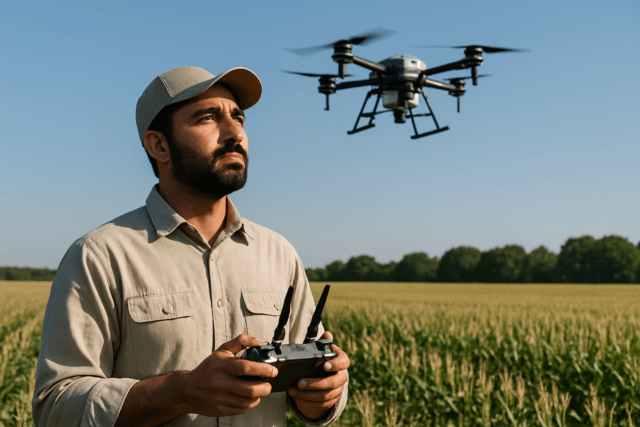

The skies are becoming increasingly crowded, not just with traditional aircraft, but with a new generation of aerial vehicles: drones. As drone delivery services move from novel concept to operational reality, a critical question emerges: how do these Unmanned Aerial Vehicles (UAVs) comply with stringent aviation security protocols? The rapid expansion of drone delivery promises unparalleled speed and efficiency, but also introduces complex security challenges that require a multifaceted approach, blending robust regulatory frameworks, cutting-edge technology, and rigorous operational procedures.
Regulatory Frameworks and Airspace Integration
The foundation of drone aviation security lies in comprehensive regulatory oversight. Governments and aviation authorities worldwide are actively developing and enforcing rules to ensure the safe integration of drones into national airspace.
Navigating Airspace Classifications
A critical aspect of drone operation involves understanding and respecting airspace classifications. These include controlled, uncontrolled, and restricted zones. Controlled airspace is typically for manned aircraft, while uncontrolled zones can accommodate both, subject to conditions. Restricted areas, often for security reasons, may be entirely off-limits for drones. Operators must meticulously analyze airspace charts and obtain necessary permissions, especially for controlled or restricted areas.
Remote Identification (Remote ID)
A cornerstone of drone security is Remote ID, essentially an electronic license plate for drones. This regulation requires most drones operating in US airspace to broadcast identifying information, including the drone’s ID, location and altitude, velocity, control station location, and emergency status. This data is broadcast via radio signals and can be received by ground receivers, allowing authorities to identify who is flying them. This capability is crucial for accountability and traceability, helping to deter malicious use and enable effective law enforcement response.
Part 107 and Other Certifications
In the United States, commercial drone operators, including those providing package delivery, must comply with FAA regulations such as Part 107 for small UAS. For drone package delivery specifically, operators often need to navigate the FAA’s Part 135 certification process, which typically applies to air carriers, and may require exemptions or waivers for Beyond Visual Line of Sight (BVLOS) operations. These certifications ensure that operators meet stringent safety and operational standards.
UAS Traffic Management (UTM) Systems
To facilitate the safe and efficient scaling of drone delivery, advanced UAS Traffic Management (UTM) systems are being developed. UTM involves a cooperative interaction between drone operators and aviation authorities to determine and communicate real-time airspace status. These systems are designed to manage concurrent BVLOS flights in shared airspace, demonstrating predictable safety outcomes to regulators and reducing reliance on manual coordination. Europe is also establishing a harmonized regulatory system for UTM, known as U-space, which will include requirements for registration, geofencing, and electronic identification.
Technological Safeguards in Drone Delivery
Beyond regulatory frameworks, drones employ a range of embedded technologies to enhance security and ensure compliance.
Geofencing and Geocaging
Geofencing uses GPS or RFID technology to create virtual geographical boundaries, automatically restricting drones from entering unauthorized or no-fly zones. If a drone attempts to deviate from its approved flight path, an alert is triggered, signaling a potential security breach or malfunction. Geocaging is an even more advanced method that defines a 3D operational flight area, restricting drones from moving outside it in both horizontal and vertical axes. While some drone manufacturers have removed geofencing from their products, shifting the responsibility to operators, it remains a critical safeguard for preventing entry into restricted airspace, such as around airports.
Secure Communication and Data Encryption
The digital systems controlling drones rely on secure digital functionalities. Drones use robust communication protocols to maintain a continuous link with ground control stations, employing techniques like frequency hopping and spread spectrum to minimize interference and interception. Anti-jamming technology further prevents intentional signal disruption. Data encryption is paramount, with all data encrypted during transmission to ensure confidentiality and integrity, preventing tampering or theft. Edge processing can also enhance cybersecurity by processing sensitive data directly on the drone or nearby, reducing the need to transmit it to external servers and minimizing exposure to cyberattacks during transmission.
Advanced Navigation and Collision Avoidance
Modern delivery drones utilize GPS technology for precise navigation along pre-programmed routes. They are equipped with various sensors (e.g., ultrasonic, infrared, lidar) and high-resolution cameras that allow them to “see” their surroundings, identify landing zones, and detect obstacles in real-time. These advanced collision avoidance systems, powered by sophisticated sensors and algorithms, are crucial for safe navigation, mitigating the risk of accidents with other airborne objects and protecting the payload. Multi-source positioning verification, combining GPS with visual positioning, radar, and Inertial Navigation System (INS) information, helps ensure flight path accuracy and counters GPS spoofing attacks.
Physical Security Measures
Securing the actual package being delivered is a primary concern for drone delivery services.
Secure Payload Compartments and Tamper-Evident Designs
Delivery drones are designed with specialized, often lockable, compartments or vaults integrated into the drone’s body to securely hold packages throughout the flight. These compartments are made from robust materials to withstand impacts and protect against environmental damage. To detect unauthorized access, packages and compartments can feature tamper-evident seals or sophisticated open/close sensors.
Controlled Release Mechanisms and Authentication
The method of package release is a critical security point. Authentication and authorization protocols ensure that only authorized individuals or systems can interact with the drone and receive packages. This can include biometric authentication, one-time password (OTP) systems, or RFID-based security to ensure tamper-proof delivery. Designated landing zones, which can be monitored or integrated with smart home systems, also help control the delivery environment, minimizing package exposure.
Operational Protocols and Best Practices
Beyond technology, strict operational protocols are essential for maintaining aviation security in drone delivery.
Pre-flight Inspections and Flight Planning
Companies must establish exhaustive safety protocols, including thorough pre-flight inspections to ensure the drone and its cargo are in prime condition. Detailed flight planning outlines the drone’s trajectory, altitude, and estimated time of arrival.
Real-time Monitoring and Surveillance
Drones are equipped with cameras that record the entire delivery process, providing video evidence in case of theft or tampering. Remote monitoring via cloud platforms allows operators to track drone location, update flight paths, and analyze delivery metrics in real time. Some systems even employ a “wingman” drone to hover overhead and record if anything happens to the delivery drone or package. Operators should also implement intrusion detection systems leveraging machine learning to identify anomalous network traffic patterns associated with cyberattacks.
Cybersecurity Best Practices for Operators
Operators must implement robust cybersecurity practices, such as ensuring devices used for software installation do not access enterprise networks and verifying vendor websites. Using strong encryption standards like WPA2-AES for communications, employing complicated and frequently changed encryption keys, and avoiding broadcasting SSIDs are also crucial. Isolating or segmenting networks, implementing multi-factor authentication, and using secure connections like VPNs during flights are recommended to protect communication pathways and prevent data breaches. Setting a predetermined “Return to Home” location helps minimize GPS-related risks and ensures proper recovery.
Incident Management and Continuous Improvement
Comprehensive insurance coverage is a must for drone delivery operators. Companies also need robust incident management procedures for learning from and improving operations. Regular maintenance and repair schedules are essential for ensuring reliability.
Challenges and Future Outlook
While significant progress has been made, challenges remain in fully integrating drone delivery into the existing aviation security landscape. These include managing concurrent Beyond Visual Line of Sight (BVLOS) flights in dense environments and demonstrating predictable safety outcomes to regulators. Cybersecurity threats, such as AI manipulation, data breaches, navigation vulnerabilities, and Denial-of-Service (DoS) attacks, are ongoing concerns. Researchers are actively exploring advanced solutions, including AI-driven threat detection, machine learning algorithms for intrusion detection, and blockchain-based security frameworks to enhance the security, reliability, and integrity of drone operations. The goal is to create a robust and adaptable security solution that can recognize both known and unexpected threats, facilitating timely responses and mitigation strategies.