Imagine a world where the structural integrity of a towering bridge, the condition of vast stretches of pipeline, or the wear and tear on a historical facade could be meticulously assessed without risking human lives, shutting down operations, or incurring exorbitant costs. This vision is now a reality, thanks to the transformative synergy of drone technology and photogrammetry. This powerful combination is fundamentally changing how we inspect, monitor, and maintain our critical infrastructure, ushering in an era of unprecedented efficiency, safety, and data accuracy.
What is Photogrammetry?
At its core, photogrammetry is the science of making measurements from photographs. It’s a sophisticated process that extracts information from two-dimensional images to create accurate three-dimensional maps and models. In the context of drone-based applications, this involves using unmanned aerial vehicles (UAVs), commonly known as drones, equipped with high-resolution cameras to capture numerous overlapping aerial photographs of a site or structure from various angles and altitudes.
How Drone Photogrammetry Works
The process of drone photogrammetry typically involves two main stages: image capture and image processing.
- Image Capture: Drones follow programmed flight paths, collecting hundreds or even thousands of high-resolution images. Crucially, these images are captured with significant overlap, ensuring that the same ground points are visible from multiple perspectives. This overlap is essential for the photogrammetry software to accurately correlate features across different images. Environmental metadata, such as humidity, time, and date, along with GPS positioning, is also recorded with the images.
- Image Processing: The collected images and any accompanying data, such as from ground control points (GCPs), are uploaded to specialized photogrammetry software. This software utilizes advanced algorithms, often employing a technique called “Structure from Motion” (SfM), to identify common points across the overlapping images. By analyzing the subtle variations in perspective, the software reconstructs the 3D coordinates of these points, generating a “point cloud”. This point cloud forms the basis for creating various outputs, including detailed 2D orthomosaic maps, digital surface models (DSMs), digital terrain models (DTMs), and photorealistic 3D models and renderings.
Key Benefits of Drone Photogrammetry in Infrastructure Assessment
The integration of drones and photogrammetry offers a multitude of advantages over traditional inspection methods, making it an indispensable tool for infrastructure management.
Enhanced Safety
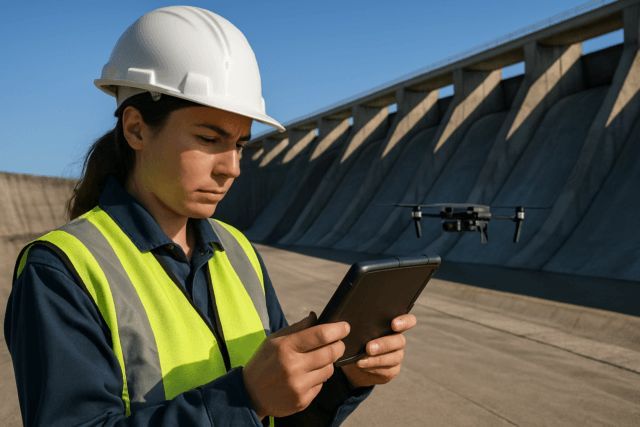
Traditional inspections often require personnel to access hazardous or difficult-to-reach areas, such as the undersides of bridges, towering wind turbines, or high-rise building facades, posing significant safety risks. Drones eliminate or significantly reduce the need for humans in these dangerous environments, allowing inspectors to gather data remotely without endangering their lives.
Increased Efficiency and Time Savings
Drone inspections are considerably faster than manual methods. Drones can cover large areas in a fraction of the time it would take human inspectors using scaffolding, cranes, or other equipment. This rapid data collection means projects can proceed with fewer delays, and critical information can be obtained quickly, especially for infrastructures requiring regular monitoring. For example, a complete bridge inspection that might take days or weeks manually can be completed in a matter of hours with drones.
Cost Reduction
By reducing the need for expensive equipment like scaffolding and cranes, minimizing labor hours, and preventing operational shutdowns, drone photogrammetry offers a more cost-effective solution for infrastructure assessment. The ability to detect issues early also prevents minor problems from escalating into costly repairs, leading to significant savings over a project’s lifecycle.
Superior Accuracy and Detail
Drones equipped with high-resolution cameras and advanced sensors can capture incredibly detailed images and precise measurements, down to centimeter-level accuracy. This level of detail allows for the detection of minute defects like cracks, corrosion, and delamination that might be missed by visual inspections from a distance. The 3D models generated provide an in-depth visualization, enabling engineers to analyze structures from multiple angles and track changes over time. Using ground control points (GCPs) further enhances measurement precision.
Non-Invasive Data Collection
Drone photogrammetry is a non-invasive method, meaning it can collect data without disrupting ongoing operations or causing damage to the infrastructure itself. For example, bridge inspections can be conducted without requiring lane closures or other traffic interruptions, minimizing inconvenience to the public.
Comprehensive Documentation and Data Management
The output of drone photogrammetry includes detailed 2D maps, 3D models, and comprehensive measurements, creating invaluable documentation for future reference, maintenance planning, and potential expansions. This digital data can be easily stored, shared, and integrated with other systems like Geographic Information Systems (GIS) and Building Information Modeling (BIM) platforms, fostering better communication and informed decision-making among stakeholders.
Applications Across Diverse Infrastructure Types
Drone photogrammetry is versatile, finding applications across a wide array of infrastructure assets.
Bridges and Roads
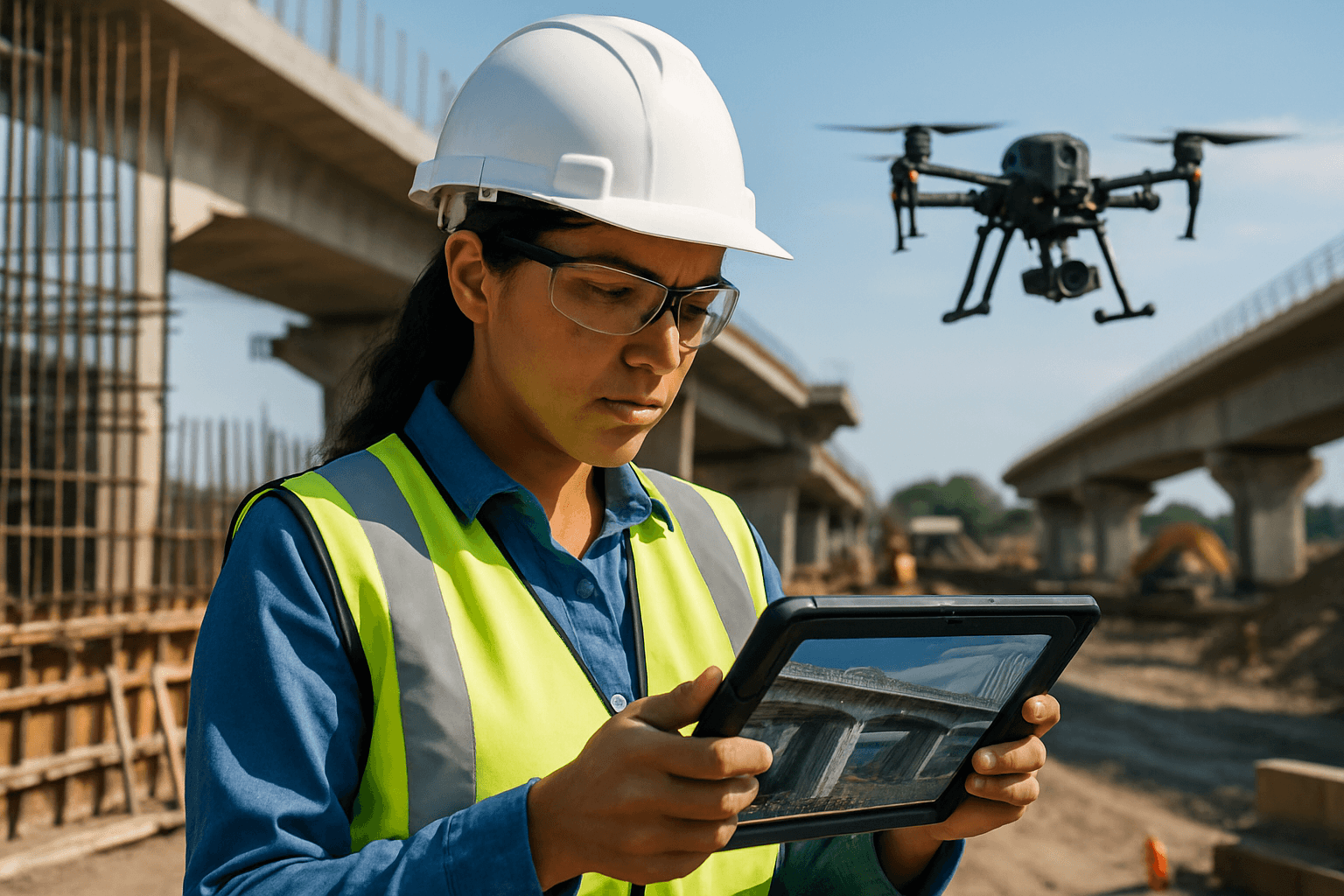
For bridges, drones can perform visual and thermal inspections to identify cracks, corrosion, and other structural defects. They can create precise 3D models for planning maintenance, repairs, or new construction, and monitor displacement or vibrations in real-time. In road construction and management, drone photogrammetry is used for detailed site surveys, mapping terrain, monitoring construction progress, calculating earthwork volumes, and assessing pavement conditions and road distress.
Buildings and Facilities
High-rise buildings, historical facades, and complex industrial facilities like power plants and oil refineries benefit from drone inspections. Drones can inspect rooftops, facades, and hard-to-reach areas, identifying subtle defects, heat leaks, and potential moisture problems. The technology can generate “digital twins” – virtual representations of physical facilities – allowing for continuous monitoring and predictive maintenance strategies.
Utilities and Linear Infrastructure
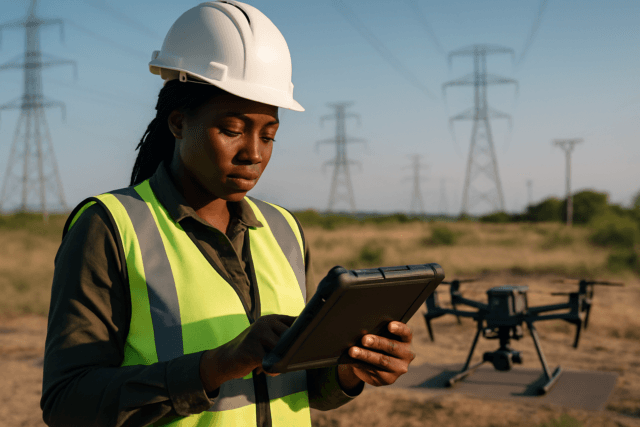
For linear infrastructure such as pipelines, power lines, and railways, drones offer an efficient way to survey vast corridors, identify potential issues, and monitor construction progress. They can detect vegetation encroachment, assess structural integrity of towers, and monitor ground conditions along the route.
Challenges and Considerations
Despite its numerous advantages, the implementation of drone photogrammetry in infrastructure assessment is not without its challenges.
Regulatory Compliance
Navigating the complex and often varying regulations regarding drone operation, flight ceilings, restricted airspace, and required permits across different regions can be a significant hurdle and delay projects.
Data Accuracy and Quality
While generally highly accurate, data quality can be affected by factors like GPS signal interference in urban areas, suboptimal weather conditions (wind, rain, fog), and the quality of drone sensors. Dense vegetation and changing shadows can also obstruct views and complicate the creation of accurate 3D models. Proper flight planning, precise image capture, and the use of ground control points are crucial for achieving high accuracy.
Integration with Existing Systems
Integrating drone-collected data with existing Geographic Information Systems (GIS) and project management tools can sometimes be challenging due to varied software applications and data formats, potentially leading to data silos and inefficiencies.
Limited Flight Time and Environmental Factors
Drones have limited flight times, which can restrict the scope of single missions, especially for large infrastructure projects. Adverse weather conditions such as strong winds, heavy rain, or extreme temperatures can also interfere with drone operations and data collection.
The Future of Drone Photogrammetry in Infrastructure
The future of drone photogrammetry in infrastructure assessment is promising, with continuous advancements driven by emerging technologies.
AI-Driven Automation and Analytics
Artificial intelligence (AI) and machine learning algorithms are increasingly being integrated to autonomously analyze photogrammetric data, identify patterns, and detect anomalies without human intervention. This will lead to faster and more accurate analysis, streamlining workflows and enabling near real-time quality assurance.
Sensor Fusion and Multi-Modal Data
Future developments will see enhanced sensors, including multispectral, hyperspectral, and LiDAR, being combined to create richer and more accurate datasets. This sensor fusion will provide comprehensive insights into structural health, material degradation, and environmental impacts.
Digital Twin Technology and BIM Integration
The creation of “digital twins”—real-time virtual replicas of physical infrastructure—will become more sophisticated, offering continuous monitoring and predictive maintenance capabilities. Seamless integration of photogrammetry-generated 3D models with Building Information Modeling (BIM) systems will further streamline construction and maintenance workflows, from planning and design to execution and lifecycle management.
Increased Accessibility and User-Friendly Platforms
As hardware becomes cheaper and software becomes more intuitive and cloud-based, drone photogrammetry will become even more accessible for a wider range of projects and users. “Drone-to-dashboard” results, delivered in hours, are expected to become an industry standard, further enhancing responsiveness and decision-making.
Conclusion
Drone photogrammetry has emerged as a revolutionary force in infrastructure assessment, transforming a historically labor-intensive, risky, and costly endeavor into a safer, more efficient, and highly accurate process. By leveraging the power of aerial imagery and advanced software, it provides unparalleled insights into the condition of our vital infrastructure, from bridges and roads to buildings and utilities. While challenges related to regulations and data integration exist, ongoing technological advancements, particularly in AI and sensor fusion, promise to further elevate the capabilities of this technology. As we look ahead, drone photogrammetry will undoubtedly continue to play a pivotal role in ensuring the longevity, safety, and sustainability of the world’s critical infrastructure.