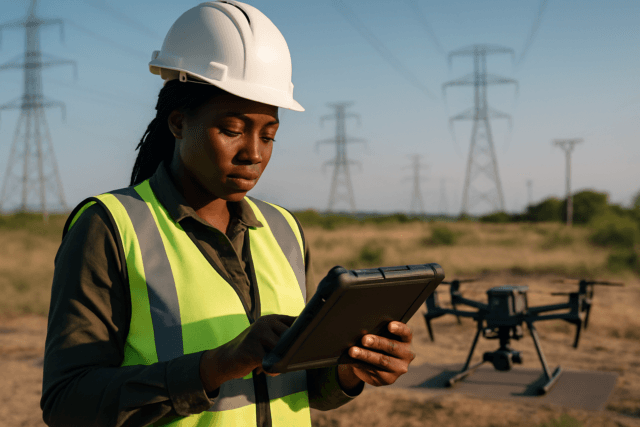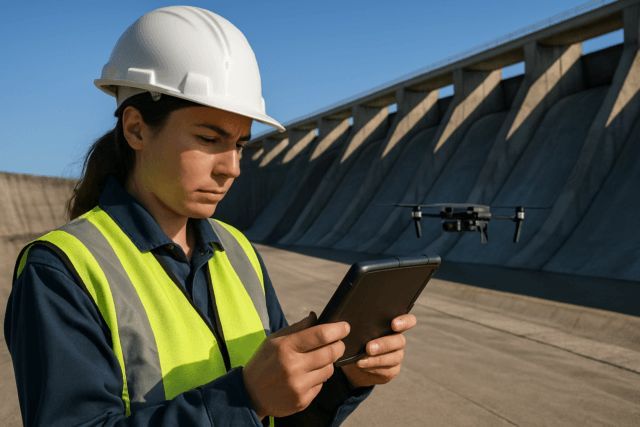

The world’s vital infrastructure, from sprawling bridge networks and extensive power grids to critical pipelines and towering wind turbines, faces the relentless challenges of aging, environmental stress, and the sheer scale of inspection requirements. Traditional inspection methods are often labor-intensive, time-consuming, costly, and inherently dangerous for human personnel, relying on scaffolding, rope access, or specialized “snooper” trucks that can disrupt traffic and pose significant risks. However, a transformative shift is underway, driven by the powerful synergy of unmanned aerial vehicles (UAVs), commonly known as drones, and advanced Artificial Intelligence (AI) techniques.
Drones equipped with high-resolution optical, thermal, LiDAR, and multispectral sensors can access hazardous, hard-to-reach, or structurally complex environments, capturing vast amounts of detailed, asset-specific data without requiring shutdowns or endangering human inspectors. The real revolution lies not just in data collection, but in what AI does with that data. AI-powered analytics convert raw drone imagery into actionable intelligence, enabling faster, more precise, and proactive maintenance strategies that save lives, reduce costs, and enhance the longevity and safety of critical assets.
Advanced Computer Vision for Automated Defect Detection
At the forefront of AI techniques for analyzing drone imagery of infrastructure is computer vision. This field enables machines to interpret and understand visual information, allowing AI systems to detect and analyze infrastructure conditions such as cracks, corrosion, wear, spalling, and damaged components that might be missed by human inspectors.
Deep Learning Models: CNNs and Vision Transformers
Deep learning, a subset of machine learning, is particularly effective for image analysis, utilizing complex neural networks to learn from vast datasets and identify intricate patterns.
- Convolutional Neural Networks (CNNs): CNNs are a cornerstone of computer vision in drone imagery analysis. They are trained on large numbers of images containing various damage types (e.g., cracking, weathering, spalling) to classify and effectively detect these issues. For example, CNNs have been used in bridge inspections to classify damage and, when coupled with image visibility optimization, can improve the accuracy of damage measurement. They are also crucial for detecting power lines and their components like insulators and cables, and identifying defects such as corrosion or wire damage.
- Vision Transformers (ViTs): Emerging as powerful alternatives or complements to CNNs, Vision Transformers have demonstrated exceptional accuracy in detecting specific types of infrastructure damage. For instance, a ViT model was found to outperform CNNs in detecting bridge deck damage and delamination, achieving an impressive 97% accuracy compared to 92% for CNNs in one study.
Object Detection, Classification, and Segmentation
Beyond simply classifying images, advanced computer vision techniques perform:
- Object Detection and Classification: AI algorithms automatically identify and categorize objects within drone imagery, enabling the rapid recognition of infrastructure elements (e.g., bridges, power lines, towers) and anomalies like cracks or signs of corrosion. This allows for the precise localization of defects.
- Image Segmentation: This technique goes a step further by outlining the exact boundaries of detected objects or defects within an image, providing a more detailed understanding of the extent of damage. This is particularly useful for measuring the size and severity of issues like cracks or areas of corrosion.
Predictive Analytics for Proactive Maintenance Strategies
One of the most significant advancements is the shift from reactive or routine maintenance to predictive maintenance, enabled by AI-driven analysis of drone data.
AI models leverage historical and real-time data collected by drones to identify patterns, forecast future events, and anticipate potential failures before they occur. This allows infrastructure owners to move to condition-based maintenance strategies, responding to actual asset health rather than fixed schedules. By continuously monitoring degradation, operators can plan interventions at the optimal time, preventing costly failures, minimizing downtime, and avoiding unnecessary maintenance. Predictive analytics helps prioritize findings, highlight trends, and assign risk scores based on severity or likelihood of failure, facilitating rapid decision-making and resource allocation.
Digital Twins for Comprehensive Asset Management
The integration of drone imagery analysis with digital twin technology is revolutionizing how infrastructure is managed throughout its lifecycle. A digital twin is a virtual replica of a physical asset, system, or environment that continuously receives data from sensors, including drones, to mirror its real-world counterpart in near real-time.
Drones capture high-resolution imagery and LiDAR data, which are then processed into detailed 3D models and point clouds that form the foundation of the digital twin. These dynamic, data-driven models allow teams to visualize changes, explore different maintenance scenarios, and monitor and predict behavior without needing to be on-site. Digital twins provide a geospatially accurate view of critical infrastructure, enabling more collaborative planning, tighter integration with enterprise systems, and stronger alignment between engineering, operations, and asset management functions. They are invaluable for assessing infrastructure condition, identifying optimal locations for new construction, and tracking construction progress.
Generative AI: Enhancing Training Data and Reporting
Generative AI is an emerging technique that is proving particularly valuable in addressing challenges related to data scarcity and the automation of reporting in infrastructure inspection.
Synthetic Data Generation
Developing high-performance AI models for defect detection often requires vast amounts of training data. However, obtaining sufficient real-world images of rare damage types (e.g., specific concrete delaminations or rebar exposure) can be difficult and time-consuming. Generative AI can overcome this limitation by synthesizing realistic training data. This technology can generate sophisticated concrete damage scenes that are virtually indistinguishable from actual footage, even with a small initial dataset. For example, a generative AI developed for tunnel inspection was capable of synthesizing 10,000 images of concrete damage within 24 hours, effectively addressing data scarcity and reducing training costs. This process improves the accuracy and recall of existing AI models by increasing the size and diversity of training data.
Automated Report Generation and Insights
Beyond data generation, generative AI is also being used to enhance post-inspection workflows. By analyzing inspection findings, generative AI can produce structured, human-readable reports based on natural language interactions. Users can query the system with questions like “What were the most critical defects detected last week?”, and the AI can generate concise, actionable summaries, streamlining the reporting process and providing immediate insights. This capability transforms raw data into operational intelligence that informs action, improves safety, and drives performance.
Edge Computing: Real-time Insights at the Source
The increasing demand for real-time analysis and decision-making in drone operations has propelled the importance of edge computing.
Traditionally, drone data would be transmitted to distant cloud servers for processing, which can introduce latency and be inefficient in areas with limited connectivity. Edge computing involves processing data directly on the drone or at local compute facilities near the data source.
Benefits of Edge Computing for Drones
- Real-time Processing: Onboard processors, including GPUs, CPUs, and specialized edge AI chips, enable drones to analyze images, videos, and sensor inputs in real-time, allowing for split-second flight decisions and immediate anomaly detection. This is critical for detecting infrastructure defects or leaks during flights and adjusting routes based on changing conditions.
- Reduced Latency and Network Dependency: Edge computing minimizes the delay associated with transmitting large volumes of data to the cloud, making real-time analysis possible even in remote locations with unreliable connectivity. This ensures continuous operation and rapid response in critical missions.
- Enhanced Efficiency and Security: Processing data at the edge reduces data transmission costs and bandwidth consumption. It also enhances data governance and security by keeping sensitive information localized, which is particularly important for compliance in regulated industries.
- Autonomous Operations: The ability to process more information locally allows for the rise of increasingly autonomous drones that can handle complex tasks without constant human intervention, from navigation and obstacle avoidance to real-time decision-making.
Multi-Sensor Data Fusion for Comprehensive Analysis
Modern drone programs are more than just cameras; they involve an array of sophisticated sensors that capture diverse types of data, which AI then fuses and analyzes for a more comprehensive understanding of infrastructure health.
- Thermal Imaging: Thermal cameras detect temperature differences, revealing issues like hot spots in electrical components, moisture ingress, or delamination in materials that are not visible to the naked eye. This is crucial for inspecting power lines for poor connections or faults.
- LiDAR (Light Detection and Ranging): LiDAR sensors generate highly accurate 3D point clouds of structures, providing precise measurements and detailed topographic information. This data is invaluable for creating detailed 3D models, mapping, and detecting subtle structural deformations or changes over time.
- Multispectral and Hyperspectral Imaging: These sensors capture data across various wavelengths beyond visible light, providing insights into material composition, vegetation health, and environmental changes. In agriculture, for instance, AI analyzes this data to identify plant diseases or assess nutrient levels, a concept transferable to environmental monitoring around infrastructure.
Automated Change Detection for Continuous Monitoring
AI-driven change detection algorithms compare drone imagery with historical data to identify alterations in infrastructure or its surrounding environment. This capability is critical for:
- Monitoring Degradation: Tracking the progression of known defects like cracks or corrosion over time to assess their severity and rate of change.
- Detecting New Issues: Automatically flagging new damage or structural anomalies that have appeared since the last inspection.
- Environmental Monitoring: Identifying land-use alterations, vegetation encroachment (e.g., near power lines), or other environmental shifts that could impact infrastructure integrity.
The Future of Infrastructure Inspection with AI Drones
The integration of emerging AI techniques with drone technology marks a significant leap forward in infrastructure inspection and maintenance. This synergistic approach offers numerous benefits, including greatly enhanced safety for personnel, substantial cost reductions due to automation and fewer disruptions, and a dramatic increase in efficiency and accuracy of inspections.
As AI models continue to evolve, becoming even more sophisticated and capable of processing multimodal data (text, thermal, imagery, LiDAR, audio) in real-time, the future promises even greater levels of autonomy and predictive capability. Drones will not only detect issues but also increasingly understand the context, provide diagnoses, and recommend maintenance actions in natural language, effectively becoming “copilots” for asset managers. This technological revolution is enabling smarter, safer, and more resilient infrastructure for the decades to come.