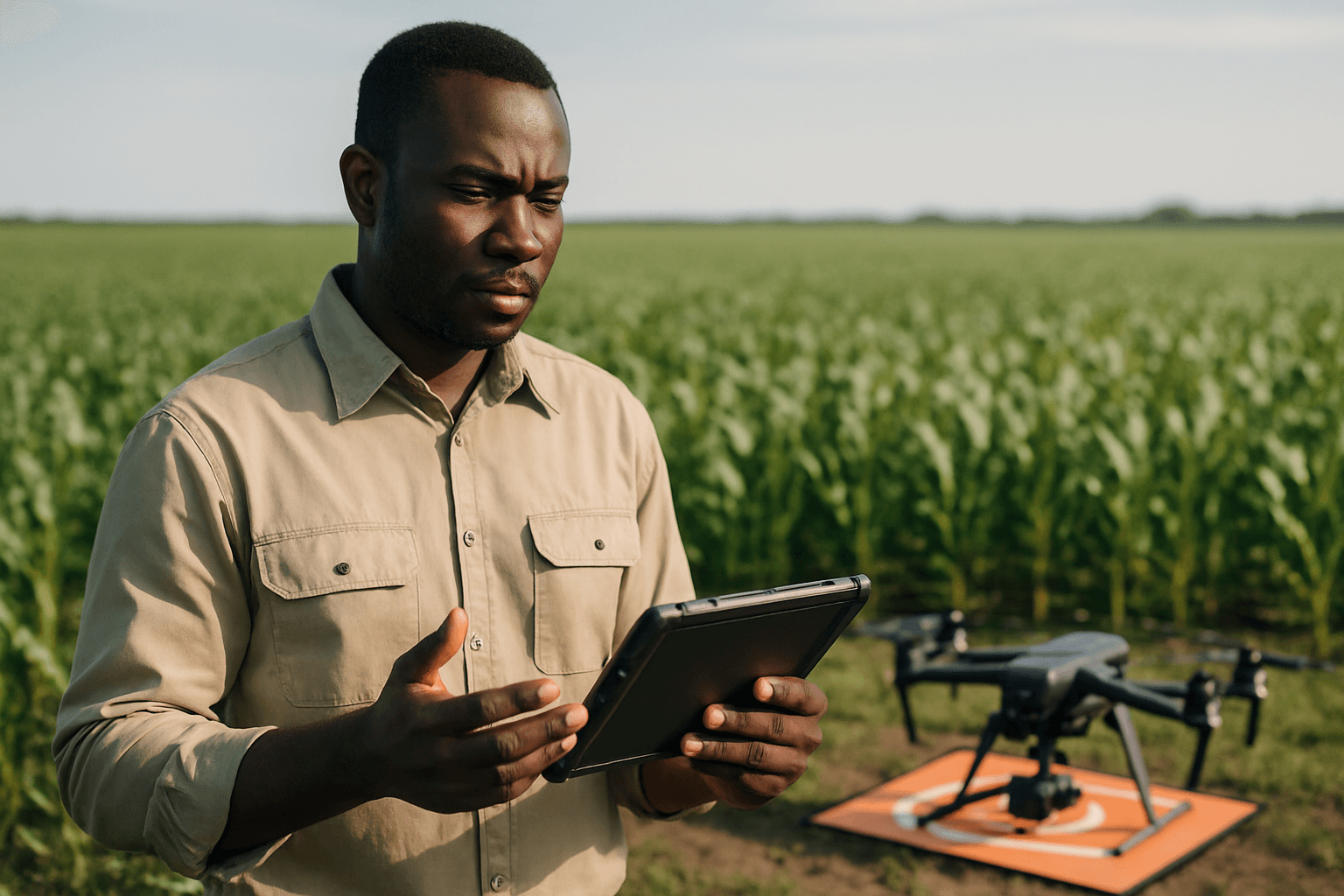
Traditional crop monitoring, often relying on manual inspection or static imagery, presents significant challenges for modern agriculture, leading to inefficiencies, high costs, and delayed responses to critical issues. Imagine the vastness of agricultural fields and the sheer impossibility of human eyes detecting nuanced changes in plant health across every acre. This is where the powerful combination of drone technology and Artificial Intelligence (AI) steps in, revolutionizing precision agriculture by offering an unparalleled ability to monitor crops, manage resources, and maximize yields with remarkable accuracy and efficiency.
By transforming farming into a data-driven industry, AI-powered drones are enabling smarter and more sustainable practices, paving the way for improved decision-making and a more resilient agricultural future.
The Foundation: Drone Technology in Crop Monitoring
Drones, or Unmanned Aerial Vehicles (UAVs), are indispensable tools in modern precision agriculture. Equipped with advanced sensors and cameras, they capture high-resolution images and real-time data from vast agricultural areas far more efficiently than traditional methods. These aerial platforms can carry various payloads, including:
- RGB Imagery: Standard color images used for general visual damage detection and pattern recognition.
- Multispectral Sensors: These sensors measure light beyond the human visual spectrum (e.g., near-infrared), revealing subtle variations in vegetation health, soil conditions, and water distribution that are invisible to the naked eye. This data is crucial for generating metrics like the Normalized Difference Vegetation Index (NDVI), which indicates plant vitality.
- Thermal Sensors: By detecting heat signatures, thermal cameras help identify irrigation problems, assess plant health, and even detect pests or diseases by pinpointing temperature differences.
- Hyperspectral Cameras: Offering even more detailed spectral information than multispectral, these provide enhanced capabilities for identifying specific crop stresses or diseases.
- LiDAR Sensors: Light Detection and Ranging technology creates highly accurate 3D maps of agricultural landscapes, aiding in precise field planning and crop management.
These advanced sensors enable drones to collect comprehensive information on soil and crop conditions, including pH levels, soil types, and chemical content. The speed and scalability of drones make them invaluable for monitoring large agricultural areas in real time.
The Brains: How AI Amplifies Drone Data
While drones excel at data collection, the sheer volume and complexity of the information they gather would be overwhelming without the “brains” of Artificial Intelligence. AI and machine learning (ML) algorithms are the core of this revolution, processing vast amounts of raw drone data and transforming it into actionable insights for farmers.
Enhanced Data Processing and Analysis
AI algorithms meticulously analyze the high-resolution imagery and multispectral data captured by drones. This analysis allows for the detection of patterns and anomalies that human eyes might miss, providing invaluable insights and forecasts for effective precision crop management.
Key AI Applications in Drone-Based Crop Monitoring
- Early Disease and Pest Detection: AI algorithms, trained on extensive datasets of healthy and diseased crops, can recognize specific patterns indicating fungal infections (like blight or powdery mildew), bacterial infestations, or pest outbreaks even in their nascent stages. This early detection allows farmers to intervene proactively, minimizing crop loss and reducing the spread of issues across the field.
- Crop Health Assessment and Nutrient Management: AI can track plant health indicators such as leaf discoloration, irregular growth patterns, and temperature fluctuations, signaling water or nutrient stress. By analyzing multispectral imagery, AI identifies nutrient deficiencies (e.g., nitrogen) and allows for the precise application of fertilizers only where needed. This optimizes resource use and prevents overuse, reducing costs and environmental impact.
- Weed Detection and Precision Spraying: AI can differentiate between crops and weeds, enabling targeted weed removal instead of blanket herbicide application. This precision spraying, guided by AI-analyzed field maps, significantly reduces chemical waste and lowers environmental impact.
- Irrigation Optimization and Soil Analysis: By analyzing thermal and multispectral data, AI helps identify areas experiencing water stress or uneven moisture distribution. This allows for optimized irrigation schedules and targeted water application, conserving water and ensuring crops receive adequate hydration without excess. AI also assists in pre-planting soil scans to determine optimal planting patterns and create 3D field maps for drainage optimization.
- Yield Prediction: Machine learning models analyze drone data (including plant height, density, growth stages, biomass, and canopy coverage) alongside historical records and weather patterns to forecast crop yields with remarkable accuracy. This foresight aids farmers in planning harvest logistics, optimizing resource allocation, and making informed marketing and storage decisions.
- Automated Flight Planning and Real-time Monitoring: AI algorithms optimize drone flight paths for efficient data collection, ensuring comprehensive coverage of agricultural lands. AI drones also provide real-time monitoring capabilities, enabling continuous observation of large agricultural landscapes and immediate alerts for detected issues.
Integration with Farm Management Systems
AI-powered drones don’t just collect and analyze data; they integrate with farm management software to provide actionable recommendations. This integration facilitates predictive analytics, allowing farmers to anticipate problems before they occur and make data-driven choices for better resource allocation.
Benefits of AI in Drone-Based Crop Monitoring
The integration of AI into drone technology offers a multitude of benefits for modern agriculture:
- Higher Yields: Early detection and intervention improve plant health and output.
- Lower Costs: Optimized use of resources like water, fertilizers, pesticides, and fuel significantly reduces expenses.
- Environmental Sustainability: Reduced chemical usage, water conservation, and minimized waste lead to a lower environmental impact, promoting soil health and biodiversity preservation. AI-driven weed control systems, for example, have reduced herbicide use by up to 90%.
- Faster and More Informed Decision-Making: AI processes raw data into actionable insights instantly, enabling farmers to make timely and effective decisions.
- Labor Efficiency: Automation of crop scouting and monitoring reduces the need for manual labor, allowing farmers to manage large areas more effectively.
- Enhanced Scalability: Drones can cover extensive farmland in a fraction of the time compared to manual inspections, making precision agriculture feasible for large-scale operations.
Challenges and Future Directions
Despite the transformative potential, the widespread adoption of AI and drone technology in agriculture faces certain challenges. These include the high initial costs of purchasing advanced drones and AI software, the need for technical expertise to operate the equipment and interpret data, limited battery life of drones, and regulatory restrictions on drone operations. Data privacy concerns also need to be addressed. Furthermore, current drone monitoring programs are more effective in monocultural fields and may struggle with increased crop diversity or less common produce.
However, continuous advancements in AI algorithms (such as generative models, transfer learning, and edge AI), sensor technology, and drone hardware are rapidly addressing these limitations. Future research focuses on energy-efficient AI models, more durable drones with longer-lasting batteries, and quality sensors appropriate for various farming needs. The development of AI-driven decision-making systems that provide intuitive, actionable recommendations in local languages will further enhance adoption.
The future of AI drones in farming envisions increasingly autonomous operations, performing complex tasks like crop monitoring, spraying, and even planting with minimal human intervention. The integration of AI-powered drones with other agricultural technologies like IoT devices and GIS will further enhance real-time monitoring and spatial analysis, leading to improved overall farm management strategies. The projected growth of the agricultural drone market, expected to reach USD 10.45 billion by 2030, underscores the profound impact these technologies will have in ensuring global food security and promoting sustainable agricultural practices.