The global challenge of waste management intensifies daily, with overflowing landfills, the pervasive issue of illegal dumping, and the complexities of recycling operations putting immense pressure on environmental and urban systems. Traditional methods, often labor-intensive, risky, and resource-heavy, are struggling to keep pace. Enter drone technology, an innovative solution emerging from the field of aviation, which is rapidly transforming how we monitor, manage, and optimize waste, ushering in a new era of efficiency and environmental stewardship.
The Growing Challenge of Waste Management
Cities worldwide face escalating difficulties in handling waste collection, tracking unauthorized disposal, and maintaining clean environments as urban populations swell. Conventional waste management systems, though vital, frequently prove slow and inefficient in adapting to these mounting pressures. Poor landfill management, for instance, can lead to significant problems, including pollution, gas accumulation, spontaneous fires, and long-term health risks. The sheer scale of waste generation demands more agile and data-driven approaches.
Drones: A New Horizon in Waste Management
Unmanned Aerial Vehicles (UAVs), commonly known as drones, are proving to be powerful allies in modern waste management. They offer a faster, safer, and more sustainable approach by reducing emissions, improving oversight, and enhancing the overall efficiency of waste strategies. Drones can navigate and collect data from areas that are hazardous or inaccessible to human workers, significantly reducing operational risks and costs.
Why Drones? Advantages in Waste Management
The integration of drone technology brings several compelling benefits:
- Efficiency and Speed: Drones can quickly scan vast areas, collecting high-resolution data much faster than ground-based surveys or manned aircraft.
- Enhanced Safety: By deploying drones, personnel are kept away from dangerous environments such as active landfills, unstable slopes, or areas with hazardous waste and emissions.
- Accuracy and Data Quality: Equipped with advanced sensors, drones capture precise data for 3D mapping, volumetric analysis, and detailed inspections, leading to more informed decision-making.
- Cost-Effectiveness: Drones can reduce labor costs, vehicle emissions, and the overall expenses associated with traditional monitoring and inspection methods.
- Environmental Impact Reduction: By optimizing routes and replacing some ground-based operations, drones can help cut down on CO2 emissions.
Key Applications of Drones in Waste Management
Drones are being deployed across various critical aspects of waste management, from the initial collection stages to long-term environmental monitoring.
Landfill Monitoring and Management
One of the most practical applications of drone technology is in managing and monitoring landfills. Drones equipped with photogrammetry and LiDAR sensors can create detailed 3D maps of landfill sites, enabling operators to:
- Estimate Volume and Capacity: Accurately measure remaining landfill capacity, track fill levels, and plan for cell expansions.
- Monitor Settlement and Deformation: Detect changes in the landfill’s surface, indicating potential stability issues.
- Detect Methane Emissions and Fire Risks: Thermal and gas sensors on drones can identify methane leaks, hot spots, and elevated temperatures, providing early warnings for fire hazards and harmful gas emissions, which are often colorless and odorless to humans. The U.S. Environmental Protection Agency has even approved a drone for methane emissions monitoring.
- Assess Structural Integrity and Leachate Leakages: Inspect liners, drainage systems, and surrounding areas for potential environmental contamination.
Waste Collection Optimization
Drones streamline waste collection processes by providing aerial insights that improve route planning and identify waste hotspots. They can:
- Map Waste Accumulation: Quickly survey large areas to identify where waste is accumulating, guiding collection teams to areas needing attention.
- Optimize Collection Routes: Data from drones can be used to plan more efficient collection routes, reducing fuel consumption and operational time.
- Identify Specific Litter Types: Drones with high-resolution cameras and AI can categorize litter, aiding in targeted clean-up efforts.
Detecting Illegal Dumping
Illegal dumping remains a persistent environmental issue, particularly in remote or unmonitored areas. Drones offer a powerful deterrent and enforcement tool:
- Surveillance of Remote Areas: Drones can scan hard-to-reach zones like forests, riverbanks, and rural roads more effectively than ground patrols.
- Evidence Collection: High-resolution imagery and videos captured by drones serve as crucial evidence for enforcement agencies to prosecute offenders.
- Real-time Monitoring: Drones can identify illegal dumping activities as they happen, enabling swift intervention and reducing environmental damage. Authorities in South Dublin County and various cities in the UK are already deploying drones for this purpose.
Recycling Facility Inspections
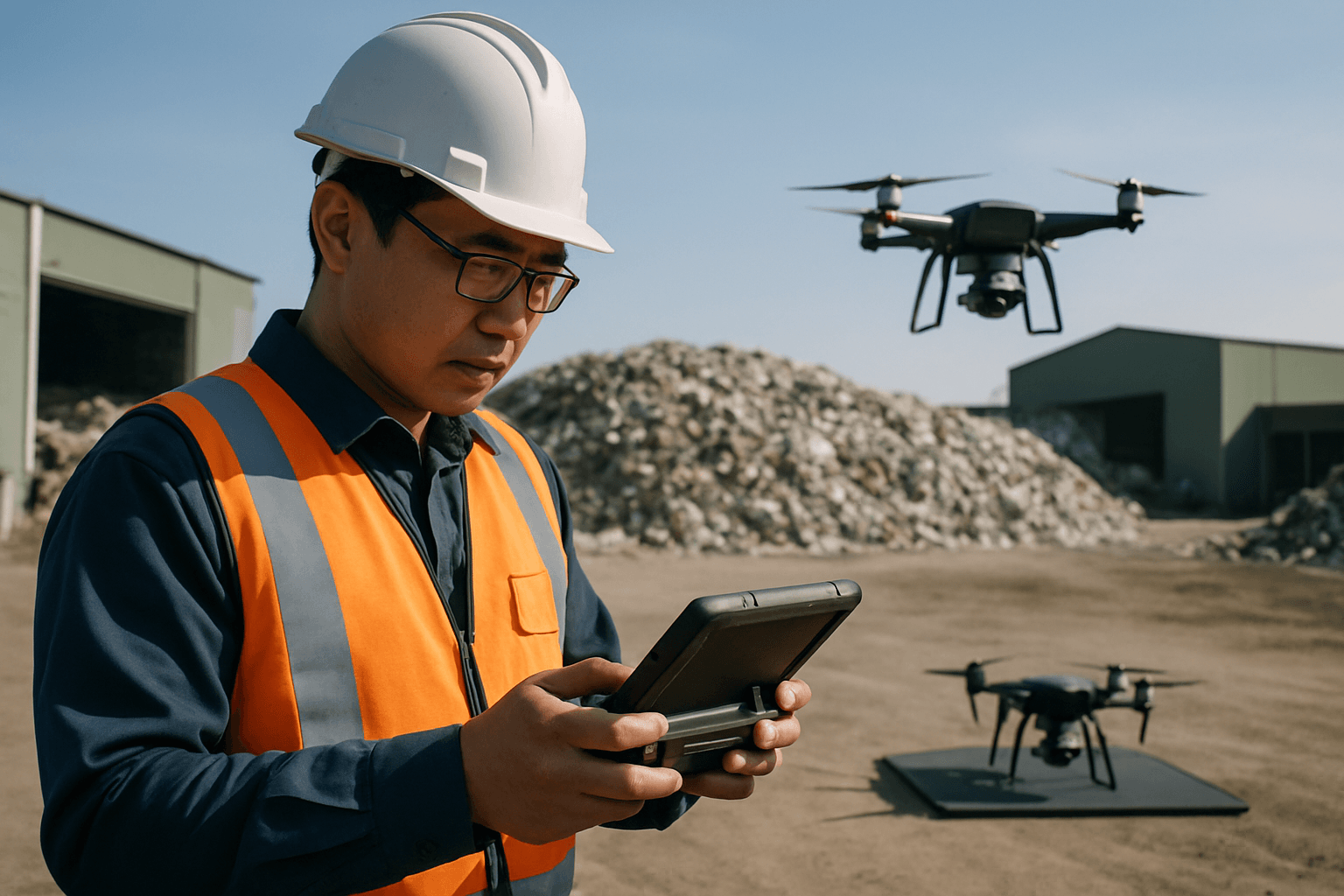
At recycling and waste processing facilities, drones contribute to operational efficiency and safety:
- Inventory Management: Track stock levels of recyclable materials and manage stockpiles.
- Layout Optimization: Aid in optimizing facility layout and access routes.
- Safety Monitoring: Detect potential issues like smoke, gas emissions, or blocked access routes, helping prevent fires and other hazards.
Environmental Impact Assessment and Clean-up
Beyond immediate waste management sites, drones play a role in broader environmental monitoring:
- Pollution Tracking: Monitor water quality and track the spread of pollution originating from waste sites.
- Ecological Monitoring: Observe protected areas surrounding landfills to ensure they are not being contaminated.
- Ocean and Beach Cleanup: Projects like The Plastic Tide use drone imagery and AI to identify and map plastic debris on coastlines, while aquatic drones like the WasteShark collect floating garbage in waterways.
- E-waste Management: In large companies, drones combined with advanced tracking systems monitor and control e-waste, ensuring compliance with regulations and optimizing recycling.
Technologies Powering Drone Waste Management
The capabilities of drones in waste management are driven by advanced integrated technologies:
- High-Resolution Cameras: Essential for detailed visual inspections and mapping.
- LiDAR and Photogrammetry: Create precise 3D models and volumetric surveys of waste sites.
- Thermal and Gas Sensors: Detect methane, other hazardous gases, and identify heat signatures indicative of fires or chemical reactions.
- GPS and Navigation Systems: Ensure accurate flight paths and precise geo-tagging of data.
- Artificial Intelligence (AI) and Machine Learning (ML): Used for automatic identification of illegal dumpsites, waste sorting, and analyzing vast amounts of data to identify patterns and anomalies.
- Specialized Software Platforms: Translate raw drone data into actionable insights and 3D models for analysis and reporting.
Challenges and Future Outlook
Despite the immense potential, the widespread adoption of drones in waste management faces challenges. These include regulatory compliance (such as airspace restrictions and privacy concerns), initial investment costs for drones, sensors, and software, and the need for skilled operators to process and interpret the collected data. Ethical considerations, such as the potential for noise pollution, disturbance to wildlife, and the e-waste generated from drone batteries, also need to be addressed.
However, the future of drones in waste management is promising. Continuous advancements in technology are expected to bring:
- Increased Autonomy: Drones will become more autonomous, capable of complex missions with minimal human intervention, and potentially operate in swarms.
- Enhanced Endurance and Range: Future drones will have longer flight times and greater operational ranges, expanding their applicability.
- Integration with IoT and 5G/6G Networks: Real-time data transfer and communication will become even more seamless, enabling immediate responses to detected issues.
- Specialized Drones: Further development of drones tailored for specific waste management tasks, with energy-efficient and quieter designs.
- AI-Driven Analysis: Machine learning will become even more sophisticated in identifying and tracking waste, revolutionizing predictive maintenance and operational planning.
Conclusion: Soaring Towards Sustainable Waste Practices
Drones are no longer merely futuristic gadgets; they are an indispensable tool in the modern waste management arsenal. By offering faster, safer, more accurate, and cost-effective solutions for monitoring landfills, deterring illegal dumping, optimizing collection, and assessing environmental impacts, these unmanned aerial vehicles are actively contributing to cleaner, greener, and smarter cities. As technology continues to evolve, the integration of drones with AI and other advanced systems promises to further revolutionize the industry, paving the way for truly sustainable waste management practices across the globe.