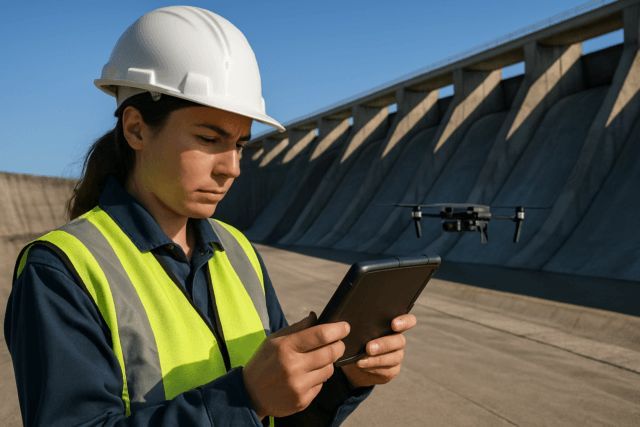
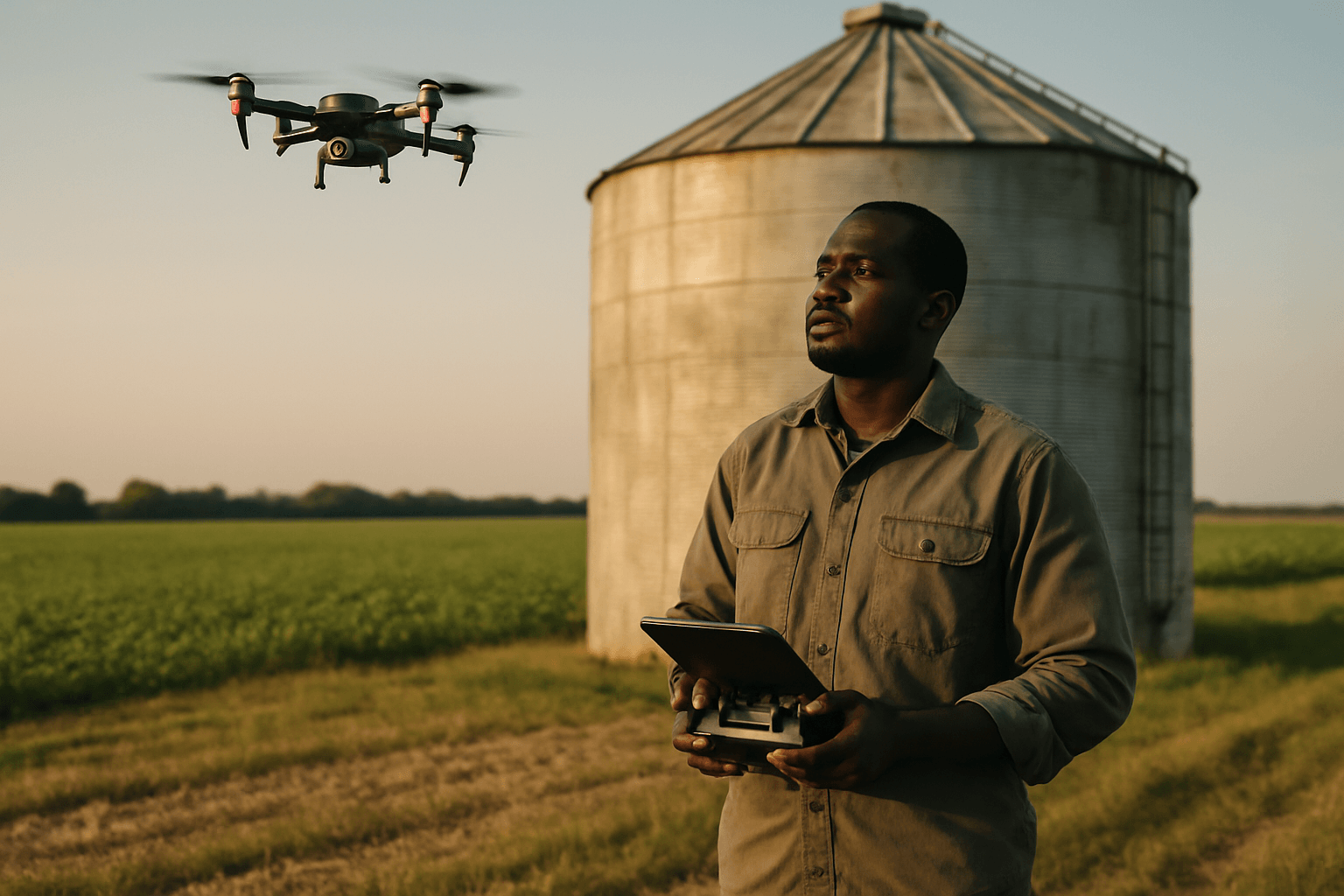
In the vast landscape of modern agriculture, maintaining the integrity and safety of crucial infrastructure, such as towering silos, has traditionally been a labor-intensive, costly, and often hazardous undertaking. However, a silent revolution is underway, driven by advancements in unmanned aerial vehicle (UAV) technology. Drones are rapidly becoming indispensable tools for inspecting agricultural infrastructure, offering unprecedented levels of safety, efficiency, and data accuracy, fundamentally transforming how farmers and agricultural businesses manage their assets.
The Evolution of Agricultural Infrastructure Inspection
For decades, inspecting large agricultural structures like grain silos, storage tanks, and barns involved manual methods. Workers often had to ascend great heights using scaffolding or ropes, or even enter confined spaces, exposing them to significant risks such as falls, respiratory hazards from dust and gases, or entrapment. These traditional methods were not only dangerous but also time-consuming, expensive, and frequently led to operational downtime. The sheer scale of many agricultural operations meant that comprehensive and frequent inspections were often impractical, potentially leading to undetected issues that could result in costly repairs or even catastrophic failures.
Why Drones are Revolutionizing Silo Inspection
The advent of drone technology has dramatically shifted this paradigm, offering a safer, faster, and more effective alternative for agricultural infrastructure inspection, particularly for silos.
Enhanced Safety for Workers
Perhaps the most significant advantage of using drones for silo inspection is the drastic improvement in worker safety. Drones eliminate the need for personnel to work at hazardous heights or enter confined spaces, which are often classified as dangerous due to low oxygen conditions or the presence of harmful gases like nitrogen dioxide. By operating remotely, drones keep human inspectors out of harm’s way, significantly reducing the risk of accidents and injuries.
Increased Efficiency and Reduced Downtime
Traditional inspections can take days or even weeks, involving extensive preparation like erecting scaffolding or shutting down operations. Drones, on the other hand, can complete a comprehensive inspection in a fraction of the time, often in just hours or even minutes. For instance, a drone inspection of a grain bin can take as little as 30 minutes, compared to 3.5-4 hours with traditional methods, saving up to $3,500 per bin inspection for large agricultural businesses like Cargill. This rapid turnaround minimizes operational downtime, allowing agricultural facilities to maintain productivity. Furthermore, the cost-effectiveness of drone inspections is notable, as they reduce labor costs, equipment rental expenses, and insurance associated with manual methods.
Superior Data Collection and Analysis
Drones equipped with advanced sensors capture high-resolution images and precise data from every angle, including previously inaccessible areas. This detailed visual information provides an unprecedented level of insight into the condition of silos and other structures, enabling proactive maintenance and preventing costly breakdowns.
Key Technologies and Drone Capabilities for Silo Inspection
Modern inspection drones are far more than just flying cameras; they are sophisticated platforms integrating various technologies to provide comprehensive structural assessments.
Visual and Thermal Cameras
High-resolution optical cameras on drones can detect even minute defects, such as cracks, spalling, corrosion, and general structural damage, some as small as 0.1 mm. Thermal imaging cameras are also crucial, as they can identify issues like concealed moisture damage, heat leakage, or insulation problems by detecting temperature differences. This capability is vital for maintaining the optimal storage conditions within silos.
LiDAR and Photogrammetry for 3D Modeling
LiDAR (Light Detection and Ranging) technology, along with photogrammetry, allows drones to create highly accurate 3D digital twins or models of silos and other structures. These detailed replicas can be inspected virtually from an office, enabling engineers to meticulously examine the structure, identify irregularities, assess structural integrity, and make precise measurements. This 3D mapping is also instrumental in tracking defect changes year by year and supporting maintenance planning.
AI and Machine Learning for Data Analysis
The vast amount of data collected by drones can be overwhelming to analyze manually. Proprietary AI software and machine learning algorithms are now employed to process images and videos, automatically identifying and mapping damages or defects on the silo surface. These algorithms can categorize defects, rank them by severity, and pinpoint their exact location on the 3D model, streamlining the inspection management process and aiding in budgeting and risk mitigation.
Challenges and Considerations in Drone-Based Silo Inspection
While the benefits are substantial, adopting drone technology for agricultural infrastructure inspection also presents certain challenges.
Regulatory Compliance and Airspace Restrictions
Navigating the complex regulatory landscape is a significant hurdle. Farmers and operators must be familiar with national and local aviation authority rules regarding pilot certification, drone registration, and flight restrictions, including limitations on altitude, proximity to airports, and beyond visual line-of-sight operations. Compliance is critical to avoid fines and legal complications.
Data Management and Integration
Drones generate large volumes of high-resolution images and spectral data. Effective storage, processing, analysis, and interpretation of this data require robust data management systems and specialized software. Integrating this drone-derived data with existing farm management systems can also be a challenge.
Pilot Expertise and Equipment Requirements
Operating agricultural drones effectively demands specialized knowledge and skills. Pilots need proficiency in drone operation, flight path planning, equipment testing, aerial surveying, data collection, and even maintenance and repair. Furthermore, while drone costs are decreasing, the initial investment for a high-quality agricultural drone equipped with specialized sensors can still be substantial, especially for smaller farms. The functionality of cheaper drones may also be limited.
Environmental and Operational Factors
Drones can be vulnerable to adverse weather conditions such as rain, high humidity, fog, or snow. Additionally, for internal inspections, silos typically need to be taken out of operation, emptied, and cleaned to enable a safe and effective inspection, especially to avoid explosive dust environments. The range and scale of drones can also be a challenge for very large areas, where alternative solutions like planes or satellites might be more competitive, though drones are generally more cost-effective for smaller, specific inspections.
The Future of Drone Technology in Agriculture
Despite the challenges, the trajectory for drone technology in agriculture is one of continuous improvement and expanded application. As drones become more autonomous, sophisticated, and cost-effective, their integration into routine agricultural practices will deepen. Ongoing research and development are exploring additional payloads, such as ultrasonic thickness probes for detailed material assessments, further enhancing their capabilities. The ability to monitor changes over time, identify emerging issues, and assess the effectiveness of maintenance interventions proactively makes drones an invaluable tool for sustainable and efficient agricultural asset management.
Conclusion
Drones are no longer just a futuristic concept for agriculture; they are a present-day reality, offering a transformative solution for inspecting agricultural infrastructure like silos. By significantly enhancing safety, improving efficiency, and providing unparalleled data accuracy through advanced imaging and AI-driven analysis, drones address many of the long-standing challenges associated with traditional inspection methods. While considerations such as regulatory compliance and the need for specialized skills remain, the clear benefits and continuous technological advancements underscore the pivotal role drones play in safeguarding agricultural assets and ensuring the longevity and productivity of farming operations worldwide.