
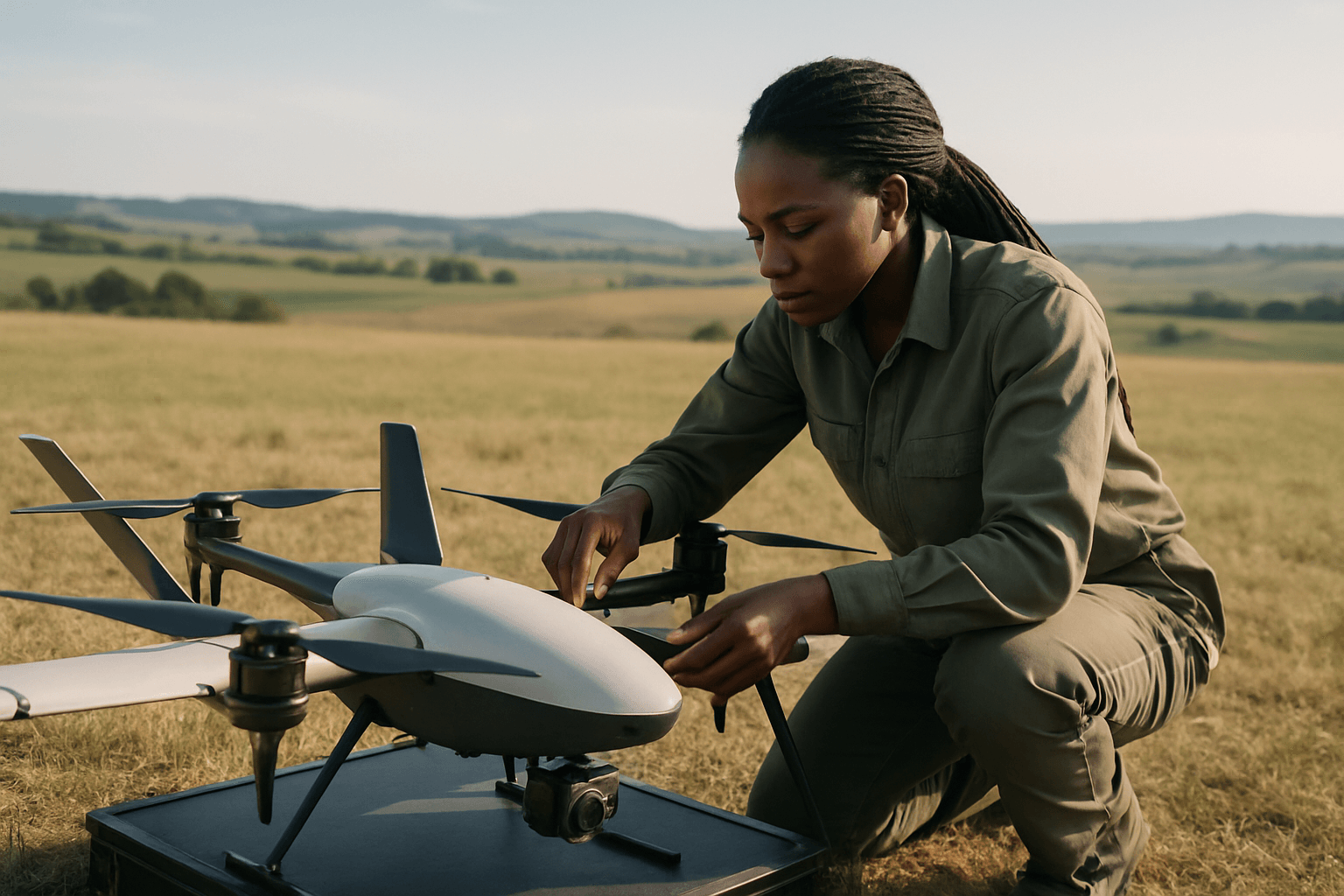
Efficient drone mapping relies heavily on meticulously optimized flight paths. Achieving maximum coverage while maintaining data quality is a critical challenge for professionals across surveying, agriculture, construction, and environmental monitoring. Strategic flight planning not only improves survey precision but also significantly saves time and reduces operational costs.
This guide delves into the essential factors, common flight patterns, and advanced techniques used to optimize drone flight paths, ensuring comprehensive data capture for accurate 2D maps and 3D models.
The Core Challenge: Balancing Coverage and Quality
The primary goal in drone mapping is to gather complete and consistent data across a defined area of interest (AOI). However, simply covering ground isn’t enough; the data must be of high enough quality for subsequent processing into accurate orthomosaics, Digital Elevation Models (DEMs), or 3D models. This balance necessitates careful consideration of several interconnected parameters.
Key Factors Influencing Drone Mapping Coverage and Accuracy
Optimizing a drone’s flight path begins with understanding the fundamental elements that dictate how much ground is covered and the quality of the data collected.
Image Overlap: The Foundation of Photogrammetry
Image overlap is paramount for successful photogrammetry, the science of making measurements from photographs. It ensures that specialized software can identify common points across multiple images, stitching them together seamlessly to create accurate maps and models.
- Front Overlap (Longitudinal): The overlap between consecutive images along the flight line.
- Side Overlap (Lateral): The overlap between images in adjacent flight lines.
Most drone mapping missions recommend a 60-80% front overlap and a 50-60% side overlap for nadir (straight down) imagery. For 3D reconstructions and oblique (angled) imaging, higher overlaps, often 70-80%, are crucial. In homogenous environments, such as forests or large grassy fields, where distinct visual features are sparse, increasing overlap (sometimes up to 85-90%) is necessary to provide enough tie-in points for the software to work effectively. Insufficient overlap can lead to incomplete data and gaps in the final product.
Flight Altitude and Ground Sampling Distance (GSD)
Flight altitude directly impacts both the area covered per image and the Ground Sampling Distance (GSD). GSD refers to the real-world size of each pixel in an image.
- Lower Altitude: Results in a smaller GSD, meaning higher resolution and greater detail. However, each image covers a smaller area, requiring more images and longer flight times to cover the same AOI.
- Higher Altitude: Increases the area covered per image, reducing the number of images and flight time. The trade-off is a larger GSD, leading to lower resolution and less detail.
Defining project objectives, such as the required level of accuracy and detail, is crucial for determining the optimal flight altitude.
Camera and Sensor Configuration
The quality of the drone’s camera and sensor setup significantly affects the output.
- Resolution and Lens: A high-resolution camera (typically 20MP or higher) with a wide-angle lens is recommended for capturing crisp, detailed images and maximizing coverage per shot.
- Shutter Type: Mechanical shutters are preferred as they significantly reduce distortion, improving precision in mapping missions.
- Image Format and Settings: Shooting in RAW or DNG format offers greater flexibility in post-processing. Proper adjustment of ISO, shutter speed, and aperture based on lighting conditions ensures consistent brightness and clarity. Disabling optical image stabilization (OIS) can also improve stability during mapping.
Terrain Complexity
The topography of the mapping area plays a vital role. Undulating terrain, steep slopes, or areas with tall structures can lead to variations in actual ground coverage and potential data gaps if not accounted for. In such cases, specialized flight planning software that can import Digital Elevation Models (DEMs) or Digital Surface Models (DSMs) is essential. These models allow the drone to perform “terrain-following,” automatically adjusting its altitude to maintain a consistent height above the ground (AGL) and ensure uniform GSD.
Environmental Conditions
Weather significantly impacts data quality and flight safety.
- Wind: High winds can cause drone instability, resulting in blurred or distorted images, and accelerate battery consumption, shortening flight time.
- Light: Clear skies and optimal lighting conditions, ideally when the sun is directly overhead to minimize shadows (avoiding early morning or late afternoon), are best for capturing high-quality images.
- Visibility: Haze or fog can reduce image clarity.
Planning flights for days with minimal wind and good lighting is a critical best practice.
Common Drone Flight Path Patterns for Mapping
Different mapping objectives and terrain types call for specific flight patterns. Modern flight planning software often automates the creation of these paths.
Grid (Lawnmower) Patterns
The most common and fundamental pattern for aerial mapping, especially for 2D orthomosaics. The drone flies in parallel lines over the AOI, resembling a lawnmower pattern. This ensures consistent coverage and overlap.
Double Grid (Cross-Hatch) Patterns
For detailed 3D modeling, particularly of buildings and structures, a double grid pattern is often employed. This involves flying two orthogonal (perpendicular) grid patterns over the same area. This provides more diverse viewing angles, capturing more data from facades and complex roof structures, which significantly enhances the accuracy and completeness of 3D reconstructions.
Corridor Missions
Designed specifically for linear infrastructure such as roads, pipelines, power lines, or rivers. These missions involve the drone flying along a narrow, extended path, optimizing for linear coverage rather than a broad area.
Circular (Orbital) Missions
Useful for capturing detailed 3D models of isolated objects like towers, monuments, or specific vertical structures. The drone orbits the object at a consistent distance and altitude, taking images from multiple angles. This can also be combined with grid patterns to enhance 3D data for structures within a larger mapped area.
Oblique and Facade Mapping
For capturing the vertical surfaces of buildings or cliffs, specific oblique missions or multi-altitude facade mapping techniques are used. This involves flying the drone at various altitudes and angles around the object to photograph its sides comprehensively.
Optimizing Flight Paths Through Software and Techniques
Leveraging specialized tools and methodologies is key to achieving optimal coverage and efficiency.
Drone Flight Planning Software
Modern drone mapping workflows are powered by sophisticated flight planning software. These applications allow users to:
- Define Project Boundaries: Outline the exact area to be mapped, often by drawing polygons on a map interface.
- Set Flight Parameters: Configure altitude, speed, desired GSD, and crucial image overlap percentages.
- Automate Flight Paths: Generate precise, automated flight routes based on the defined parameters, minimizing human error and ensuring consistency.
- Integrate Terrain Data: Advanced software like UgCS and ArcGIS Flight can import DEMs and DSMs to enable intelligent terrain-following, adjusting the drone’s height to maintain consistent GSD over varied topography and avoid obstacles.
- Manage Batteries and Waypoints: Plan for battery changes on large missions and set specific waypoints for complex maneuvers or data capture points.
Popular platforms include UgCS, DJI Pilot 2, DroneDeploy, Pix4Dcapture, ArcGIS Flight, and Draganfly DGroundControl, each offering various features for different operational needs.
Advanced Optimization Techniques
- Real-time Monitoring: Some systems provide real-time feedback on image quality and overlap during flight, allowing for immediate adjustments if necessary.
- Multi-drone Operations: For very large areas, some software allows planning and control for multiple drones simultaneously to expedite data collection.
- Pre-visualization: Simulating flight paths in 3D environments helps identify potential issues or coverage gaps before deployment.
Best Practices for Maximizing Coverage
Beyond specific flight path considerations, a holistic approach to mission planning is vital.
- Clearly Define Project Goals: Understand the required accuracy, desired outputs (2D orthomosaic, 3D model, DEM), and coverage area from the outset. This guides all subsequent planning decisions, including altitude, overlap, and sensor choice.
- Conduct Thorough Site Assessment: Familiarize yourself with the terrain, potential obstacles, and any no-fly zones.
- Check Airspace Regulations: Always research and comply with local airspace restrictions and obtain any necessary permissions before flight.
- Perform Pre-Flight Checks: Ensure batteries are fully charged, sensors are calibrated, and GPS is functioning correctly.
- Maintain Consistent Flight Parameters: Once airborne, strive for a steady altitude and speed throughout the mission to ensure uniform image resolution and quality.
- Utilize Ground Control Points (GCPs): For surveys requiring high absolute accuracy, strategically placed and precisely measured GCPs are essential for calibrating the model and improving accuracy.
- Plan for Post-Processing: Consider how the collected data will be processed. High-quality input data from well-planned flights simplifies and accelerates the post-processing phase, which includes stitching images, removing distortion, and generating final deliverables.
Conclusion
Optimizing drone flight paths is a multifaceted discipline that forms the bedrock of accurate and efficient aerial mapping. By carefully considering factors such as image overlap, flight altitude, camera specifications, and terrain complexity, and by leveraging advanced flight planning software, drone operators can ensure maximum coverage and high-quality data. Adhering to best practices from mission planning to post-flight processing ultimately leads to superior geospatial products, saving resources and delivering reliable insights across a multitude of industries.