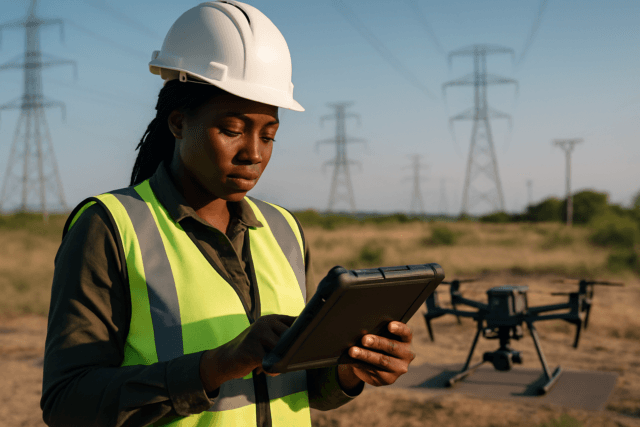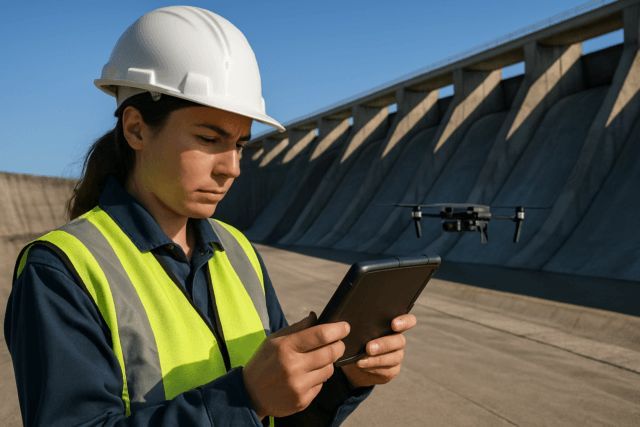
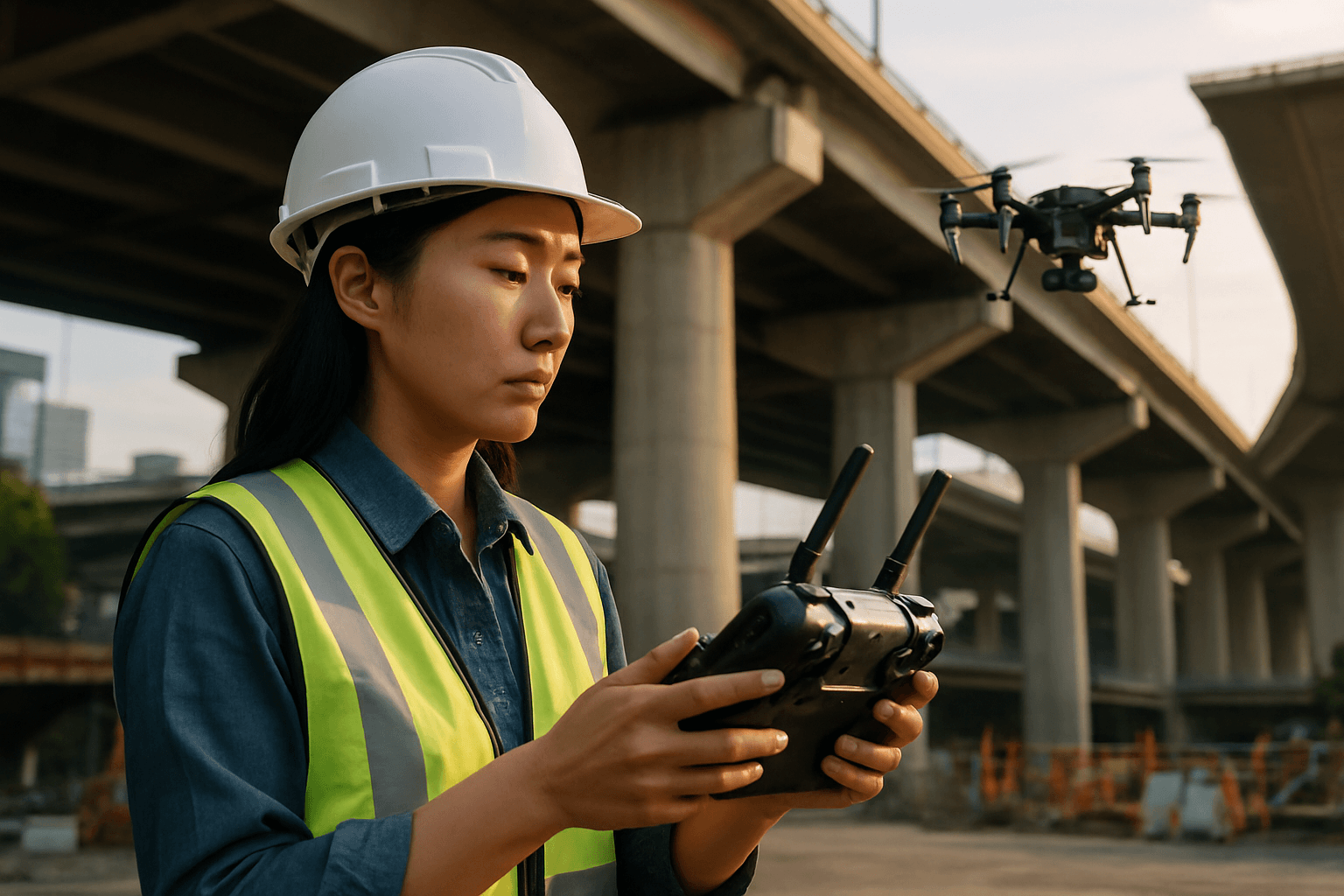
The integrity of our global infrastructure is paramount, yet inspecting vast networks of bridges, pipelines, dams, and buildings for hidden flaws presents significant challenges. Traditional manual inspections are often costly, time-consuming, dangerous, and can lead to missed defects. Enter drones, or Unmanned Aerial Vehicles (UAVs), which are rapidly revolutionizing infrastructure assessment. While drones excel at visual surface inspections, a critical question remains: can they peer beneath the surface to detect internal structural defects? The answer is a resounding yes, though not always in a direct “see-through” manner, but rather through the clever integration of advanced Non-Destructive Testing (NDT) technologies.
Drones equipped with a suite of sophisticated sensors can identify indicators of internal damage, transforming how engineers approach preventative maintenance and ensuring the longevity and safety of critical assets. They provide unprecedented access to difficult-to-reach areas, enhance safety by keeping human inspectors out of hazardous zones, and offer efficiency gains that traditional methods cannot match.
How Drones Uncover Hidden Flaws: Advanced NDT Technologies
Drones act as mobile platforms for various NDT instruments, allowing them to collect data from vantage points previously inaccessible or too dangerous for human inspectors. This data is then analyzed to infer the presence and nature of internal structural defects.
Thermal Imaging (Infrared Thermography – IRT)
One of the most powerful tools in a drone’s arsenal for detecting internal defects is thermal imaging. Infrared (IR) cameras detect minute temperature variations on a structure’s surface. These variations can indicate underlying issues such as moisture intrusion, delamination, voids, insulation failures, or even early signs of concrete failure.
- Mechanism: Materials absorb and release heat at different rates. A defect, like a hidden void or water pocket, can alter the thermal conductivity of the material, causing a detectable temperature difference on the surface.
- Applications:
- Delamination Detection: In concrete bridge decks, air pockets or separating layers (delamination) show up as distinct heat signatures.
- Moisture Intrusion: Water infiltration, which can weaken materials, is identifiable by cooler spots on a surface.
- Insulation Gaps: Thermal drones can reveal insulation gaps in building envelopes, leading to energy loss.
- Electrical Faults: Overheating electrical components can be quickly identified, preventing potential failures.
Ultrasonic Testing (UT)
For more direct assessment of internal material properties, drones can incorporate ultrasonic testing. This technology uses high-frequency sound waves to measure material thickness and detect internal defects like corrosion or cracks within materials.
- Mechanism: An ultrasonic transducer emits sound waves into the material and measures the time it takes for these waves to reflect off a boundary or defect. Changes in reflection patterns indicate anomalies.
- Advanced Implementations: While traditional UT requires direct contact, drone-based UT is advancing with either contact-based sensors (requiring specialized drones with robotic arms to touch the surface) or non-contact methods.
- Applications: Detecting corrosion and pitting, erosion, material thinning in pressure vessels and tanks, and assessing weld integrity in metal structures.
LiDAR (Light Detection and Ranging)
LiDAR technology, commonly mounted on drones, uses laser pulses to create highly accurate 3D models of structures. While primarily used for external mapping, these detailed models are crucial for inferring internal issues by precisely tracking structural deformation, misalignment, and changes over time.
- Mechanism: By emitting laser pulses and measuring their reflections, LiDAR drones generate dense point clouds that form a precise 3D representation.
- Applications:
- Structural Deformation: High-precision digital models help engineers assess deformation, alignment, and load distribution.
- Comparative Analysis: Millimeter-level accuracy allows engineers to track subtle structural shifts over time, identifying potential problems before they become critical.
High-Resolution Visual and Multispectral Imaging with AI
Beyond human-eye capabilities, drones carry advanced high-resolution cameras that capture intricate surface details. When combined with Artificial Intelligence (AI) and deep learning algorithms, these cameras can achieve exceptional defect detection.
- Mechanism: Drones capture thousands of high-quality images and videos. AI algorithms are trained to recognize patterns indicative of cracks, spalling, corrosion, and other surface defects, often with greater speed and consistency than human inspectors.
- Multispectral Imaging: Captures data across different light spectra, which can reveal changes in material composition or moisture content not visible to the naked eye.
- Digital Twins: High-resolution drone data can be used to create “digital twins” – virtual 3D models that precisely mirror a physical asset. These models enable remote monitoring, structural analysis, and highly accurate tracking of damage progression over time.
Pulsed Eddy Current (PEC)
This NDT method, which can be integrated with drones, is specifically designed to identify corrosion beneath coatings or insulation without requiring their removal. This is crucial for evaluating the integrity of pipes and other metal components where corrosion can lead to significant internal damage.
Types of Internal Defects Drones Can Help Detect
Through the application of these various technologies, drones contribute significantly to identifying a range of internal and sub-surface defects:
- Delamination: Particularly in concrete structures, where layers separate from each other.
- Moisture Intrusion and Water Ingress: Hidden pockets of moisture that can accelerate degradation.
- Voids and Air Gaps: Empty spaces within materials that compromise structural integrity.
- Insulation Failures: Gaps or damage in insulation layers, indicating energy inefficiency or potential thermal stress.
- Sub-surface Corrosion: Particularly on metal components, often inferred through thermal anomalies or detected more directly with PEC or specialized UT.
- Early Concrete Degradation: Identifying subtle signs of internal deterioration before they manifest as visible surface cracks.
Limitations and Challenges
Despite their rapid advancements, drones for internal defect detection are not without limitations:
- Depth of Penetration: While thermal imaging can infer sub-surface issues, truly deep internal defects within thick materials (e.g., large voids in the core of a massive concrete foundation) may remain challenging to detect without more penetrating NDT methods, which are difficult to miniaturize and deploy via drone for large-scale scanning.
- Detection of Minute Defects: Current drone technology, even with advanced sensors, may sometimes struggle to identify extremely minute or complex defects that a highly experienced human inspector might discern during a close physical examination.
- Confined Spaces: While specialized smaller, agile drones are emerging, navigating geometrically complex, dimly lit, or highly confined internal spaces (like culverts or intricate structural interiors) still presents challenges regarding maneuverability, signal interference, and data capture quality.
- Environmental Constraints: Adverse weather conditions such as strong winds, heavy precipitation, or dense fog can hinder drone operations, affecting flight stability, sensor performance, and data accuracy.
- Battery Life: The limited battery life of many drones restricts their operational time and range, often necessitating frequent battery swaps and meticulous flight planning.
- Data Interpretation and Expertise: While AI assists significantly, the effective interpretation of complex sensor data (thermal, ultrasonic, LiDAR) still requires skilled operators and engineers with specialized expertise.
The Future of Drone-Based Infrastructure Inspection
The field of drone-based infrastructure inspection is continually evolving. Future advancements are expected to address current limitations, including:
- More Advanced Sensor Integration: Miniaturization of more traditional NDT tools (like ground-penetrating radar for deeper concrete analysis) for drone deployment.
- Enhanced AI and Machine Learning: Further refinement of algorithms for automated defect detection, predictive maintenance, and real-time analysis, reducing the need for extensive post-processing.
- Improved Autonomy: Drones with greater self-navigation capabilities, especially in GPS-denied or complex environments, will increase efficiency and reduce human error.
- Swarm Technology: Deployment of multiple drones working collaboratively to cover larger areas more quickly and comprehensively.
- Robotic Arms for Contact NDT: More robust and precise drone-mounted robotic arms that can perform contact-based NDT methods like ultrasonic testing with greater reliability.
Conclusion
Drones have undeniably become indispensable tools in infrastructure inspection, offering a safer, faster, and more cost-effective alternative to traditional methods. While they may not possess a magic “X-ray vision” to see through all materials directly, their ability to deploy sophisticated NDT sensors like thermal cameras, ultrasonic probes, and LiDAR, combined with advanced imaging and AI, enables them to effectively detect and infer a wide array of internal structural defects. By identifying these hidden flaws early, drones play a critical role in proactive maintenance, preventing catastrophic failures, extending asset lifespans, and ultimately ensuring the safety and reliability of our vital infrastructure. As technology continues to advance, the capabilities of drones in safeguarding our built environment will only grow.